Basement Wall Crack Repair in Youngstown, OH
A crack in a basement wall is the house trying to tell you something. Most of the time it is saying that the concrete shrank as it cured. Sometimes it is saying that the wall is moving, and that is a message worth hearing properly.
Talk to a local waterproofing professional
Describe what is happening in your basement and a local professional will assess the water path and the right fix.
Hours: Mon–Fri 7:00 AM–10:00 PM ET · Sat 8:00 AM–10:00 PM ET · Sun 7:00 AM–9:00 PM ET
Reading a basement wall crack
A crack is read the way a doctor reads a symptom: by its shape, its location, its width, and whether it is changing. A vertical crack in a poured concrete wall, running from the top of the wall to the floor, is the most common crack in a Youngstown basement, and it is usually a shrinkage crack. The concrete shrank as it cured, and the wall cracked at its weakest point. A vertical crack that is narrow, stable and not growing can be sealed with confidence.
A horizontal crack is a different message. It runs along the wall, usually at the frost line or at the middle of the wall, and it means the wall is being pushed inward by soil pressure. A horizontal crack that is opening, or a wall that is bowing inward, is a structural problem, and it needs a foundation assessment before any repair. Sealing a horizontal crack without addressing the pressure behind it will not hold.
A diagonal crack, running from a corner at an angle, can mean settlement, or it can mean lateral pressure. A diagonal crack that is narrow and stable is often a settlement crack, and it can be repaired. A diagonal crack that is widening, or one that is accompanied by a door or a window that sticks, needs a closer look.
A stair-step crack in a block wall follows the mortar joints, running diagonally across the wall in a series of steps. It can mean settlement, or it can mean the wall is being pushed. A stair-step crack that is narrow and stable can be repaired, but one that is widening, or one that is accompanied by a bowing wall, is a structural sign.
When a crack is a structural problem
The signs that a crack is structural are consistent: the crack is growing, the wall is bowing or leaning, the crack is horizontal, or the crack is accompanied by other symptoms, such as a floor that is cracking, a door that sticks, or a chimney that is leaning. Any one of those signs means the wall needs a foundation assessment before any sealing work begins.
A bowing wall is the most serious sign. It means the soil pressure behind the wall is pushing it inward, and the wall is losing the fight. A wall that bows more than an inch, or a wall that is bowing and cracking at the same time, needs to be stabilised. Waterproofing a bowing wall without stabilising it is wasted work, because the wall will keep moving and the seal will keep breaking.
Settlement is a different structural problem. A house that settles unevenly will crack at the points where the settlement is greatest, usually at the corners or at the middle of a long wall. Settlement cracks are usually diagonal, and they are often accompanied by a floor that slopes or a door that sticks. A settlement crack that has stopped moving can be repaired. A settlement crack that is still moving needs the cause understood first.
The assessment is not a guess. It involves measuring the crack, measuring the bow, and looking at the soil, the grading and the drainage outside. The wall is a structure, and it is assessed as a structure, not as a leak.
How crack injection works
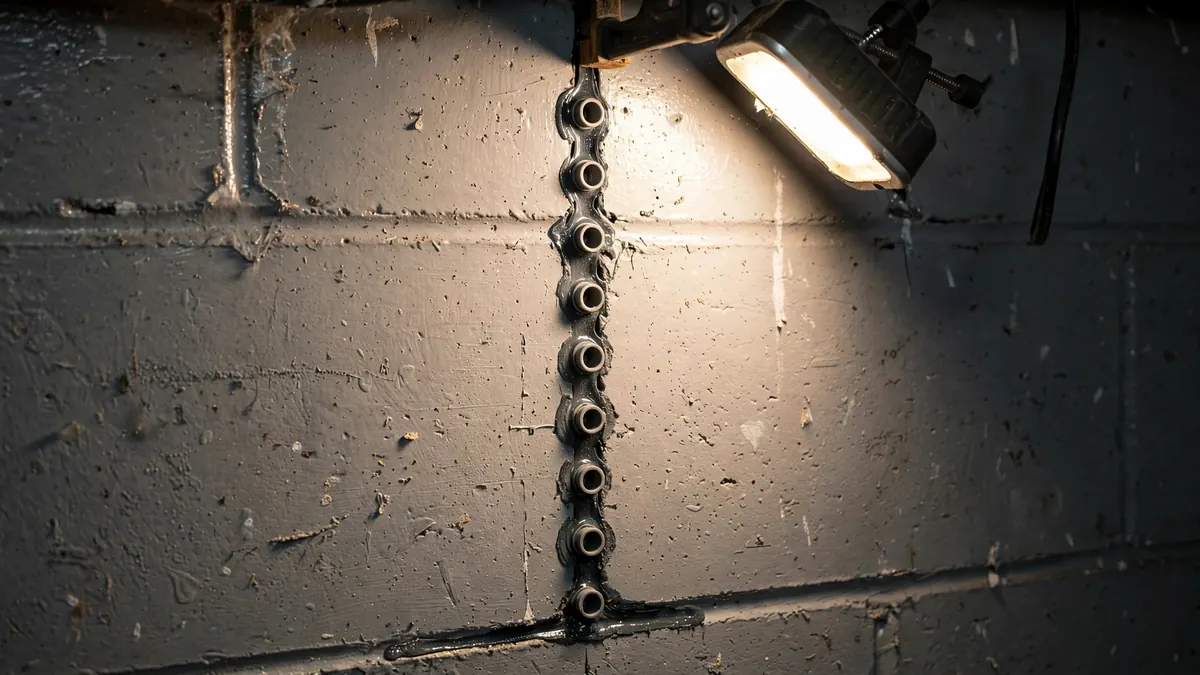
Crack injection is the standard repair for a leaking crack in a poured concrete wall. Small ports are fixed along the crack, usually every few inches, and a low-viscosity resin is injected through the ports, starting at the bottom and working up. The resin fills the crack all the way through the wall, from the inside face to the outside face, and it cures into a flexible, waterproof seal.
Polyurethane is the usual choice for a leaking crack, because it expands when it meets water and it stays flexible, so it moves with the wall as the temperature changes. Epoxy is stronger and more rigid, and it is used where the crack also needs structural bonding. The choice is made by the crack: a wet, active leak gets polyurethane, a dry crack that needs strength gets epoxy.
The repair is done from the inside, so there is no excavation, and it usually takes an hour or two for a single crack. The wall can be painted over once the resin has cured, and the repair is invisible. A properly injected crack does not leak again, because the resin fills the full depth of the wall, not just the surface.
Injection does not work on every crack. It does not work on a crack that is actively moving, it does not work on a block wall, where the leak is through the mortar joints rather than a single crack, and it does not work where the wall is deteriorating. In those cases the repair is different: a membrane, a drain, or an exterior fix.
Block wall and mortar crack repair
A block wall does not crack the way a poured wall does. It cracks along the mortar joints, and the leak is through the joint, not through a single fissure. Repairing a block wall crack means repointing the joint, which is the process of removing the old, soft mortar and replacing it with new mortar, and then sealing the wall from the inside with a membrane, or from the outside with a membrane and a drainage board.
Repointing is skilled work. The old mortar has to be removed to a proper depth, the joint has to be cleaned, and the new mortar has to match the strength of the old. Mortar that is too strong will crack the block. Mortar that is too weak will crumble. A block wall that is repointed properly will hold for decades.
A block wall that is leaking through the joints across a wide area is not a repointing job. It is a waterproofing job, and it needs a wall membrane on the inside that catches the seepage and directs it to a drain, or an exterior membrane that stops the water before it reaches the wall. Repointing a wall that is wet through its full thickness will not keep it dry.
A stair-step crack in a block wall is repointed the same way, but the cause has to be understood first. A stair-step crack that is caused by settlement will not reopen if the settlement has stopped. A stair-step crack that is caused by lateral pressure will reopen, because the pressure is still there. The repair has to match the cause.
What a crack repair includes
A crack injection includes the ports, the resin, and the surface seal, and it should include a check after the next rain to confirm the crack is dry. A good repair is judged by its result, not by its materials, so the follow-up matters.
A repointing job includes the removal of the old mortar, the new mortar, and the sealing of the wall. A structural repair, if one is needed, includes the stabilisation work and the waterproofing that follows it. The repair should be explained to the homeowner, including what was found, what was done, and what to watch.
What a crack repair does not include is a promise that no other crack will ever appear. A foundation has many possible weak points, and fixing one does not fix the others. A homeowner who has one crack repaired should still watch the rest of the basement during the next few storms, because the next crack may be on a different wall.
The repair should also include an explanation of the cause. A homeowner who understands why the wall cracked, whether it was shrinkage, settlement or soil pressure, is a homeowner who will notice the next crack early, while it is still small.
Mistakes that make a crack worse
The most common mistake is sealing the inside of a crack with hydraulic cement and calling it done. The cement plugs the visible opening, but the crack runs all the way through the wall, and the water pressure behind it does not go away. The water finds the next weak point, and the leak moves. Injection fills the full depth of the crack, which is why it holds where surface cement does not.
A second mistake is painting over a cracked wall. Waterproof paint will hold for a few weeks, then peel, because the pressure behind it builds until the paint lets go. The paint also hides the crack, so the homeowner does not notice it getting wider until the damage is already done.
A third mistake is repairing a crack without checking the grading and the drainage outside. A crack that is sealed while the downspout still discharges at the foundation and the lot still slopes toward the house will be under more pressure than it needs to be, and the next crack will open beside it. The outside has to be part of the repair.
The last mistake is ignoring a horizontal crack. A horizontal crack is a structural sign, and sealing it without addressing the pressure behind it will not hold. The wall will keep moving, the seal will keep breaking, and the problem will get worse while it is hidden behind a patch.
Wall cracks in the Mahoning Valley towns
Youngstown's poured concrete basements, particularly on the North Side and in the neighbourhoods built in the 1950s and 1960s, often have a single vertical shrinkage crack that leaks after heavy rain. Those are the simplest repairs in the cluster, and they are usually done by injection in a single visit.
Boardman's block foundations are more likely to crack along the mortar joints, in a stair-step pattern, because the block is older and the mortar is softer. Those cracks need repointing and a membrane, rather than an injection, and the repair is a system rather than a single crack.
Austintown and Canfield have a mix of both, with poured walls in the newer homes and block in the older ones. The inspection there spends more time on the horizontal cracks, because the clay soil in those towns swells when it is wet and pushes hard against the wall, and a horizontal crack is the first sign of that pressure.
How to tell if a crack repair worked
A repaired crack should stay dry through the next few storms, and the wall around it should stay dry as well. The test is simple: watch the wall during and after rain, and look for water at the crack, for a wet line running down from the crack, or for efflorescence appearing beside it. A crack that stays dry through a Youngstown spring is a crack that has been repaired.
The wall should also be watched for new cracks. A foundation has many possible weak points, and fixing one does not fix the others. A new crack beside a repaired one is not a failure of the repair. It is a sign that the wall has another weak point, and that weak point needs to be found and repaired as well.
The homeowner should keep a record of the crack, with photographs and dates, so the change can be tracked. A photograph from this year, compared with a photograph from last year, will show whether the crack is growing, even if the change is small. A crack that is growing slowly is still growing, and it needs to be understood.
If the repaired crack leaks again, or if a new crack opens beside it, the wall needs to be looked at again, because the cause may not have been what it seemed. A crack that returns after a repair is a crack whose cause was not understood, and the cause has to be found before the repair is attempted again.
What a proper job looks like
Water path found first
The inspection traces the water to its entry point, so the fix matches the cause.
Pressure relieved, not fought
A drain channel gives water a better path than your floor. Paint and sealant fight pressure and lose.
Pump sized to the house
The pump is sized to the water volume and the lift, with a battery backup for power cuts.
Tested before handover
Water is run into the channel, the pump cycles, and the discharge is checked outside.
From inspection to a dry basement
Inspection
Walk the basement and the outside of the house to find where the water enters, what the wall is made of, and where the water table sits.
Plan
Match the system to the house: drain channel, wall membrane, sump pump, discharge, and battery backup where power cuts are a concern.
Install
Cut the trench, lay the channel and gravel, fit the membrane and the pump, and run the discharge away from the house.
Restore
Re-pour the concrete flush with the floor, clean the work area, and leave the basement usable again.
Test
Run water into the channel, watch the pump cycle, and confirm the discharge flows away from the property.
More waterproofing services
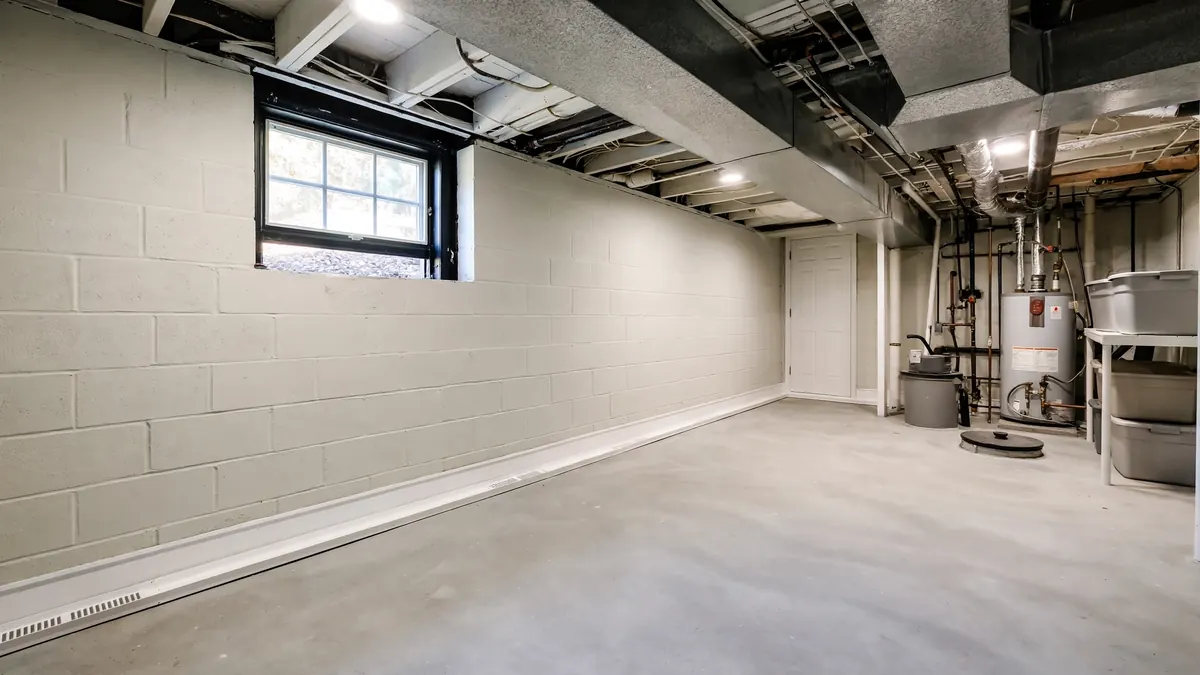 Basement Waterproofing
Basement waterproofing in Youngstown, OH for wet basements, wall leaks and seepage. Interior drains, sump pumps and foun
Learn more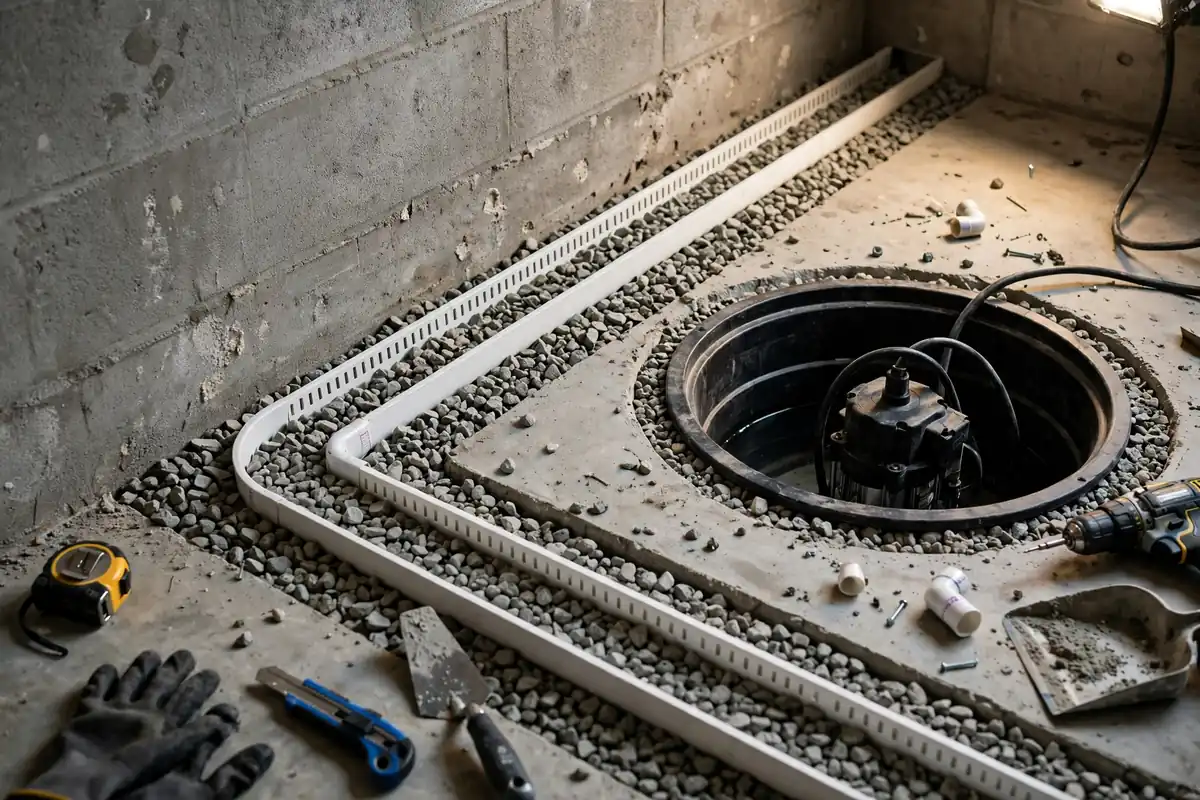 Interior Drain System
Interior drain systems in Youngstown, OH collect water at the wall-floor joint and send it to a sump pump. A proven fix
Learn more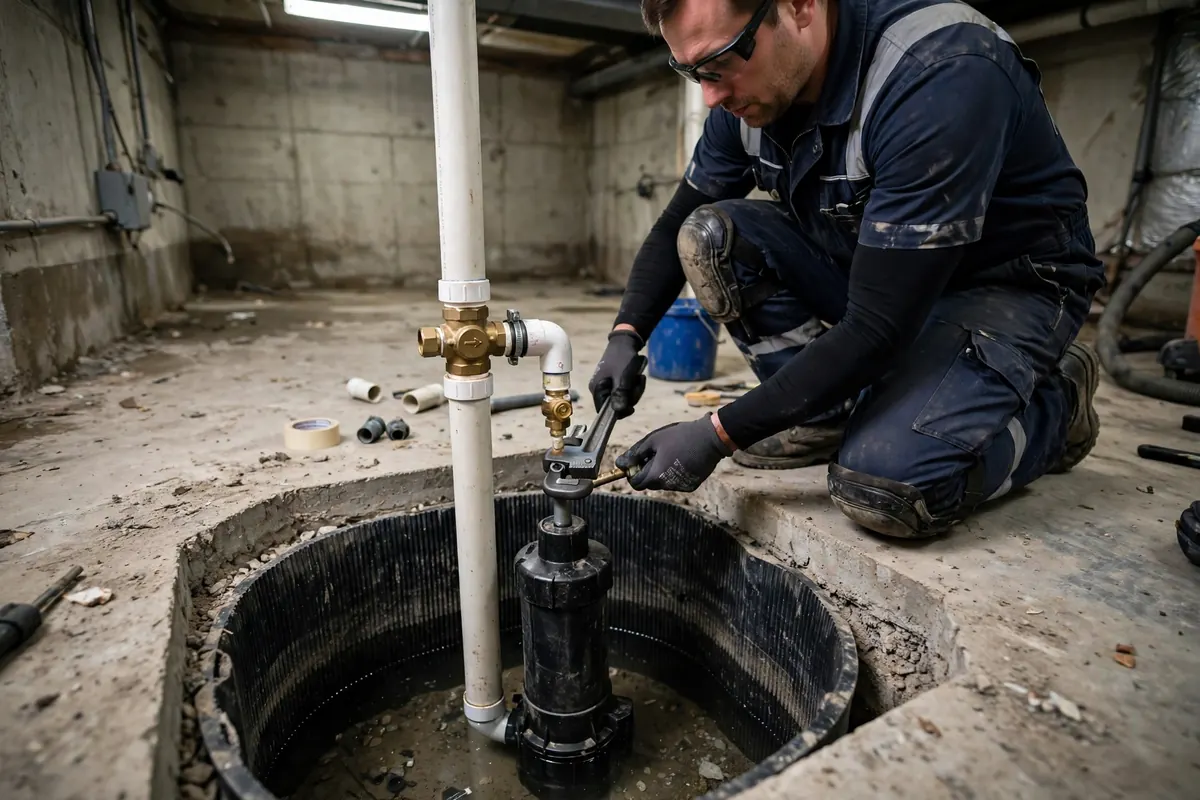 Sump Pump Installation
Sump pump installation in Youngstown, OH for basements that take on water. Submersible pumps, battery backup systems and
Learn more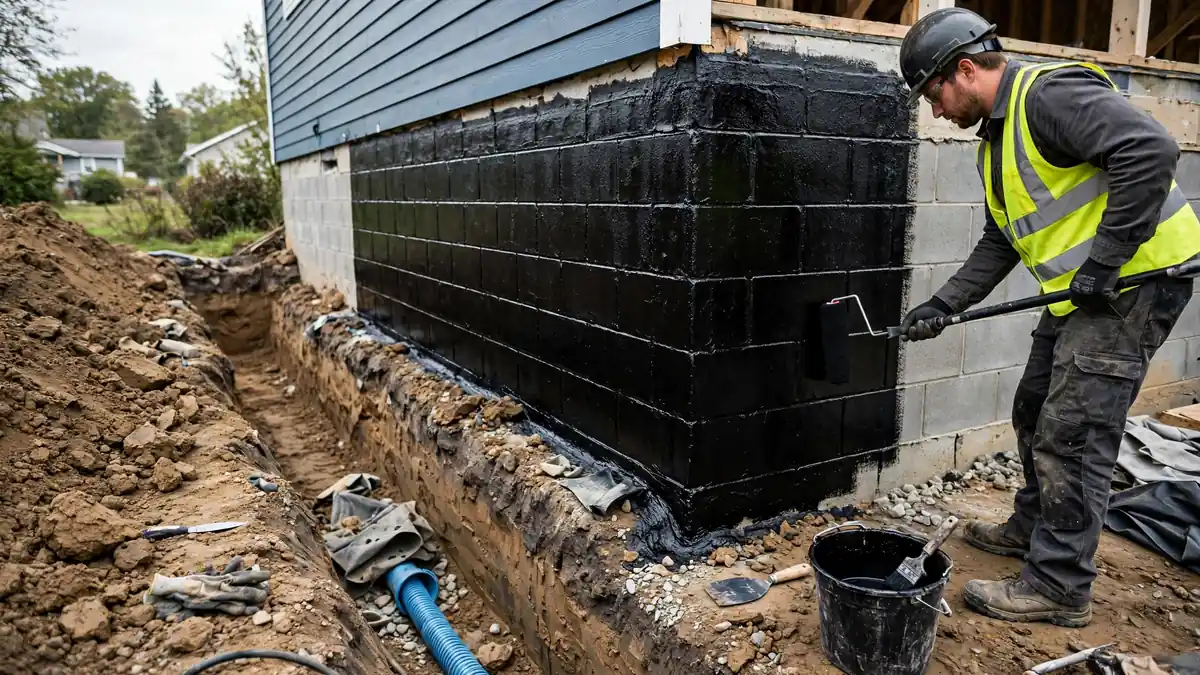 Foundation Waterproofing
Foundation waterproofing in Youngstown, OH: exterior membranes, drainage board and interior systems for block and poured
Learn more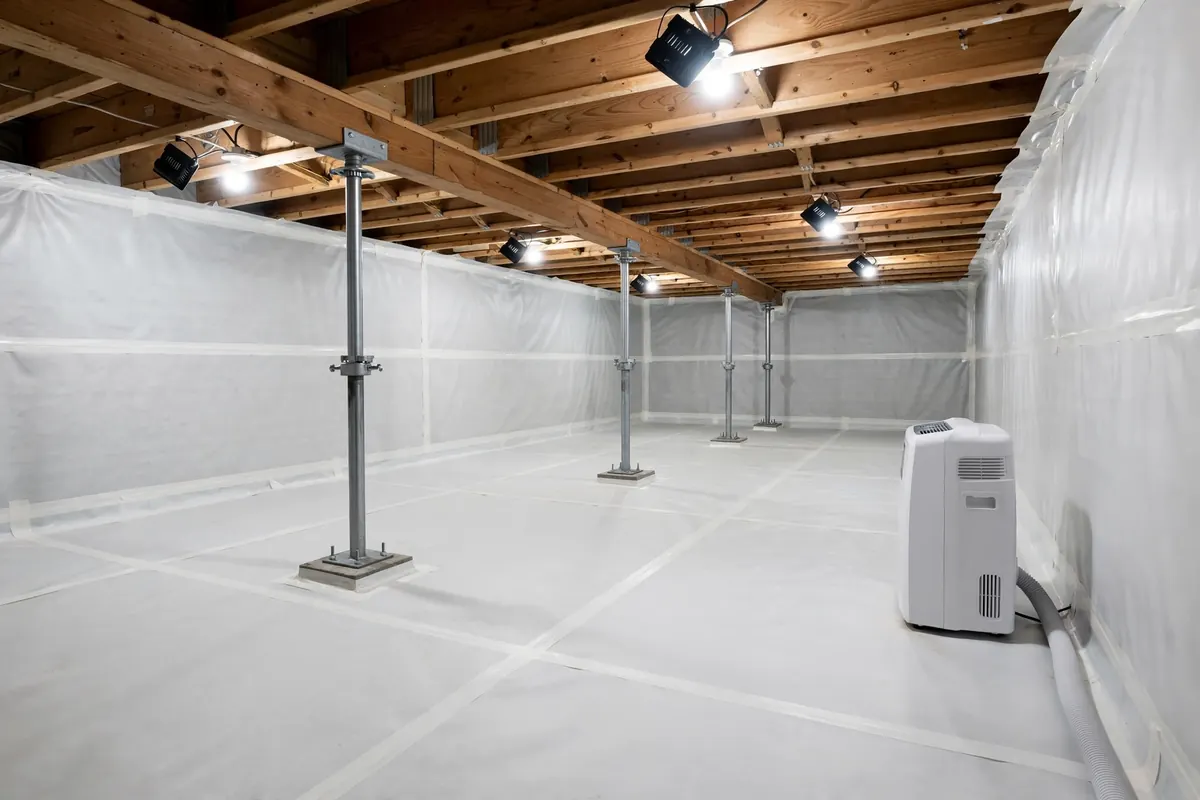 Crawl Space Waterproofing
Crawl space waterproofing in Youngstown, OH: encapsulation, vapor barriers, drainage and dehumidification for damp crawl
Learn more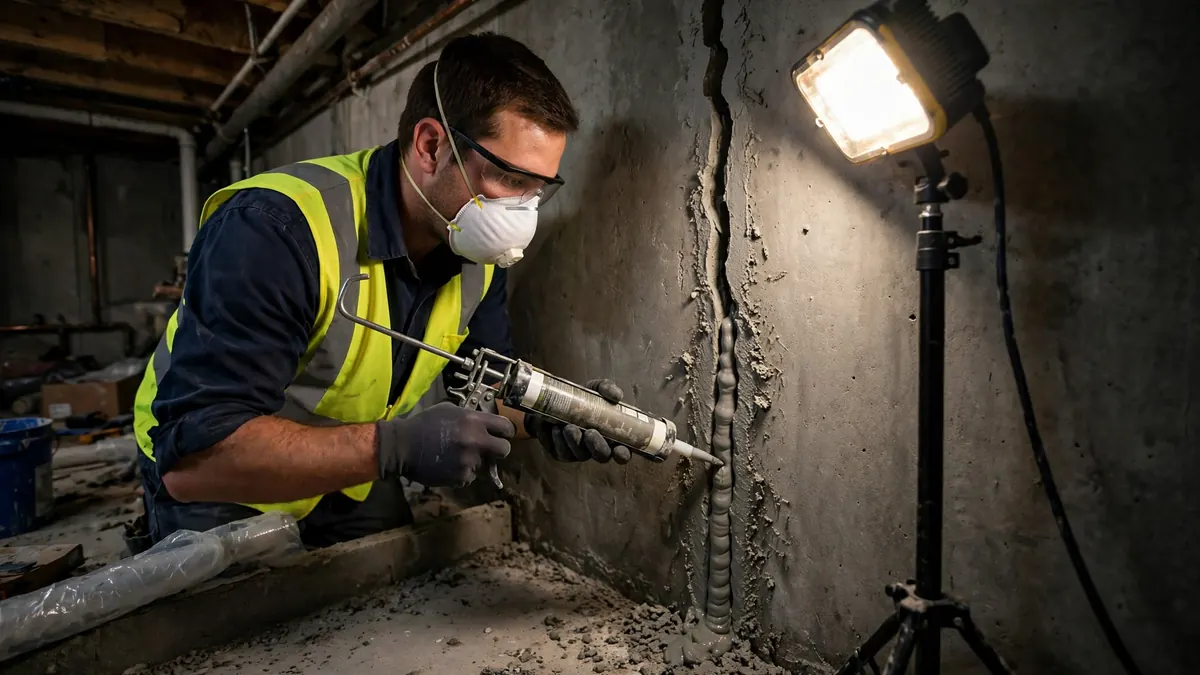 Basement Leak Repair
Basement leak repair in Youngstown, OH: find where the water enters and fix that path. Crack injection, joint sealing an
Learn moreQuestions, answered
Look at the direction, the width, and whether it is changing. A narrow, vertical crack that has not changed in years is usually a shrinkage crack and is not serious. A horizontal crack, a crack that is widening, a crack that is accompanied by a bowing wall, or a crack that is accompanied by a sticking door or a sloping floor are all serious signs, and they need a foundation assessment before any repair.
Most can. A vertical crack in a poured wall is repaired by injection from the inside, and a block wall crack is repaired by repointing and a membrane from the inside. Exterior repair is needed when the wall is deteriorating, when the crack is at the top of the wall, or when the problem is a single failed section of the exterior coating. The inspection decides which side the repair belongs on.
A properly injected crack is a permanent repair. The resin fills the full depth of the wall and bonds to the concrete, so the water path is closed. It does not peel, it does not wash out, and it moves with the wall as the temperature changes. If the wall itself starts to move, because of settlement or soil pressure, a new crack can open beside the repaired one, but the repaired crack will not leak again.
A properly injected crack will not leak again. The resin fills the full depth of the wall, from the inside face to the outside face, and it cures into a flexible, waterproof seal. A surface patch, by contrast, will leak again, because it only plugs the visible opening and the water pressure behind it does not go away. The difference is the depth of the repair.
Yes, always. Finishing a basement before the crack is repaired means the finished wall will hide the crack until the water damage is already done, and the repair will mean tearing out the finished work. Repair the crack, test it through at least one wet season if possible, and only then finish the basement. It is far cheaper to repair a crack in an unfinished basement than to repair a finished one.
In a poured wall, the most common cause is shrinkage as the concrete cures. In a block wall, the most common cause is settlement or lateral pressure from the soil. In both, the clay soil in the Mahoning Valley, which swells when it is wet and shrinks when it dries, pushes and releases the wall year after year, and the wall cracks at its weakest point. A crack is the wall's response to pressure, and the pressure has to be understood before the crack is repaired.
A small, stable vertical crack in a poured wall can be sealed with a homeowner injection kit, and many homeowners do it successfully. A horizontal crack, a bowing wall, a stair-step crack that is widening, or a crack in a block wall should not be a do-it-yourself job, because the repair depends on understanding the cause, and the wrong repair can hide a structural problem. If the crack returns after a repair, or if the wall is moving, it needs a professional look.
The crack, the wall, and the method. A single vertical crack repaired by injection is a small job. A horizontal crack that needs structural work is a larger one. What matters is that the repair matches the cause, because a repair on the wrong cause will work out worse in the end than the right repair done once.
Talk to a local waterproofing professional
Describe what is happening in your basement and a local professional will assess the water path and the right fix.
Get in touch
Talk to a local waterproofing professional about your basement.
Hours: Mon–Fri 7:00 AM–10:00 PM ET · Sat 8:00 AM–10:00 PM ET · Sun 7:00 AM–9:00 PM ET
What to have ready
- Where the water appears, and after what kind of weather
- Whether the basement has a sump pump, and whether it runs
- Photos of the wall, the floor joint, or the water itself