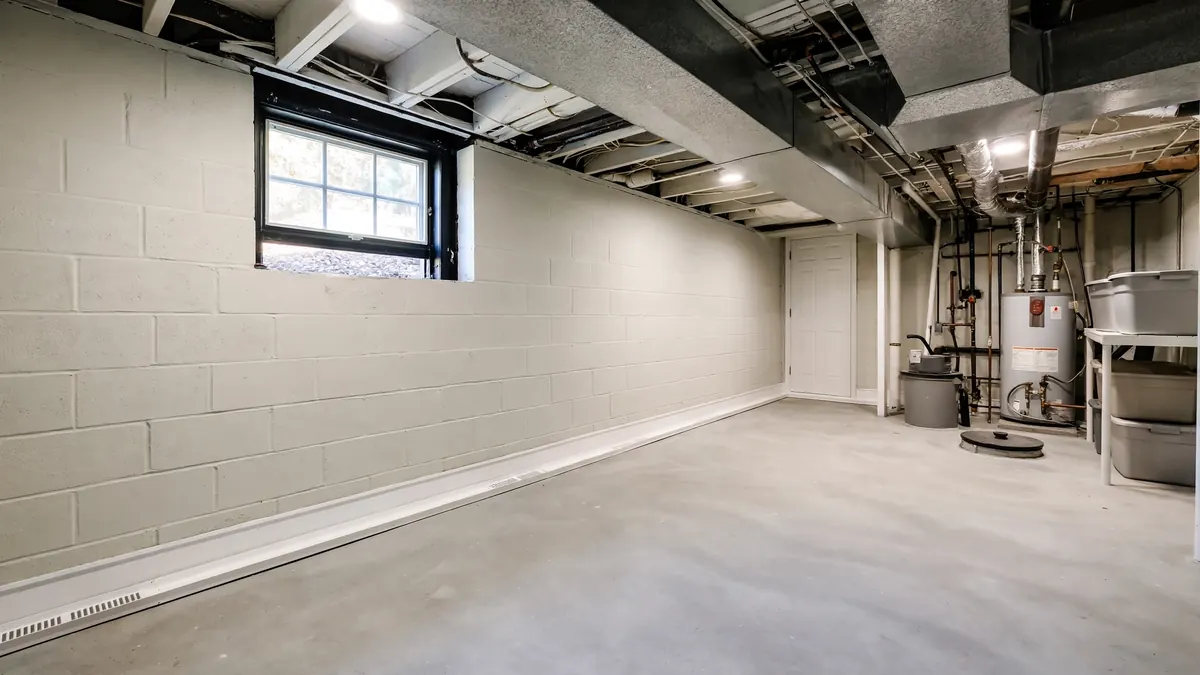
Basement Waterproofing in Youngstown, OH
A wet basement in Youngstown is rarely a one-storm problem. It is usually the same water finding the same weak point, storm after storm, until the wall stains, the floor dampens and the musty smell settles in. Waterproofing fixes the path the water takes, not just the puddle it leaves behind.
Talk to a local waterproofing professional
Describe what is happening in your basement and a local professional will assess the water path and the right fix.
Hours: Mon–Fri 7:00 AM–10:00 PM ET · Sat 8:00 AM–10:00 PM ET · Sun 7:00 AM–9:00 PM ET
What basement waterproofing actually does
Basement waterproofing is the work of keeping groundwater and surface water out of the lowest level of a home, and managing the water that cannot be kept out. In a Youngstown basement that usually means two things working together: a way to stop water pressing through the wall or the floor joint, and a way to collect and remove the water that still arrives. A wall coating alone will not hold back a rising water table. A sump pump alone will not stop a wall that leaks at every mortar joint. The systems that last pair a collection method with a discharge method, so water has somewhere to go other than across the floor.
Most Mahoning Valley homes were built with basements that were never designed to stay dry by modern standards. A house built in the 1930s or 1950s in Youngstown, Boardman or Austintown typically has a block or poured concrete foundation, a floor slab poured inside the footing, and a joint where the wall meets the floor. That joint, called the cove joint, is the most common entry point for water in the whole valley. When the soil around the foundation saturates after heavy rain or spring snowmelt, water pushes sideways against the wall and upward under the slab. It finds the cove joint first, then hairline cracks, then the porous block itself.
A proper waterproofing plan starts by finding which of those paths the water is using in that particular house. A wall that seeps through the block face needs a different answer than a floor joint that runs water after every storm, and both are different from a window well that fills up and spills over the sill. The inspection matters more than any single product, because the wrong system in the right house still leaves a wet floor.
Homeowners sometimes ask whether a coat of waterproof paint counts as waterproofing. Paint can slow moisture moving through a block wall, and it can make a wall look better for a season, but it does not relieve water pressure, it does not collect water, and it peels once the pressure behind it builds. It is a cosmetic step, not a system. Real waterproofing either keeps the water from reaching the wall, collects it before it reaches the floor, or both.
Signs your Youngstown basement needs waterproofing
Water rarely announces itself with a flood. In most Youngstown homes it starts small, and the early signs are easy to dismiss until the damage is already done. The clearest sign is water itself: a puddle after rain, a damp strip along the wall-floor joint, or a floor that darkens in one corner and dries slowly. If it happens after more than one storm, the path is established and it will keep returning.
White, chalky deposits on a block wall are another early warning. That crust is efflorescence, mineral salts left behind when water moves through the masonry and evaporates on the inside face. It means water is travelling through the wall, even on days when the floor looks dry. A wall that shows efflorescence in bands, especially low on the wall, is telling you where the water table sits after wet weather.
A musty smell that never quite leaves, even with the windows open in summer, usually means moisture is feeding mould growth somewhere out of sight, behind stored boxes, behind a finished wall, or under carpet. Rust on the bottom of a furnace, water heater or laundry appliance, and a sump pit that fills and empties constantly during wet weeks, both point the same way. So does paint or parging flaking off the inside of the wall in sheets.
The sign that should never be ignored is a horizontal crack, a wall that bows inward, or a stair-step crack running through block courses. Those are structural symptoms, not just moisture symptoms, and they need a foundation assessment before any waterproofing work begins. Waterproofing a wall that is moving will not hold, and the crack will keep opening.
Why basements leak in the Mahoning Valley
Youngstown sits in the Mahoning River valley in northeast Ohio, and the valley shapes how water behaves around a foundation. The city averages roughly 39 to 41 inches of precipitation a year, spread across all four seasons, with about 40 to 45 inches of snow on top of that. Winter snow does not drain away; it sits, then melts in March and April while the ground is still frozen, which sends a large volume of water at foundations all at once. Summer brings a different pattern: short, heavy thunderstorms that drop an inch of rain in an hour onto soil that is already wet.
The housing stock makes the problem worse. Much of the valley was built between the 1920s and the 1960s, when homes were framed on block foundations with exterior damp-proofing that was never meant to last a century. That coating, usually a thin tar or asphalt layer, breaks down over decades. Drain tile installed at the footing in that era was often clay pipe, which shifts, cracks and clogs with silt. Once the exterior defence is gone, the wall itself becomes the defence, and block walls are porous by nature.
Grading is the third piece. Many older Youngstown lots slope gently toward the house rather than away from it, because the street, the sidewalk and the driveway were all built before modern grading practice. Downspouts that discharge at the foundation, a driveway that pitches toward the garage wall, and a neighbour's lot that drains across the property line all push water to the same place. Add a high water table near the river and its tributaries, and the result is a basement that wets up after every sustained rain.
None of this means a Youngstown basement cannot be kept dry. It means the solution has to match the valley: a system that handles both the slow, steady pressure of a high water table and the sudden surge of a summer thunderstorm or a spring thaw.
How a waterproofing job works, step by step
Every job starts with an inspection of the basement and the outside of the house. The technician walks the perimeter inside, looking for the water path: the cove joint, cracks, window wells, the sump pit, and any place where the wall has been patched before. Outside, the check covers grading, gutters, downspouts, the driveway pitch and the soil line against the wall. The inspection usually takes less than an hour, and it decides everything that follows.
For an interior system, the next step is to open the floor along the wall where water enters. A narrow trench is cut in the slab, usually about a foot wide, and the drain channel and gravel bed are set at the footing. The channel connects to a sump basin, and the wall is covered with a drainage membrane that directs wall seepage down into the channel instead of onto the floor. The trench is then re-concreted, leaving a clean, narrow slot where the floor meets the wall.
The sump pump is the heart of the system. It sits in the basin, and when water rises to the float level it pumps the water out through a discharge line that runs outside and away from the house. A check valve on the line stops the water from running back into the pit. Where power cuts are a concern, a battery backup pump sits beside the main pump and takes over if the power fails or the main pump fails.
Exterior work is different and heavier. It means excavating down to the footing, cleaning the wall, applying a waterproof membrane and drainage board, and replacing the drain tile at the base. It is the only method that stops water before it touches the wall, and it is the right answer when the wall itself is deteriorating or when the problem is a single, localised failure. Most Youngstown homes get an interior system, because it handles the water table and the cove joint without disturbing the yard, the driveway or the porch.
The last step is the one homeowners notice most: the floor is restored, the work area is cleaned, and the system is tested by running water into the channel and watching the pump cycle. A job is not finished when the concrete is poured. It is finished when the pump runs, the discharge flows away from the house, and the basement stays dry through the next rain.
Interior or exterior: which fits your home
Interior waterproofing manages water after it reaches the foundation. An interior drain system collects water at the cove joint and along the wall, and the sump pump removes it. It works in almost any weather, it can be installed year-round, and it does not disturb landscaping, driveways or porches. Its weakness is that the wall still gets wet on the outside; the system manages the water rather than preventing contact. For most homes with a high water table or a leaking cove joint, that trade is worth it.
Exterior waterproofing prevents contact. The wall is excavated, sealed and drained from the outside, so water never reaches the masonry. It is the strongest answer for a wall that is spalling, for a foundation with a failed exterior coating, or for a new addition where the wall is already exposed. Its weakness is the scale of the work and the disruption: excavation, landscaping repair and the risk of disturbing a driveway, a porch or a gas line all add up, and the work is weather-dependent.
Many homes end up with a combination. An interior drain handles the water table and the cove joint, while a single exterior repair fixes the one wall that is failing, or a window well is rebuilt so it drains instead of filling. The combination is decided by the inspection, not by a catalogue. A home with a sound wall and a wet joint needs interior work. A home with a crumbling wall needs exterior work. A home with both needs both.
What a full waterproofing job includes
A complete interior job includes the drain channel and gravel bed, the wall drainage membrane, the sump basin and pump, the discharge line with check valve, and the concrete restoration of the opened floor. It also includes the small items that decide whether the system lasts: a sealed lid on the basin to keep out debris and radon, a discharge line that runs well away from the foundation and does not freeze in winter, and an alarm that sounds if the water in the pit rises too high.
What it does not include is just as important. Waterproofing does not repair a bowing wall, it does not replace a failed sewer line, and it does not fix a roof leak that runs down inside the wall. If the inspection finds a structural problem, that problem is addressed first, and the waterproofing is designed around the repair. A system installed over a moving wall will fail at the same crack that was already there.
Homeowners should also expect a clear explanation of what to watch after the job: how often the pump should run in wet weather, what the alarm means, where the discharge goes, and what to do if the power goes out during a storm. A system the homeowner understands is a system that gets maintained, and maintenance is what keeps a dry basement dry.
Mistakes that keep Youngstown basements wet
The most common mistake is treating the symptom and missing the source. A homeowner paints the wall, and the wall looks dry for a month, while the water keeps coming through the cove joint and pooling under the paint line. Another common mistake is extending a downspout by three feet and calling the grading fixed, when the lot still slopes toward the house and the water still collects at the wall.
A second mistake is installing a sump pump without a drain system to feed it. A pump in a pit with no channel only removes the water that happens to reach the pit. Water entering twenty feet away along the wall will still cross the floor. The pump and the channel are one system, and installing one without the other leaves half the basement unprotected.
A third mistake is discharging the pump water right back against the house. A discharge line that ends at the foundation, or that drains onto a sidewalk that pitches back toward the wall, recycles the same water. In winter it freezes at the outlet and the pump runs against a blocked line. The discharge has to end well away from the house, on ground that falls away from the foundation.
The last mistake is waiting. A damp basement that is ignored through one wet spring becomes a basement with a mould problem, a damaged furnace, and a floor slab that has been wet so long the efflorescence has eaten into the block. Water problems in the Mahoning Valley do not improve on their own. They get more expensive, one season at a time.
Waterproofing in Youngstown, Boardman and Austintown
Youngstown's neighbourhoods each bring their own version of the same problem. The older streets on the South Side and in the Idora and Cornersburg areas have some of the oldest block foundations in the city, with clay drain tile that has had eighty years to fail. The West Side, around the Mahoning River, sits lower and closer to the water table, so basements there wet up first after a thaw. The North Side and the streets near Youngstown State University mix pre-war homes with post-war ranches, and the two eras leak in different places.
Boardman, just south of the city, is dominated by mid-century ranches and split-levels built in the 1950s and 1960s on clay-heavy soil that holds water against the foundation. Austintown has a similar post-war stock, with many homes on lots that were graded flat rather than pitched away from the house. Canfield and Poland, to the south and east, have newer homes on larger lots, but the same valley soils and the same spring thaw. The system changes with the house, but the water does not change with the ZIP code.
What matters in every one of those towns is the same inspection: where the water enters, what the wall is made of, where the water table sits after a wet week, and where the discharge can go. A waterproofing plan that starts with those four answers will hold. One that starts with a product catalogue will not.
What a proper job looks like
Water path found first
The inspection traces the water to its entry point, so the fix matches the cause.
Pressure relieved, not fought
A drain channel gives water a better path than your floor. Paint and sealant fight pressure and lose.
Pump sized to the house
The pump is sized to the water volume and the lift, with a battery backup for power cuts.
Tested before handover
Water is run into the channel, the pump cycles, and the discharge is checked outside.
From inspection to a dry basement
Inspection
Walk the basement and the outside of the house to find where the water enters, what the wall is made of, and where the water table sits.
Plan
Match the system to the house: drain channel, wall membrane, sump pump, discharge, and battery backup where power cuts are a concern.
Install
Cut the trench, lay the channel and gravel, fit the membrane and the pump, and run the discharge away from the house.
Restore
Re-pour the concrete flush with the floor, clean the work area, and leave the basement usable again.
Test
Run water into the channel, watch the pump cycle, and confirm the discharge flows away from the property.
More waterproofing services
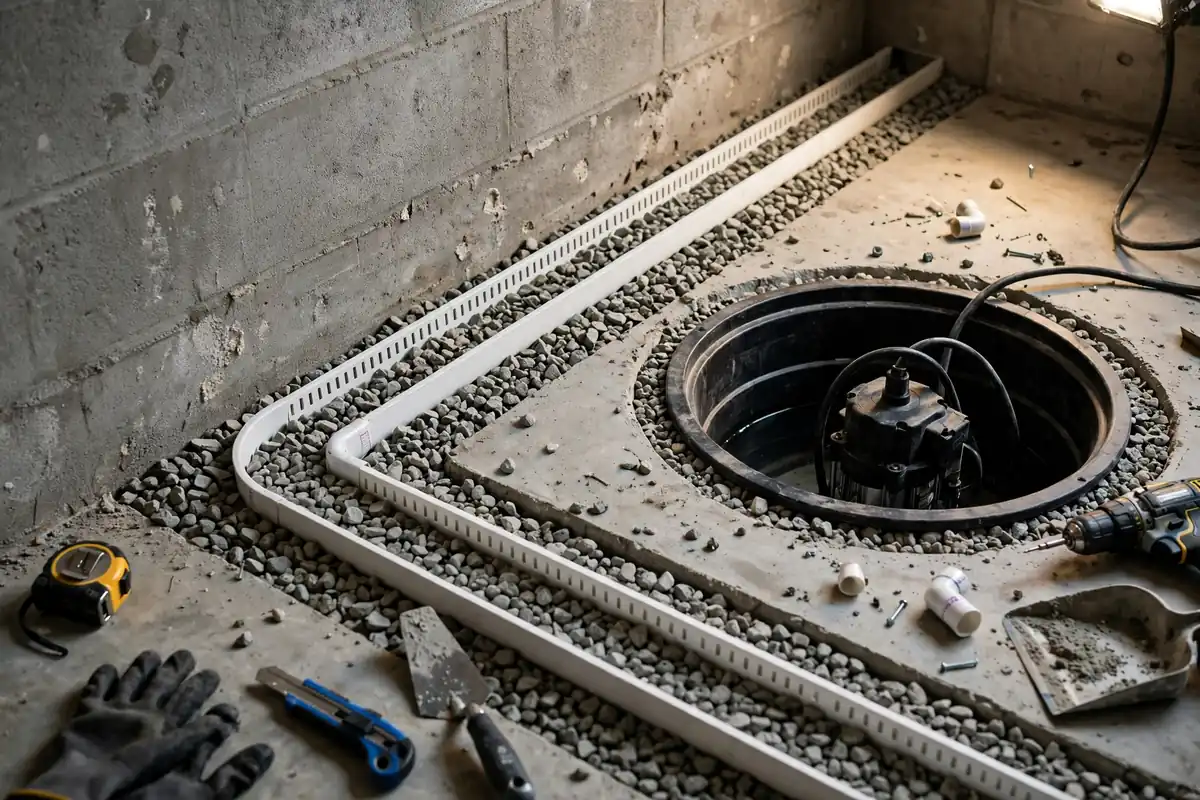 Interior Drain System
Interior drain systems in Youngstown, OH collect water at the wall-floor joint and send it to a sump pump. A proven fix
Learn more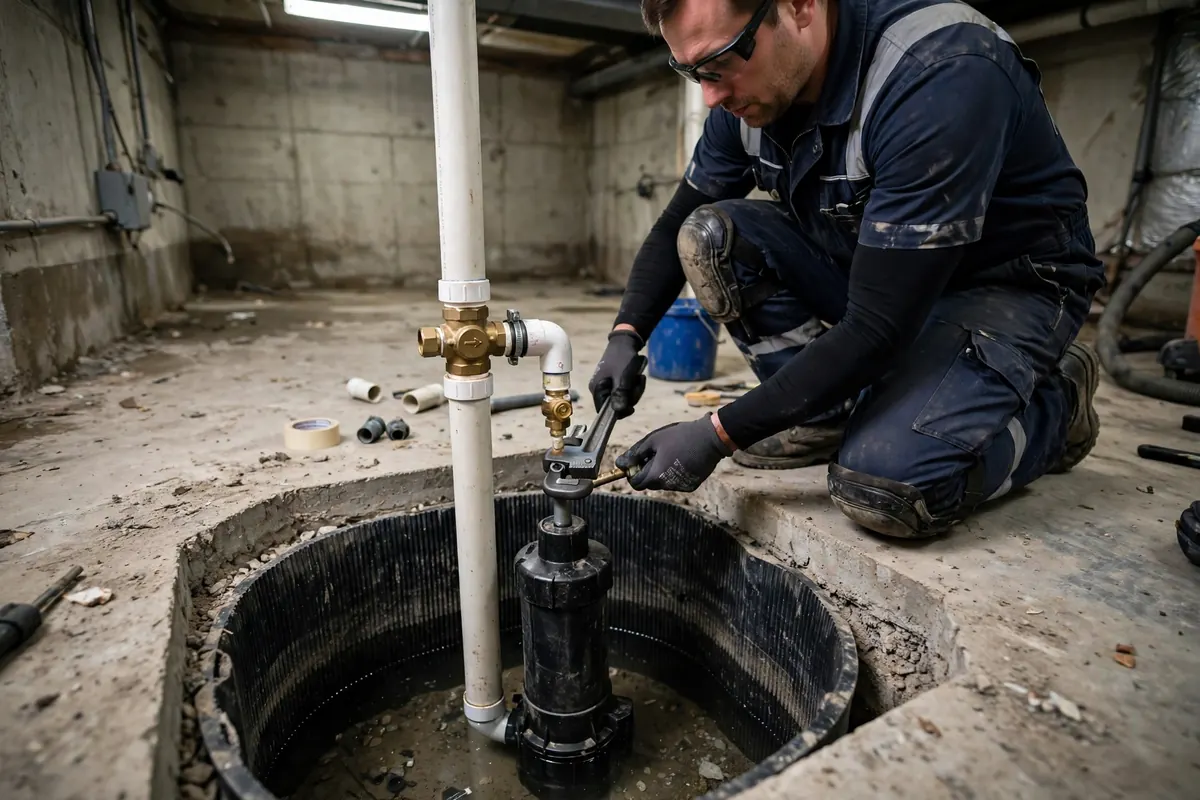 Sump Pump Installation
Sump pump installation in Youngstown, OH for basements that take on water. Submersible pumps, battery backup systems and
Learn more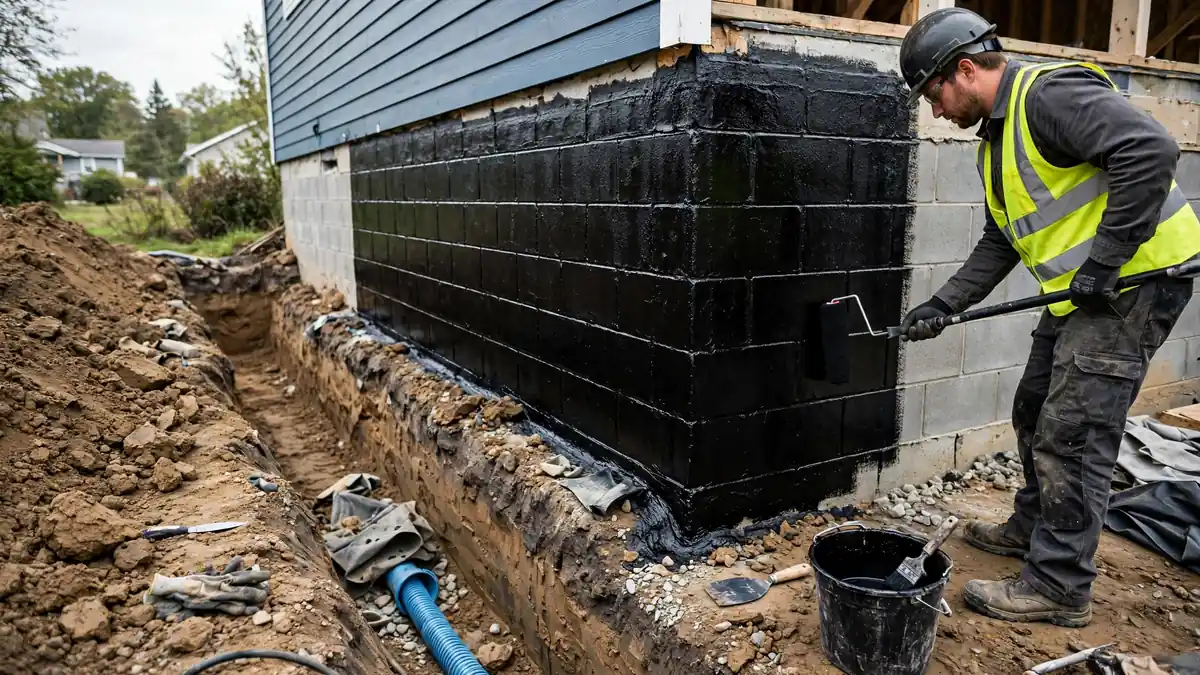 Foundation Waterproofing
Foundation waterproofing in Youngstown, OH: exterior membranes, drainage board and interior systems for block and poured
Learn more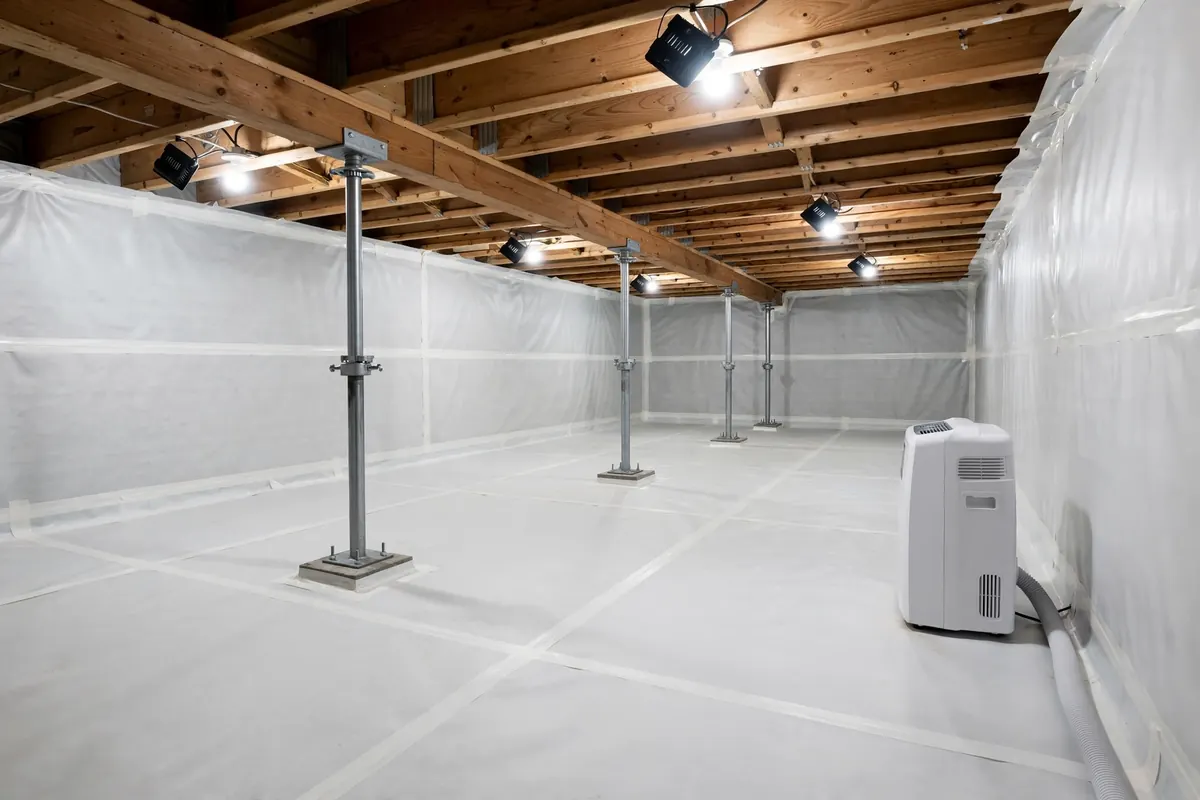 Crawl Space Waterproofing
Crawl space waterproofing in Youngstown, OH: encapsulation, vapor barriers, drainage and dehumidification for damp crawl
Learn more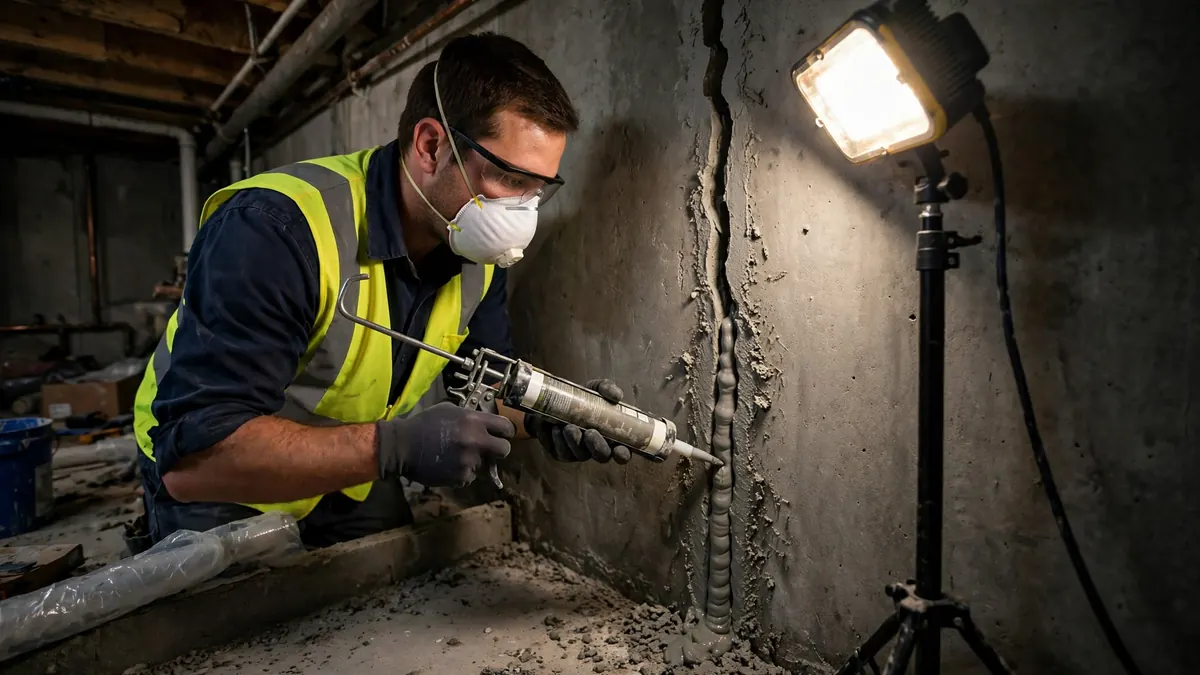 Basement Leak Repair
Basement leak repair in Youngstown, OH: find where the water enters and fix that path. Crack injection, joint sealing an
Learn more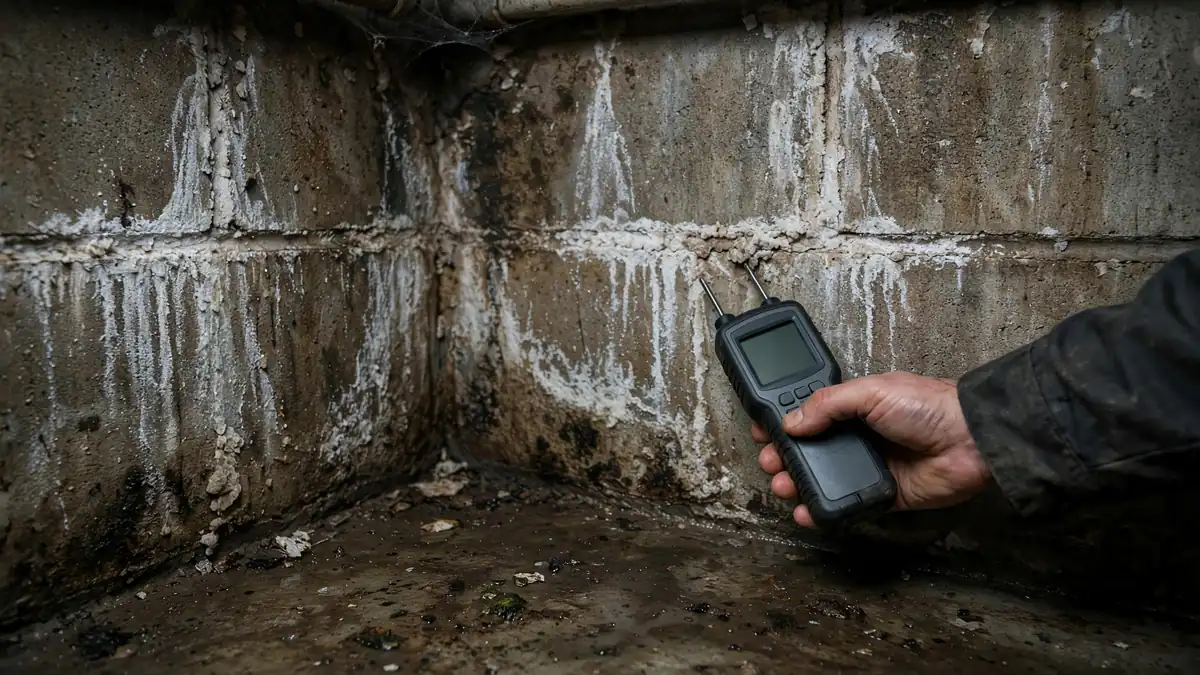 Wet Basement Repair
Wet basement repair in Youngstown, OH for damp floors, seeping walls and musty basements. Find the water path and fix it
Learn moreQuestions, answered
If water appears in the same place after more than one storm, or if the wall shows efflorescence, a musty smell or flaking paint, the problem is a water path, not a one-time leak. A single crack that leaks only during a driving rain can often be repaired on its own. A cove joint that runs water every spring, or a wall that seeps across a wide area, needs a system that collects and removes water, not a patch. An inspection that traces the water path will tell you which one you are dealing with.
An interior drain system is designed for exactly that: it collects water at the wall-floor joint and along the wall, and the sump pump discharges it outside. During a heavy storm the pump will cycle more often, which is normal. What matters is that the discharge line runs well away from the house and does not freeze or clog, and that the pump has a backup if the power fails. A system that is sized to the house and maintained will handle the storms Youngstown gets, including the fast summer downpours.
It fixes the cause of the smell in most cases. A musty smell usually means moisture is feeding mould growth on organic material in the basement, behind stored items, under carpet or inside a finished wall. Once the water path is closed and the basement dries out, the moisture source is gone. If the smell persists after the basement is dry, the cause may be a separate issue such as a sewer gas leak or a damp crawl space, and that needs its own inspection.
Interior waterproofing can be installed year-round, because the work happens inside the basement. Winter is often a good time to schedule it, since the ground is frozen and the basement is at its driest, which makes the inspection clearer. Exterior waterproofing is weather-dependent and is usually scheduled in the warmer months, when the ground can be excavated and the membrane can cure properly.
An interior drain system is built from PVC channel, gravel and concrete, which do not wear out in normal use. The part that needs attention is the sump pump, which is a mechanical device with a working life measured in years, and the discharge line, which needs to stay clear. With the pump tested regularly, the pit kept clean and the discharge checked each spring, the system keeps working for decades. The pump itself is a replaceable part, not the system.
An interior system stops that water from reaching the floor by catching it at the wall with a drainage membrane and directing it into the channel. The wall itself will still get wet on the outside during a storm, but the water is collected before it can pool. Exterior waterproofing is the only method that stops water from touching the wall at all, and it is the right choice when the wall is deteriorating or when the leak is localised to one wall.
The drain system and the pump are two halves of one system. The channel collects the water, and the pump is what removes it from the house. Without a pump, the channel fills and the water has nowhere to go. A gravity drain to daylight works on a sloped lot where the outlet can sit below the basement floor, but most Youngstown lots are flat enough that a pump is needed. A battery backup pump is worth considering in any home where a power cut during a storm would leave the main pump dead.
Clear the wall where the work will happen, moving stored items, shelving and anything that blocks access to the floor along the wall. Note where water appears after rain, and when, because that record helps the inspection. Make sure the crew can reach the electrical panel, since the pump needs a dedicated outlet, and clear a path for carrying out concrete debris. The crew will handle the cutting, the dust control and the cleanup.
Talk to a local waterproofing professional
Describe what is happening in your basement and a local professional will assess the water path and the right fix.
Get in touch
Talk to a local waterproofing professional about your basement.
Hours: Mon–Fri 7:00 AM–10:00 PM ET · Sat 8:00 AM–10:00 PM ET · Sun 7:00 AM–9:00 PM ET
What to have ready
- Where the water appears, and after what kind of weather
- Whether the basement has a sump pump, and whether it runs
- Photos of the wall, the floor joint, or the water itself