Exterior Waterproofing in Youngstown, OH
Exterior waterproofing is the only method that stops water before it touches the wall. It is also the heaviest job in waterproofing, and the one that should be chosen for the right reasons.
Talk to a local waterproofing professional
Describe what is happening in your basement and a local professional will assess the water path and the right fix.
Hours: Mon–Fri 7:00 AM–10:00 PM ET · Sat 8:00 AM–10:00 PM ET · Sun 7:00 AM–9:00 PM ET
What exterior waterproofing is
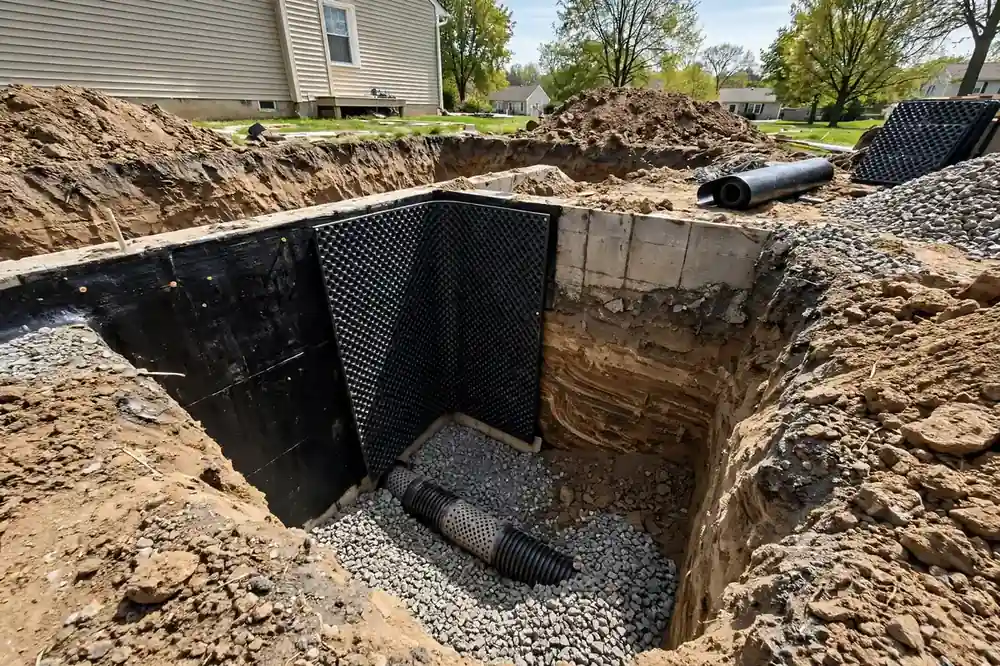
Exterior waterproofing means excavating the soil away from the foundation wall, down to the footing, and applying a waterproof membrane and a drainage board to the outside face of the wall. New drain tile is laid at the footing, in gravel, and pitched to a sump pit or a daylight outlet. The trench is backfilled, the grading is restored, and the wall is protected from the outside for the first time since the house was built.
The method is the oldest in waterproofing, and it is still the strongest. It works because it addresses the water where it first arrives, at the outside face of the wall, rather than managing it after it has already passed through. A wall that is sealed from the outside stays dry, and a dry wall does not deteriorate, does not grow mould, and does not pass water into the basement.
The work is heavy. Excavation means digging, and digging means a yard that is disturbed, a driveway or a porch that may have to be worked around, and a job that takes days. It is also weather-dependent, because excavation in heavy rain or frozen ground is slow and risky. For those reasons, exterior work is chosen when it is the right answer, not as a default.
Most Youngstown homes do not need a full exterior excavation. They need an interior drain, because the problem is the water table and the cove joint, not the wall. Exterior work is the right answer when the wall itself is the problem: when it is spalling, when the mortar is failing, when the exterior coating is gone, or when the leak is localised to one wall that can be fixed from the outside.
When exterior waterproofing is the right choice
The clearest case is a deteriorating wall. A block wall whose faces are flaking off, whose mortar is soft and crumbling, or whose courses are shifting needs exterior protection, because no interior coating will hold the wall together. The membrane and the drainage board protect the wall from further water damage, and the excavation lets the wall be repaired properly before it is sealed.
A second case is a localised failure. A single wall that leaks, while the rest of the basement stays dry, is often a failed exterior coating or a broken drain tile on that one side. Excavating that one wall, sealing it, and replacing the tile is a targeted repair, and it is often cheaper than a full interior system that the house does not need.
A third case is new construction or an addition. When a wall is already exposed, sealing it from the outside is straightforward and inexpensive, and it protects the wall from the start. It is far cheaper to waterproof a wall that is already open than to excavate it later.
A fourth case is a home where the interior cannot be disturbed. A finished basement with a high-end fit-out, or a basement that cannot be cut because of a structural slab, may be a better candidate for exterior work, because the disruption happens outside rather than inside.
How exterior waterproofing is done
The job starts with the excavation, which is done in sections so the house is never left unsupported. The soil is dug away from the wall down to the footing, and the wall is cleaned of loose material, old coating and soil. Any cracks are repaired, and a wall that is spalling is parged to give the membrane a sound surface.
The membrane goes on next. Modern membranes are thick, flexible sheets or spray-applied coatings that bond to the wall and bridge small cracks. A drainage board is fixed over the membrane, which protects it from damage during backfill and gives water a path down to the drain tile. The combination is what makes the system work: the membrane stops the water, and the drainage board makes sure the water does not sit against the membrane under pressure.
At the footing, new drain tile is laid in washed gravel, pitched toward a sump pit or a daylight outlet. The old clay tile is usually removed, because it is cracked and silted and cannot be trusted. The trench is backfilled with clean gravel near the wall, to drain, and soil above, and the grading is restored so water runs away from the house.
The last step is restoration. The lawn, the planting beds and any hardscaping in the excavated strip are rebuilt, and the grading is checked to make sure water runs away from the wall. A job that is not restored is not finished, because bad grading will send water straight back to the wall that was just sealed.
Membranes and drainage boards
The membrane is the heart of the system. Modern membranes are either sheet membranes, which are thick, flexible rolls bonded to the wall, or spray-applied membranes, which are liquid coatings that cure into a seamless, rubbery layer. Both are far better than the thin tar coating that was applied to Youngstown foundations in the 1950s, which cracked and peeled within a decade.
A sheet membrane is the usual choice for a block wall, because it bridges the mortar joints and the uneven surface. A spray membrane is the usual choice for a poured wall, because it follows the smooth surface and seals every crack and cold joint. The choice is made by the wall, not by preference.
The drainage board is a dimpled plastic sheet fixed over the membrane. Its dimples create a gap between the membrane and the soil, so water runs down the gap to the drain tile instead of pressing against the membrane. It also protects the membrane from rocks and roots during backfill, which is the most common cause of a membrane failure.
The drain tile at the footing is perforated pipe, laid in washed gravel, with a filter fabric to keep silt out. It collects the water that runs down the drainage board and carries it to the sump pit or to daylight. Without the tile, the water would pool at the footing and press against the wall from below.
What exterior work costs the homeowner in disruption
Excavation disturbs the yard. The lawn along the wall will be dug up, planting beds will be disturbed, and any hardscaping in the strip, such as a walkway or a patio, may have to be removed and rebuilt. A driveway or a porch that sits against the wall may have to be cut or worked around, and that is discussed during the inspection before any work starts.
The job takes time. A single wall takes two to four days, and a full perimeter takes a week or more, depending on the depth, the soil and what has to be worked around. The house is habitable throughout, but the yard is a work site, and the basement may be noisy during the excavation.
The weather matters. Excavation in heavy rain is slow, because the trench fills with water, and excavation in frozen ground is slow, because the soil is hard. Exterior work is usually scheduled in the warmer months, when the ground can be dug and the membrane can cure properly.
The restoration is part of the job. The grading is rebuilt, the lawn is restored, and the drainage is checked. A job that leaves the yard in a worse state than it found it has not been finished properly.
Mistakes that ruin exterior waterproofing
The most damaging mistake is backfilling with the same clay soil that was dug out. Clay holds water against the membrane and swells when it is wet, pressing hard on the wall. The backfill near the wall should be clean gravel, which drains, and the clay should go further out, where it cannot press on the wall.
A second mistake is a drain tile with no outlet. Tile laid at the footing with nowhere to drain fills with water and stops working. It has to run to a sump pit, where a pump removes the water, or to a daylight outlet below the basement floor level. A tile that ends in a dead end is worse than no tile at all.
A third mistake is a membrane applied to a wall that was not cleaned or repaired first. A membrane bonded to loose material, or to a wall that is crumbling, will peel away, and the water will get behind it. The wall has to be sound before it is sealed.
The last mistake is excavating the whole perimeter when only one wall needs it. A full excavation is expensive and disruptive, and it should only be done when the whole foundation needs it. A targeted repair on the one failing wall is often the better answer, and it leaves the rest of the yard untouched.
Exterior waterproofing across the cluster
Youngstown's oldest homes, on the South Side and the West Side, are the strongest candidates for exterior work, because their block walls are spalling and their mortar is soft. Those walls need the protection of a membrane and a drainage board, and the excavation lets the wall be repaired properly before it is sealed.
Boardman and Austintown have a younger stock, and the common case for exterior work there is a single wall that leaks while the rest of the basement stays dry. A targeted excavation on that one wall, with a new membrane and new drain tile, is often the right answer, and it is cheaper than a full interior system.
Canfield and Poland have larger lots, which makes excavation easier, because there is room to work and room to put the soil. Those homes are often good candidates for exterior work when the wall needs it, because the disruption is lower and the restoration is simpler.
How to tell if exterior work was done well
A well-done exterior job is visible in the details. The membrane is continuous, with no gaps or wrinkles, and it runs from the top of the wall down to the footing. The drainage board is fixed over the membrane, with its dimples facing the soil, so water runs down the gap to the drain tile. The drain tile is laid in washed gravel, pitched toward a sump pit or a daylight outlet, and the trench is backfilled with clean gravel near the wall.
The grading is the most visible sign. The ground should slope away from the house, so water runs away from the wall rather than toward it. A job that leaves the ground flat, or sloping toward the house, has not been finished properly, because bad grading will send water straight back to the wall that was just sealed.
The restoration is the second most visible sign. The lawn, the planting beds and any hardscaping in the excavated strip should be rebuilt, and the yard should look like a yard again, not a work site. A job that leaves the yard in a worse state than it found it has not been finished properly.
The test is the rain. A wall that is sealed from the outside should stay dry on the inside, even during a heavy storm, and the basement should stay dry through the next spring. A wall that still seeps after exterior work has a gap in the membrane, a tile with no outlet, or a grading problem, and it needs to be looked at again.
What a proper job looks like
Water path found first
The inspection traces the water to its entry point, so the fix matches the cause.
Pressure relieved, not fought
A drain channel gives water a better path than your floor. Paint and sealant fight pressure and lose.
Pump sized to the house
The pump is sized to the water volume and the lift, with a battery backup for power cuts.
Tested before handover
Water is run into the channel, the pump cycles, and the discharge is checked outside.
From inspection to a dry basement
Inspection
Walk the basement and the outside of the house to find where the water enters, what the wall is made of, and where the water table sits.
Plan
Match the system to the house: drain channel, wall membrane, sump pump, discharge, and battery backup where power cuts are a concern.
Install
Cut the trench, lay the channel and gravel, fit the membrane and the pump, and run the discharge away from the house.
Restore
Re-pour the concrete flush with the floor, clean the work area, and leave the basement usable again.
Test
Run water into the channel, watch the pump cycle, and confirm the discharge flows away from the property.
More waterproofing services
 Basement Waterproofing
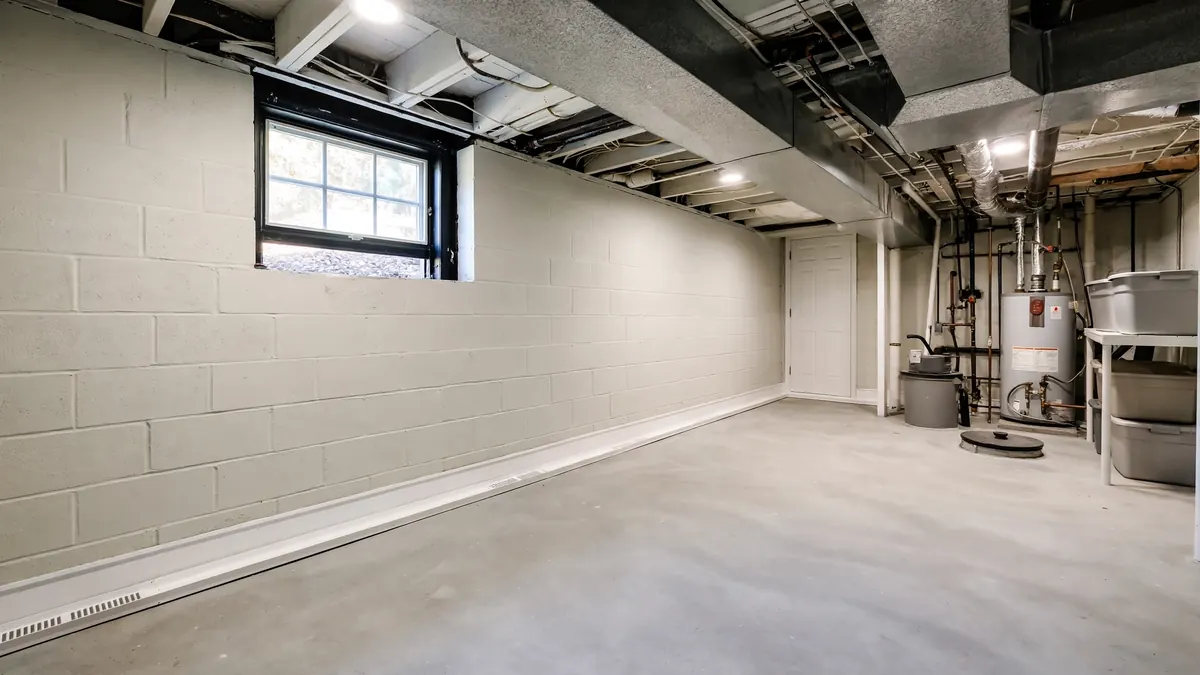
Basement waterproofing in Youngstown, OH for wet basements, wall leaks and seepage. Interior drains, sump pumps and foun
Learn more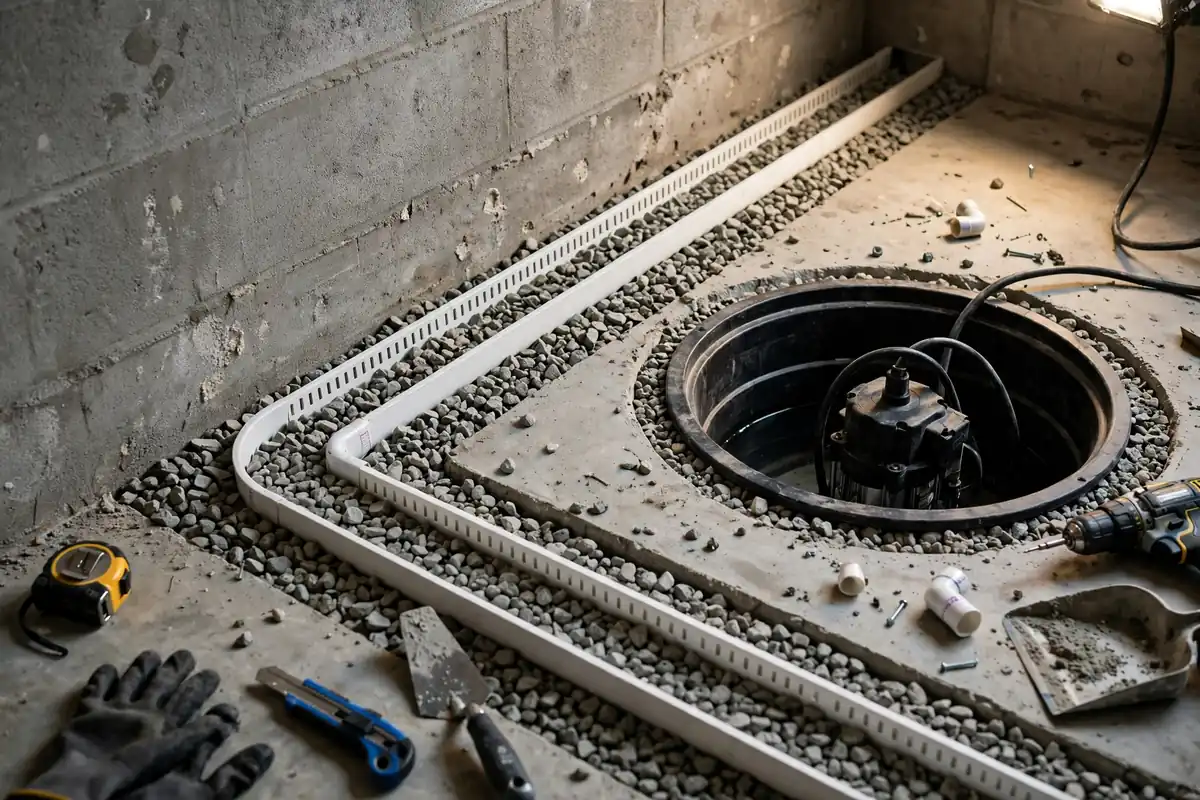 Interior Drain System
Interior drain systems in Youngstown, OH collect water at the wall-floor joint and send it to a sump pump. A proven fix
Learn more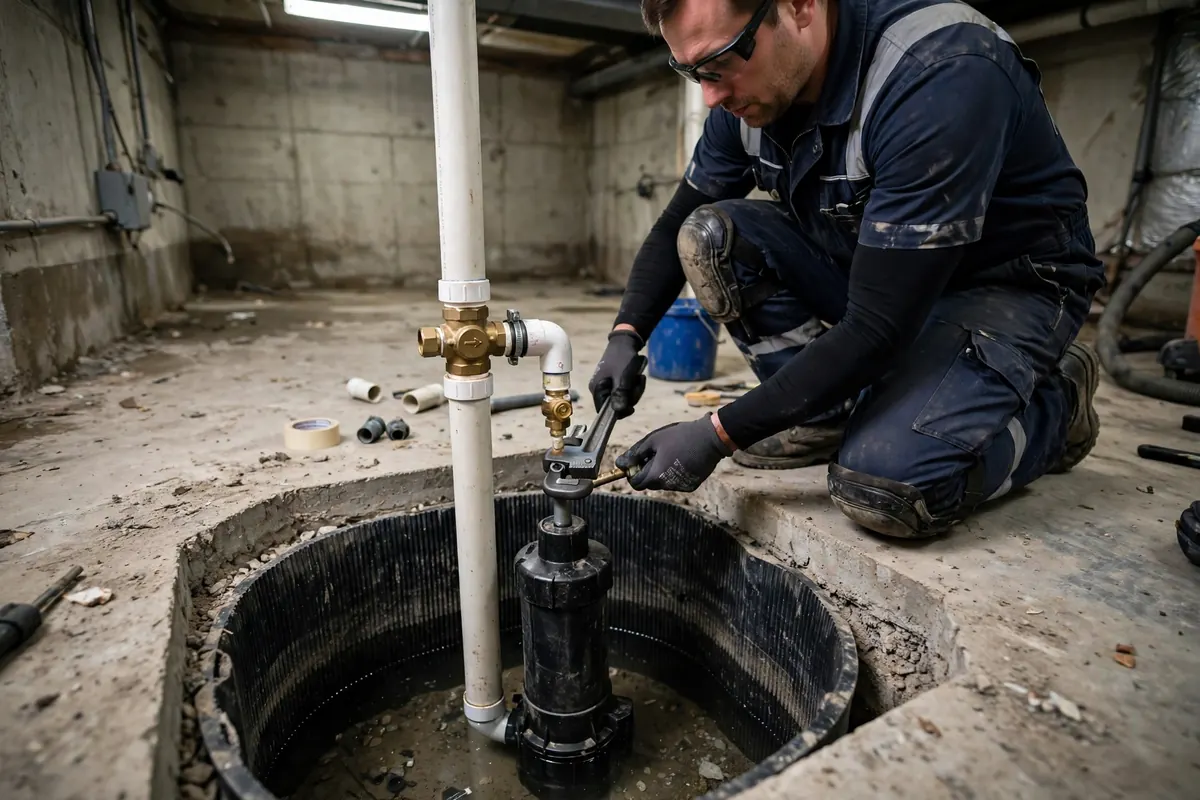 Sump Pump Installation
Sump pump installation in Youngstown, OH for basements that take on water. Submersible pumps, battery backup systems and
Learn more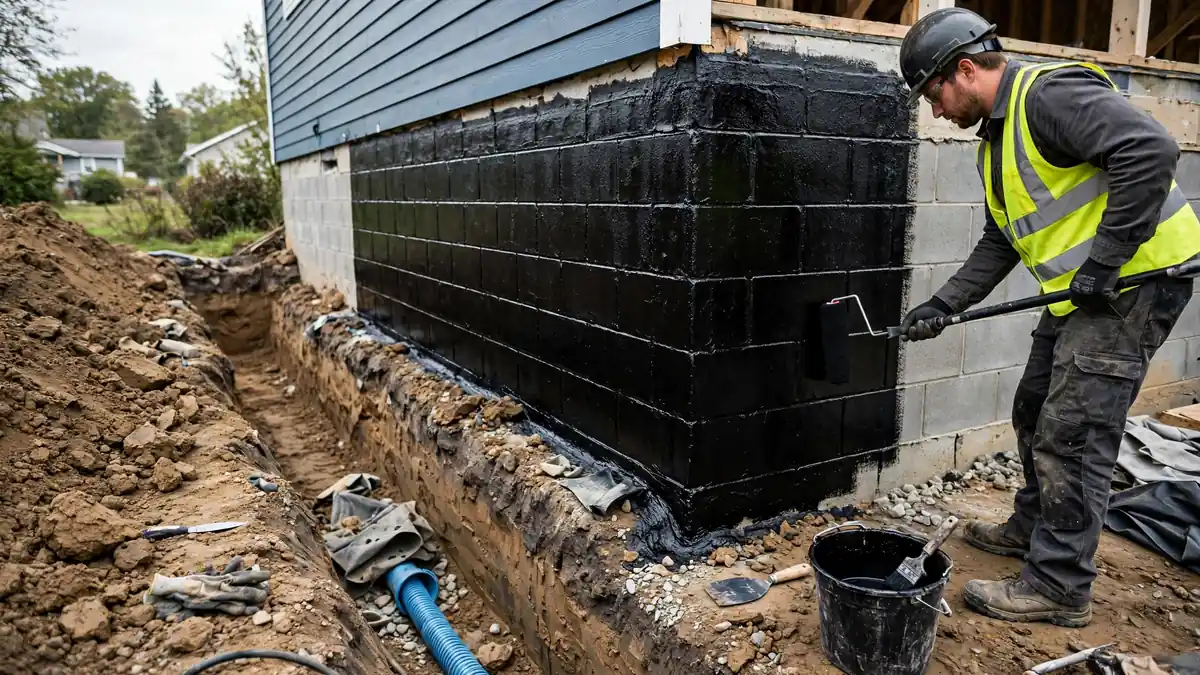 Foundation Waterproofing
Foundation waterproofing in Youngstown, OH: exterior membranes, drainage board and interior systems for block and poured
Learn more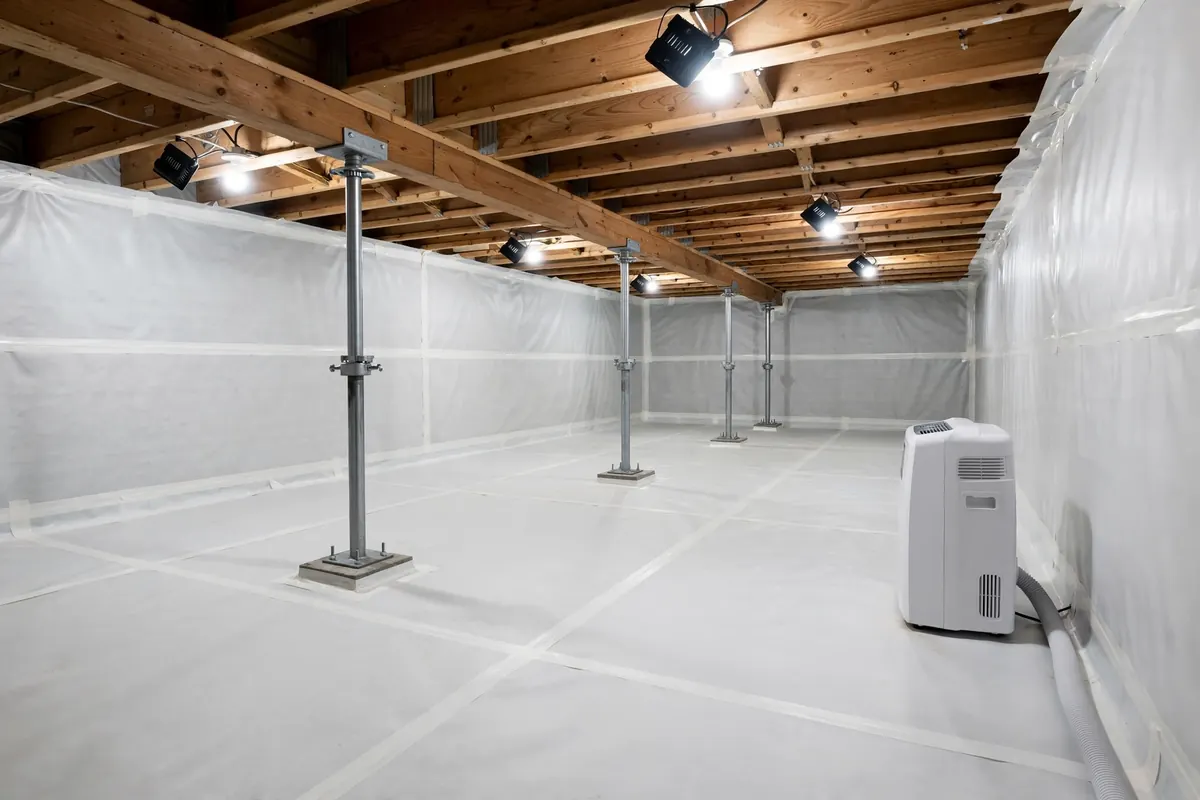 Crawl Space Waterproofing
Crawl space waterproofing in Youngstown, OH: encapsulation, vapor barriers, drainage and dehumidification for damp crawl
Learn more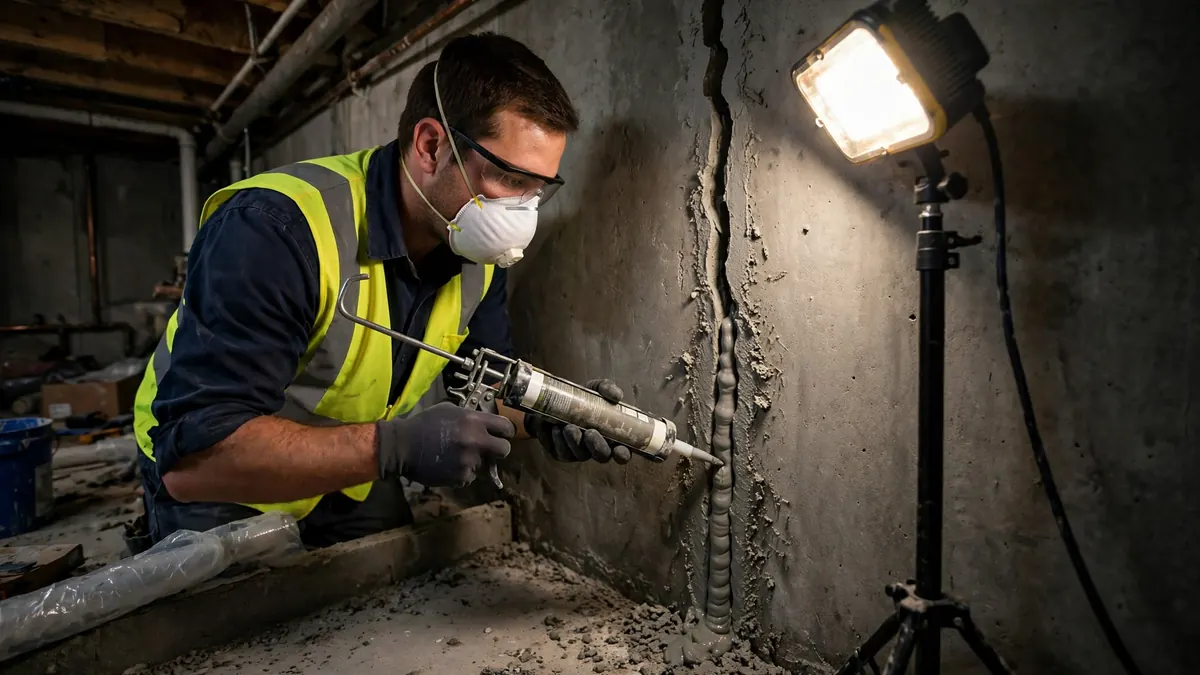 Basement Leak Repair
Basement leak repair in Youngstown, OH: find where the water enters and fix that path. Crack injection, joint sealing an
Learn moreQuestions, answered
It is different, not simply better. Exterior waterproofing stops water before it touches the wall, which is the strongest protection for a deteriorating wall. Interior waterproofing manages the water after it enters, which is the right answer for a high water table and a leaking cove joint. Most Youngstown homes need an interior system, because the problem is the water table. A home with a crumbling wall needs exterior work. Many homes end up with both.
A modern membrane and drainage board, properly installed and protected by gravel backfill, lasts for decades. The membrane does not wear out in normal use, because it is protected from sunlight and from damage. The drain tile, if it is laid in washed gravel with a filter fabric, stays open. The part that needs attention is the grading and the downspouts, which have to keep directing water away from the wall.
It can, if the driveway or porch sits against the wall that needs to be excavated. That is discussed during the inspection, before any work starts, and the repair or the work-around is part of the plan. In many cases the excavation can be done without disturbing a driveway, by working in sections. Where a driveway has to be cut, the restoration is part of the job.
It is difficult. Frozen ground is hard to dig, and a membrane needs a certain temperature to cure properly. Exterior work is usually scheduled in the warmer months. Interior work, by contrast, can be done year-round, because it happens inside the basement. If a wall needs exterior work urgently, it can be done in winter, but it will take longer and involve more work.
Not necessarily. An interior drain handles the water table and the cove joint, and for most homes that is enough. Exterior work is needed when the wall itself is deteriorating, when the leak is localised to one wall, or when the interior system cannot keep up because the wall is letting in too much water. The inspection will tell you whether the wall needs exterior protection or whether the interior system is sufficient.
The strip along the wall will be disturbed, and planting beds, shrubs and lawn in that strip will need to be restored. The restoration is part of the job, and the grading is rebuilt so water runs away from the house. Shrubs and small trees that are in the way are usually moved or replaced. The yard will look like a work site during the job, and it will be restored when the job is finished.
Yes, if it is done properly. The membrane, the drainage board and the drain tile are permanent materials, and they do not wear out. The system fails only if the backfill is wrong, if the tile has no outlet, or if the grading is allowed to send water back to the wall. With the backfill, the outlet and the grading all correct, the wall stays dry for the life of the home.
If the wall is spalling, if the mortar is soft and crumbling, if the wall is damp through its full thickness even in dry weather, or if a single wall leaks while the rest of the basement stays dry, exterior work is likely needed. An inspection that looks at the wall from the outside, and at the soil and the grading, will confirm it. A wall that is sound but wet usually needs an interior system, not an excavation.
Talk to a local waterproofing professional
Describe what is happening in your basement and a local professional will assess the water path and the right fix.
Get in touch
Talk to a local waterproofing professional about your basement.
Hours: Mon–Fri 7:00 AM–10:00 PM ET · Sat 8:00 AM–10:00 PM ET · Sun 7:00 AM–9:00 PM ET
What to have ready
- Where the water appears, and after what kind of weather
- Whether the basement has a sump pump, and whether it runs
- Photos of the wall, the floor joint, or the water itself