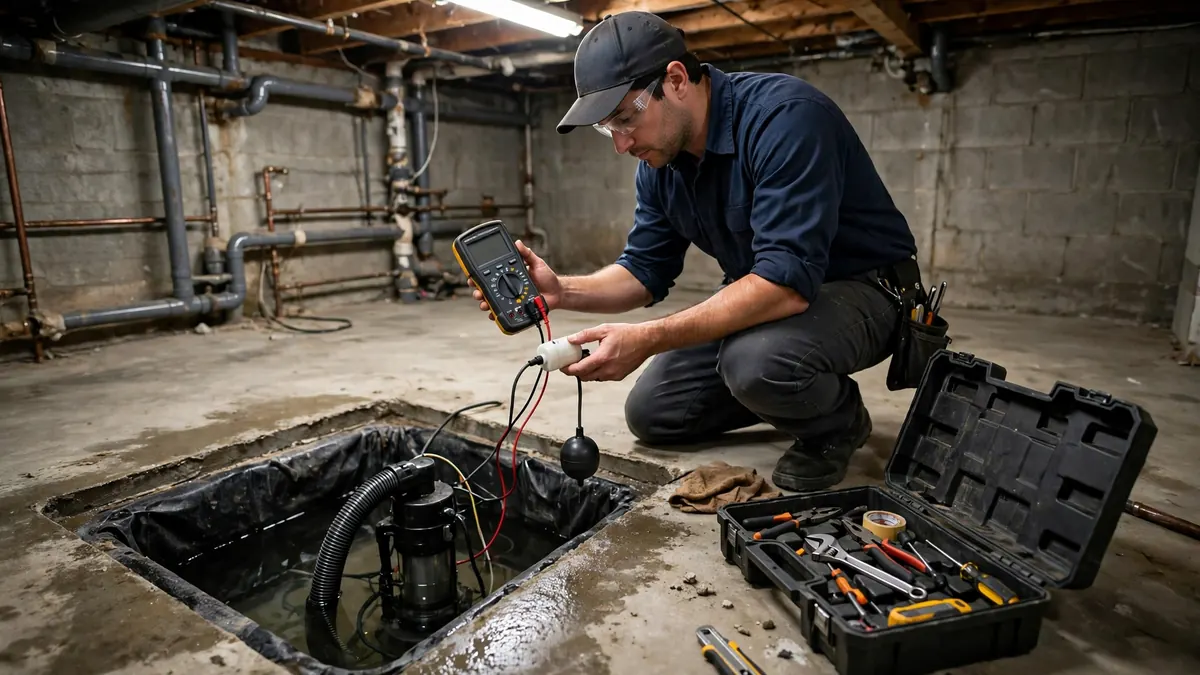
Sump Pump Repair in Youngstown, OH
A sump pump usually fails in the most unhelpful way possible: silently, months before the storm that needs it, and without any sign until the water is already on the floor.
Talk to a local waterproofing professional
Describe what is happening in your basement and a local professional will assess the water path and the right fix.
Hours: Mon–Fri 7:00 AM–10:00 PM ET · Sat 8:00 AM–10:00 PM ET · Sun 7:00 AM–9:00 PM ET
Why sump pumps fail
A sump pump fails for a small number of reasons, and they are all preventable. The most common is a stuck float switch. The float rises with the water and turns the pump on, and it falls as the water drops and turns the pump off. If the float catches on the discharge pipe, the basin wall or the power cord, it will not rise, and the pump will not start. If the float is waterlogged, it will not float, and the pump will not start either.
The second most common reason is a failed check valve. The check valve stops the water in the discharge pipe from running back into the pit when the pump stops. If the valve fails, the water runs back, the pump starts again a few seconds later, and the pump short-cycles until the switch or the motor wears out. A pump that cycles on and off every few seconds is a pump with a failed check valve.
The third reason is a worn impeller or a jammed pump. Silt in the pit, debris in the water, or a pump that has been running dry will wear the impeller, and the pump will hum without moving water. A pump that grinds or rattles is a pump with a worn or jammed impeller, and it needs to be cleaned or replaced.
The fourth reason is electrical. A tripped breaker, a failed outlet, or a pump that has burned out its motor will not run at all. A pump that is more than seven or eight years old and has never been serviced is living on borrowed time, and it tends to fail during the storm that needs it most.
Diagnosing a sump pump problem
Diagnosis starts with the simplest checks. Is the pump plugged in? Is the breaker tripped? Is the outlet working? Is the float able to move, or is it caught on something? Those checks take a minute, and they solve a surprising number of problems.
The next step is to test the pump. Pour a bucket of water into the pit and watch what happens. If the pump starts and the water level drops, the pump works, and the problem is elsewhere, perhaps the discharge. If the pump hums without pumping, the impeller is jammed or worn. If the pump does not start at all, the float, the switch or the motor has failed.
The discharge is checked next. Is water flowing out of the outlet outside? If the pump runs but no water comes out, the discharge is blocked, frozen or disconnected. If the water comes out and then runs back into the pit, the check valve has failed.
The diagnosis ends with a decision: repair or replace. A stuck float, a failed check valve, or a clogged discharge can be repaired. A burned-out motor, a worn impeller, or a pump that is more than ten years old is usually replaced, because the repair will not last and the pump will fail again during the next storm.
Common sump pump repairs
A stuck float is freed by clearing the obstruction and securing the cords out of the float's path. A waterlogged float is replaced. A float switch that has failed is replaced, and the new switch is adjusted so the pump starts before the water reaches the floor and stops before the pit is empty.
A failed check valve is replaced, and the new valve is fitted on the vertical run, close to the pump, so the water in the pipe does not fall back into the pit. The valve has to be fitted the right way round, or it will block the discharge instead of the backflow.
A jammed impeller is cleaned, and the pit is cleaned of silt and debris. The pump is set on a brick or a stand, so it does not sit in silt, and the pit is fitted with a sealed lid to keep debris out.
A tripped breaker or a failed outlet is repaired by an electrician, and the pump is put on a dedicated circuit where possible, so it does not share power with other appliances that could trip the breaker.
When to repair and when to replace
A pump that is less than seven years old, with a single failed part, is usually worth repairing. A float switch, a check valve or a jammed impeller can be fixed, and the pump will work for years afterwards. A pump that is more than ten years old, or a pump that has failed more than once, is usually replaced, because the next failure is already on its way.
A pump that is undersized for the house should be replaced, not repaired, because the repair will not change the capacity. A pump that runs constantly and never keeps up is a pump that is too small, and a larger pump, with a larger basin, is the answer.
A pump that has been under water, because the basement flooded, should be inspected before it is used again. Water damage to the motor is not always visible, and a pump that has been submerged may fail without warning. In many cases, a flooded pump is replaced rather than repaired.
The decision is made by the inspection, not by the age alone. A pump that is old but well maintained can be worth repairing. A pump that is young but badly installed is worth replacing. The inspection looks at the pump, the pit, the discharge and the water volume, and the decision follows from what is found.
Keeping a repaired pump working
A repaired pump needs the same maintenance as a new one. Test it a few times a year by pouring water into the pit and watching it cycle. Keep the pit clean of debris. Check the discharge outlet each spring for blockages. If the system has a battery backup, check the battery. A few minutes of checking each season is what keeps the pump ready for the storm that matters.
The float needs clear space to move, and the cords need to be secured out of its path. The pump needs to sit on a stand, not in silt. The discharge needs to run away from the house, and the outlet needs to be protected from freezing. Those are the small things that decide whether a pump works when it is needed.
A water alarm in the pit is worth adding during a repair, because it sounds when the water rises above the normal level, which means the pump has failed or the power is out. An alarm that is heard in time can save a basement, because the homeowner can act before the water reaches the floor.
What a proper job looks like
Water path found first
The inspection traces the water to its entry point, so the fix matches the cause.
Pressure relieved, not fought
A drain channel gives water a better path than your floor. Paint and sealant fight pressure and lose.
Pump sized to the house
The pump is sized to the water volume and the lift, with a battery backup for power cuts.
Tested before handover
Water is run into the channel, the pump cycles, and the discharge is checked outside.
From inspection to a dry basement
Inspection
Walk the basement and the outside of the house to find where the water enters, what the wall is made of, and where the water table sits.
Plan
Match the system to the house: drain channel, wall membrane, sump pump, discharge, and battery backup where power cuts are a concern.
Install
Cut the trench, lay the channel and gravel, fit the membrane and the pump, and run the discharge away from the house.
Restore
Re-pour the concrete flush with the floor, clean the work area, and leave the basement usable again.
Test
Run water into the channel, watch the pump cycle, and confirm the discharge flows away from the property.
More waterproofing services
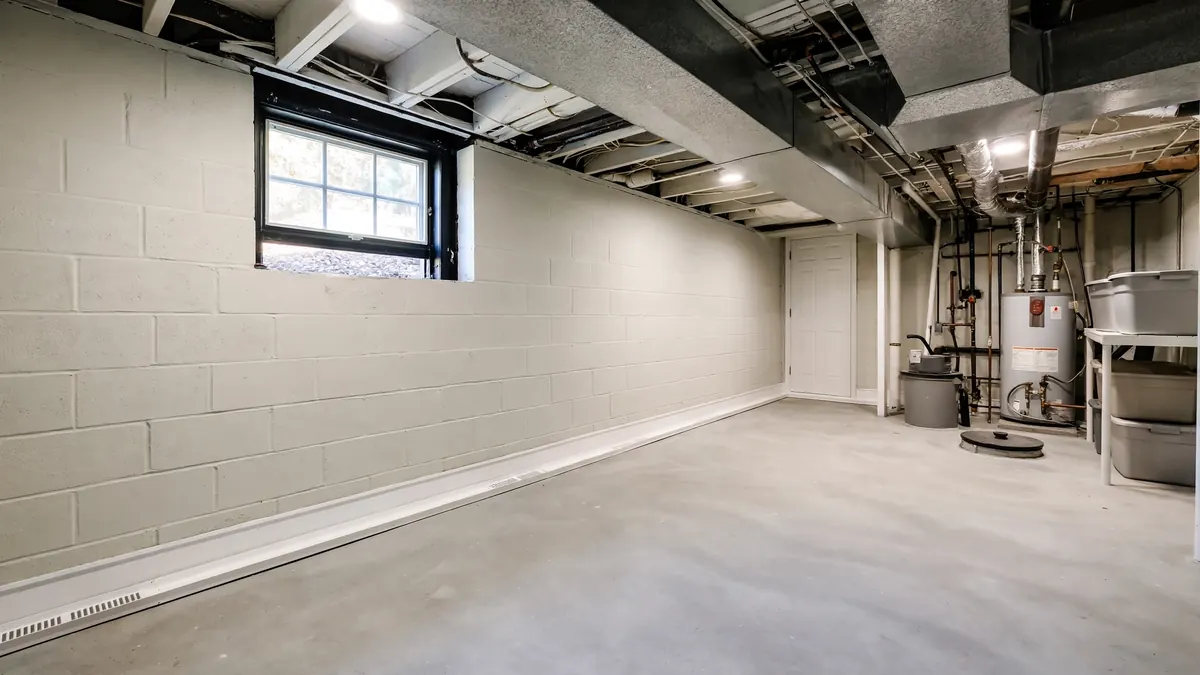 Basement Waterproofing
Basement waterproofing in Youngstown, OH for wet basements, wall leaks and seepage. Interior drains, sump pumps and foun
Learn more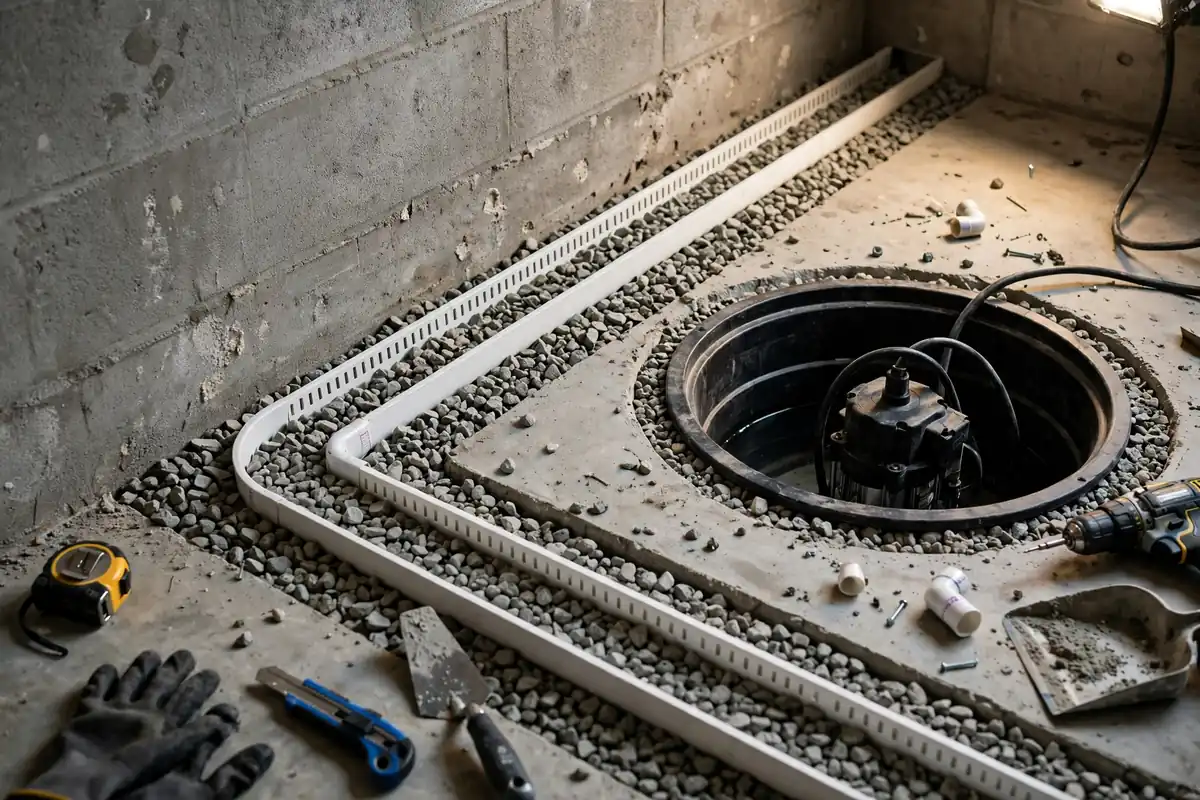 Interior Drain System
Interior drain systems in Youngstown, OH collect water at the wall-floor joint and send it to a sump pump. A proven fix
Learn more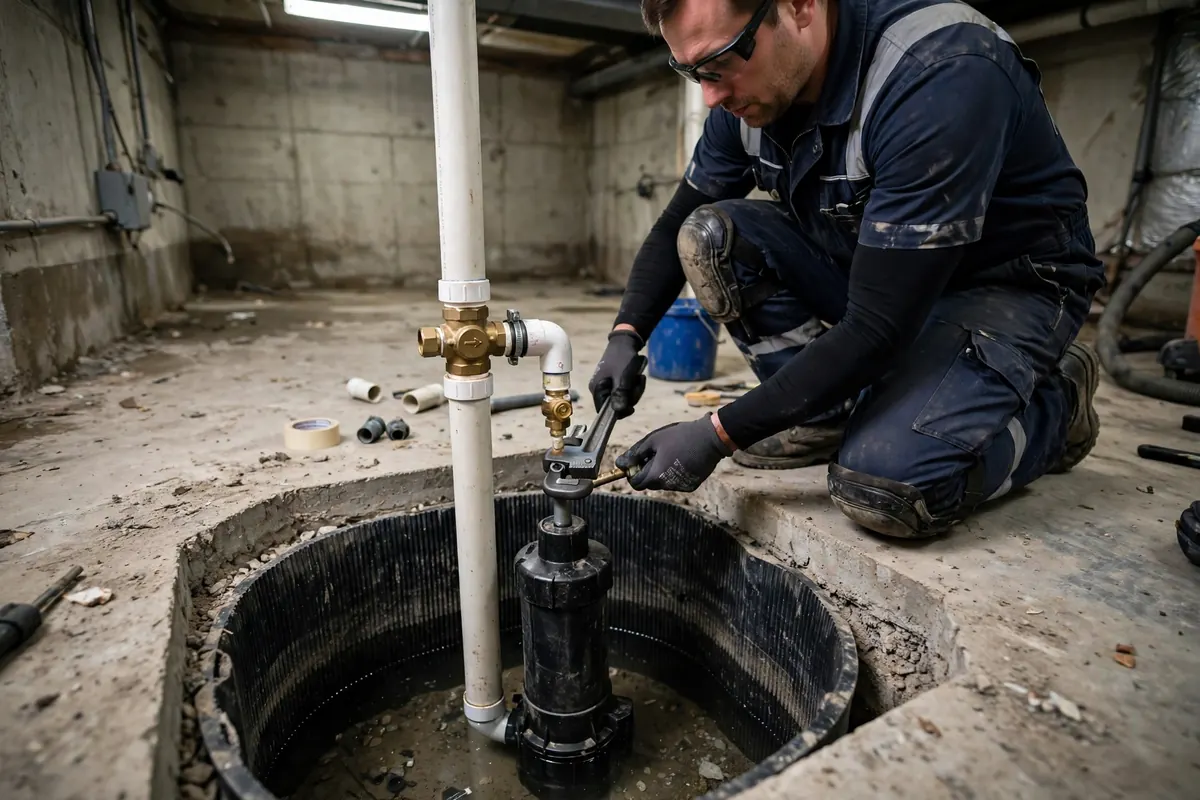 Sump Pump Installation
Sump pump installation in Youngstown, OH for basements that take on water. Submersible pumps, battery backup systems and
Learn more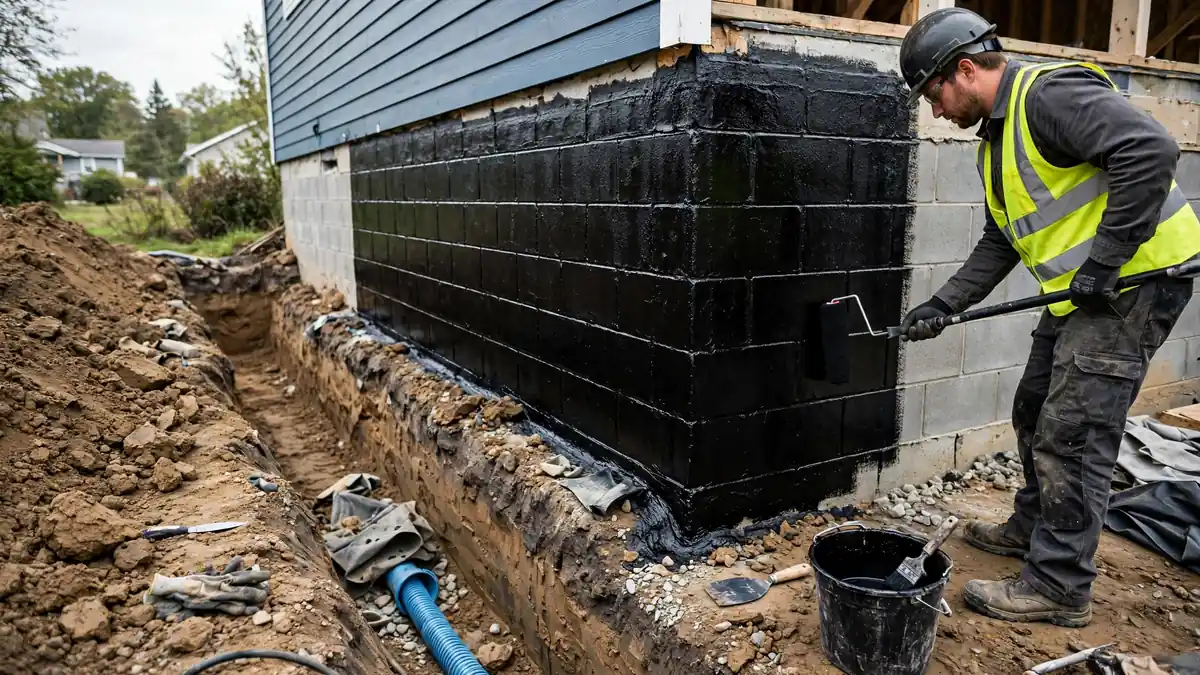 Foundation Waterproofing
Foundation waterproofing in Youngstown, OH: exterior membranes, drainage board and interior systems for block and poured
Learn more Crawl Space Waterproofing
Crawl space waterproofing in Youngstown, OH: encapsulation, vapor barriers, drainage and dehumidification for damp crawl
Learn more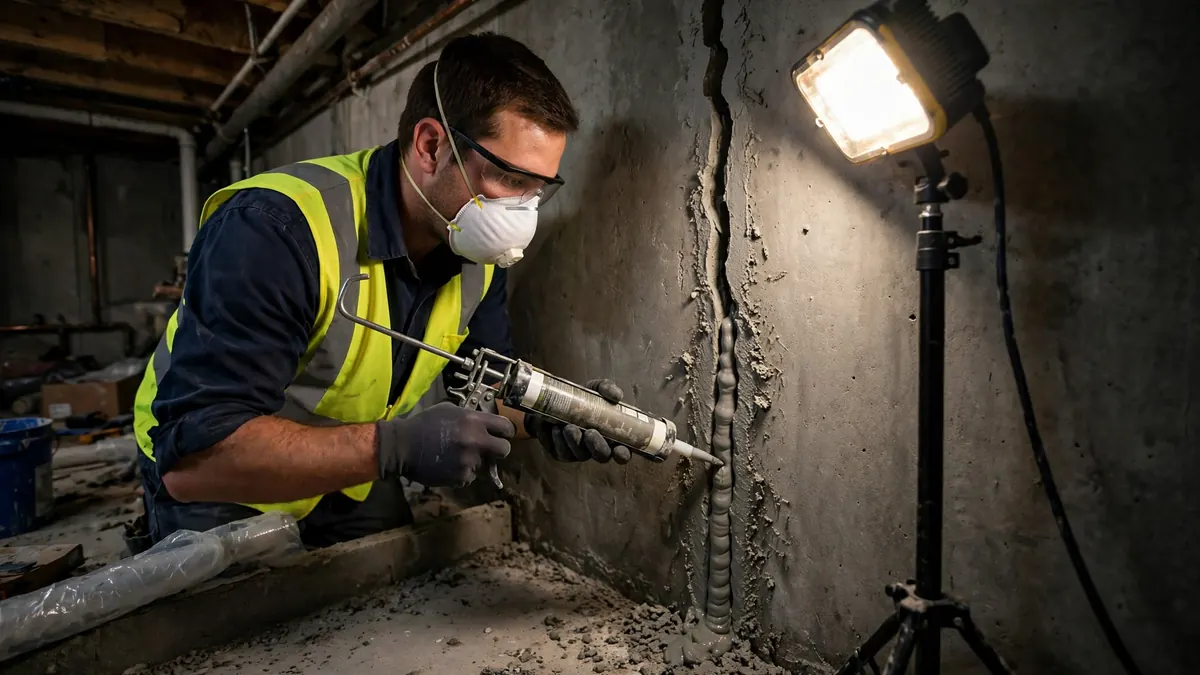 Basement Leak Repair
Basement leak repair in Youngstown, OH: find where the water enters and fix that path. Crack injection, joint sealing an
Learn moreQuestions, answered
The most common reason is a stuck float switch, which cannot rise because it is caught on the discharge pipe, the basin wall or the power cord. Other causes are a tripped breaker, a failed outlet, a waterlogged float, or a burned-out motor. Check the power and the float first, because those are the simplest fixes, and they solve a surprising number of problems.
That is called short cycling, and it usually means the check valve has failed. The check valve stops the water in the discharge pipe from running back into the pit when the pump stops. If it fails, the water runs back, the pump starts again a few seconds later, and the cycle repeats. A failed check valve will wear out the switch and the motor, and it should be replaced.
If the pump is less than seven years old and has a single failed part, such as a float switch or a check valve, it is usually worth repairing. If the pump is more than ten years old, if it has failed more than once, or if it is undersized for the house, it is usually replaced. The inspection will tell you which one it is, based on the pump, the pit, the discharge and the water volume.
A stuck float can often be freed by clearing the obstruction, and a tripped breaker can be reset. Anything beyond that, such as a failed check valve, a jammed impeller or a burned-out motor, should be handled by a professional, because the pump is the only thing standing between the basement and a flood, and a repair that is done wrong will fail during the next storm.
At least once a year, and ideally before spring, when the snow melts and the water table rises. The service includes cleaning the pit, testing the pump, checking the float, checking the check valve, and checking the discharge. A pump that is serviced regularly will last longer and will fail less often, because the small problems are found before they become big ones.
It depends on the problem. A float repair includes freeing or replacing the float and adjusting the switch. A check valve repair includes replacing the valve. An impeller repair includes cleaning the pump and the pit. A full service includes all of those, plus a test of the pump and the discharge, and a check of the battery backup if there is one. The repair should be explained to the homeowner, including what was found and what to watch.
Talk to a local waterproofing professional
Describe what is happening in your basement and a local professional will assess the water path and the right fix.
Get in touch
Talk to a local waterproofing professional about your basement.
Hours: Mon–Fri 7:00 AM–10:00 PM ET · Sat 8:00 AM–10:00 PM ET · Sun 7:00 AM–9:00 PM ET
What to have ready
- Where the water appears, and after what kind of weather
- Whether the basement has a sump pump, and whether it runs
- Photos of the wall, the floor joint, or the water itself