Battery Backup Sump Pumps in Youngstown, OH
The heaviest rain in Youngstown often arrives with the power cut. A battery backup pump is the pump that keeps working when the main pump cannot.
Talk to a local waterproofing professional
Describe what is happening in your basement and a local professional will assess the water path and the right fix.
Hours: Mon–Fri 7:00 AM–10:00 PM ET · Sat 8:00 AM–10:00 PM ET · Sun 7:00 AM–9:00 PM ET
Why a battery backup matters
A sump pump needs electricity, and the storms that make a sump pump necessary are the same storms that knock out power. Summer thunderstorms, winter ice and high wind all cut power in Youngstown, Boardman and Austintown, and the outage often lasts long enough for a sump pit to fill and overflow. A basement with a sump pump and no backup is a basement with no protection during a power cut.
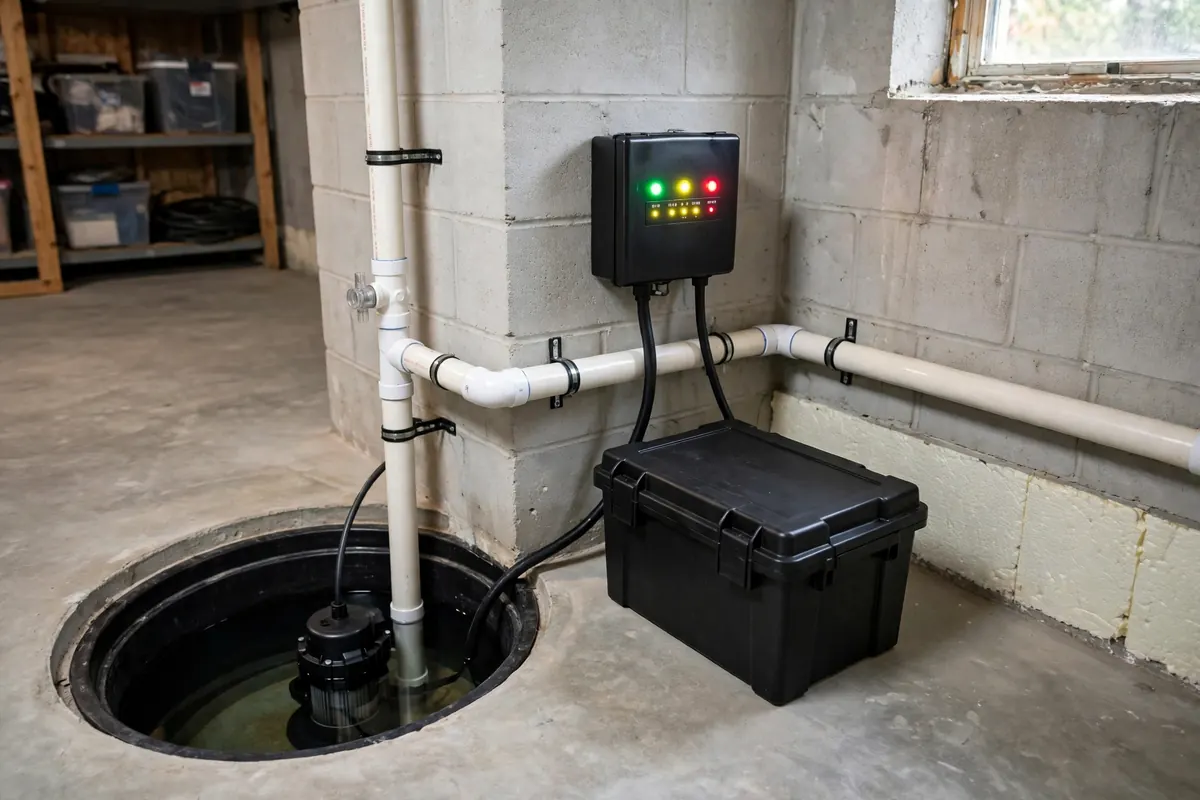
A battery backup pump is a second, smaller pump that sits beside the main pump in the same pit, powered by a deep-cycle battery. When the power fails, or when the main pump fails, the backup takes over automatically. It will keep pumping for hours on a charged battery, which is enough to get through most outages, and it will keep the basement dry while the power is out.
The backup is not a luxury. It is the part of the system that works when the rest of the system cannot, and it is the difference between a basement that stays dry during a storm and a basement that floods during the same storm.
How a battery backup works
The backup pump sits in the same pit as the main pump, on its own float switch, set slightly higher than the main pump's switch. When the water rises past the main pump's start level and the main pump does not run, either because the power is out or because the main pump has failed, the water keeps rising until it reaches the backup's switch, and the backup starts.
The battery is a deep-cycle marine battery, kept charged by a charger that runs off the household power. When the power is on, the charger keeps the battery full. When the power goes out, the battery powers the pump. A fully charged battery will run the backup pump for many hours, depending on how much water is coming in and how often the pump has to cycle.
The system includes an alarm that sounds if the water in the pit rises above the backup's start level, or if the battery is low. The alarm is what tells the homeowner that the backup is running and that the main pump needs attention. A backup with a dead battery is no backup at all, so the alarm and the battery are both part of the system.
Choosing a battery backup
The pump should be sized to the house, not to the battery. A backup pump that is too small will not keep up with the water coming in, and the basement will flood anyway. A backup pump that is too large will drain the battery quickly. The sizing is based on the water volume the house takes on during a heavy storm, and the height the water has to be lifted.
The battery should be a deep-cycle battery, not a car battery. A car battery is designed to deliver a short burst of power to start an engine, and it will fail quickly if it is discharged deeply and repeatedly. A deep-cycle battery is designed to be discharged and recharged many times, and it will last for years if it is maintained.
The charger should be a smart charger that keeps the battery full without overcharging it. An overcharged battery will fail early, and an undercharged battery will not be ready when it is needed. The charger should also have an indicator that shows the battery's condition, so the homeowner can see at a glance whether the backup is ready.
Maintenance for a battery backup
The battery needs to be checked regularly. The water level in a flooded battery needs to be topped up, the terminals need to be kept clean, and the battery needs to be replaced every three to five years, depending on how often it is used. A battery that has never been checked is a battery that will fail when it is needed.
The backup pump should be tested a few times a year, by unplugging the main pump and pouring water into the pit, and watching the backup start and run. The test takes five minutes, and it is the simplest way to know the backup works. A backup that has never been tested is a backup that may not work.
The alarm should be tested too, by lifting the float or by pouring water into the pit until the alarm sounds. An alarm that does not sound is an alarm that will not warn the homeowner when the water is rising.
Battery backup or water-powered backup
A water-powered backup pump uses the home's water pressure to move sump water, and it needs no electricity at all. It will run for as long as the water pressure holds, which means it never runs out of battery. It is a good choice for a home with adequate water pressure and a municipal water supply.
The weakness of a water-powered pump is that it uses a significant amount of municipal water while it runs, and it only works where the water pressure is adequate. It also needs a backflow preventer, so sump water cannot contaminate the drinking water supply. The choice between battery and water power depends on the home's plumbing, the water pressure, and the homeowner's preference.
Many homes end up with a battery backup, because it is simpler to install and it does not use municipal water. A water-powered backup is a good second choice, or a good addition to a battery backup, for a home that floods deeply and needs a backup that will run indefinitely.
What a proper job looks like
Water path found first
The inspection traces the water to its entry point, so the fix matches the cause.
Pressure relieved, not fought
A drain channel gives water a better path than your floor. Paint and sealant fight pressure and lose.
Pump sized to the house
The pump is sized to the water volume and the lift, with a battery backup for power cuts.
Tested before handover
Water is run into the channel, the pump cycles, and the discharge is checked outside.
From inspection to a dry basement
Inspection
Walk the basement and the outside of the house to find where the water enters, what the wall is made of, and where the water table sits.
Plan
Match the system to the house: drain channel, wall membrane, sump pump, discharge, and battery backup where power cuts are a concern.
Install
Cut the trench, lay the channel and gravel, fit the membrane and the pump, and run the discharge away from the house.
Restore
Re-pour the concrete flush with the floor, clean the work area, and leave the basement usable again.
Test
Run water into the channel, watch the pump cycle, and confirm the discharge flows away from the property.
More waterproofing services
 Basement Waterproofing
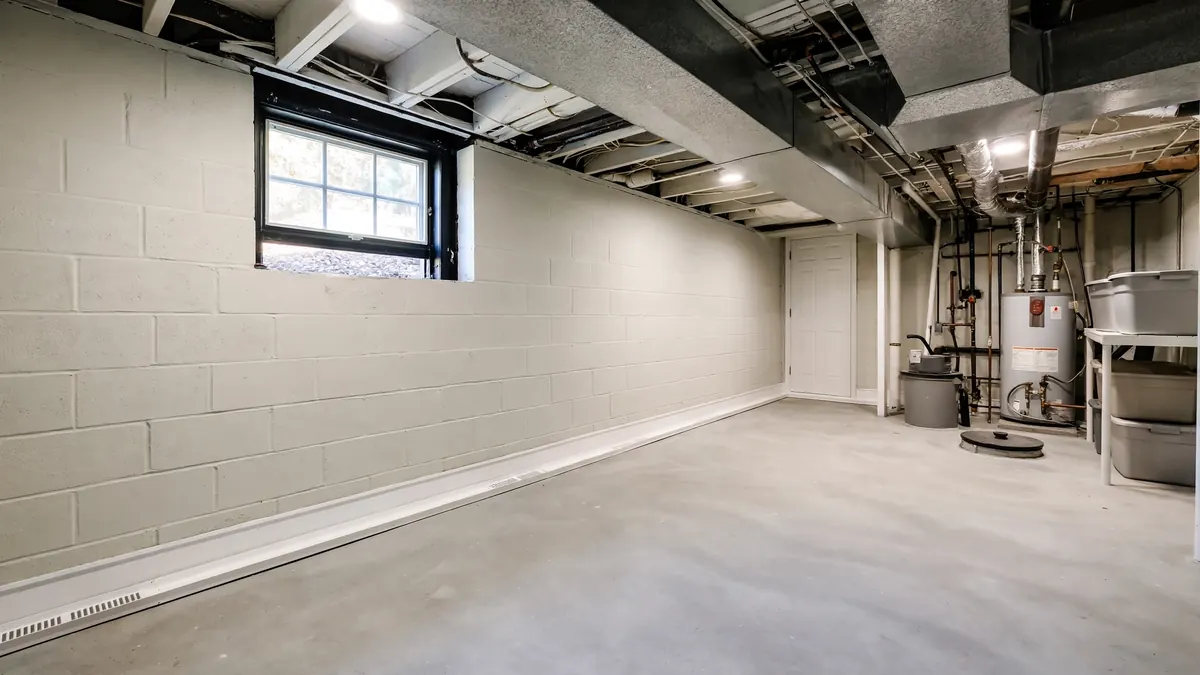
Basement waterproofing in Youngstown, OH for wet basements, wall leaks and seepage. Interior drains, sump pumps and foun
Learn more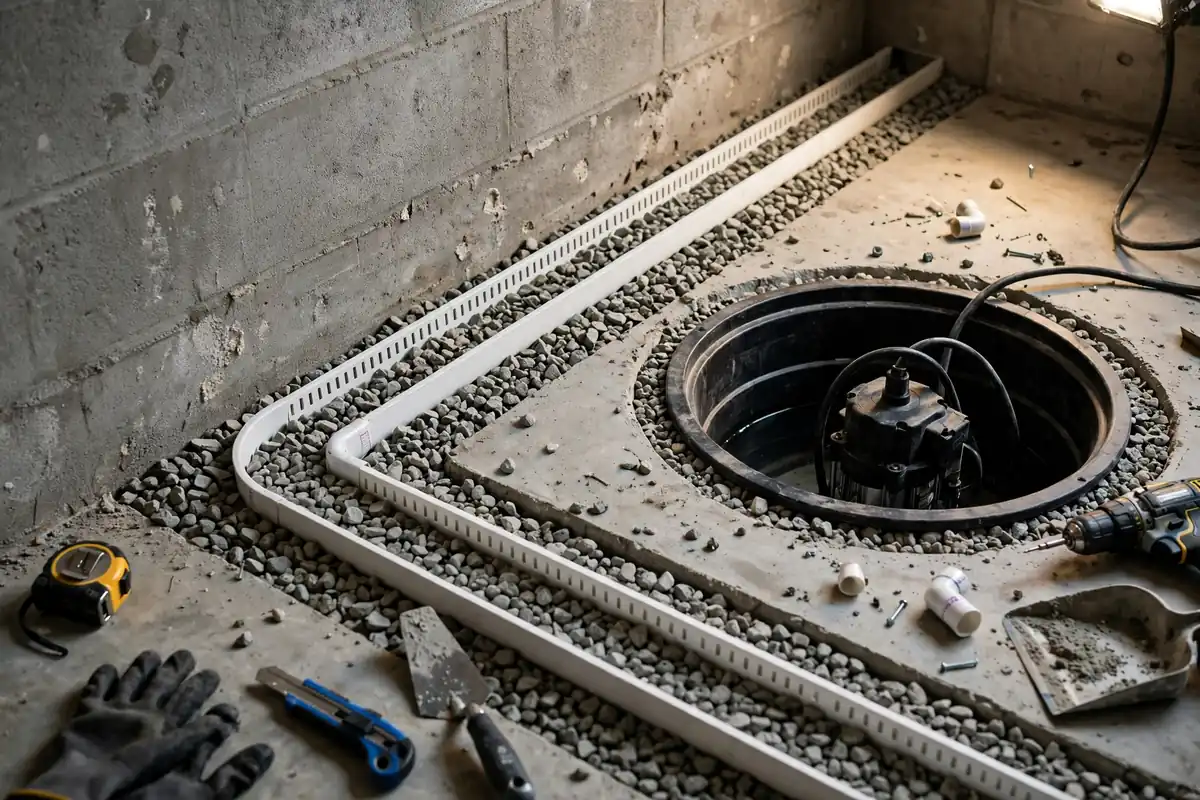 Interior Drain System
Interior drain systems in Youngstown, OH collect water at the wall-floor joint and send it to a sump pump. A proven fix
Learn more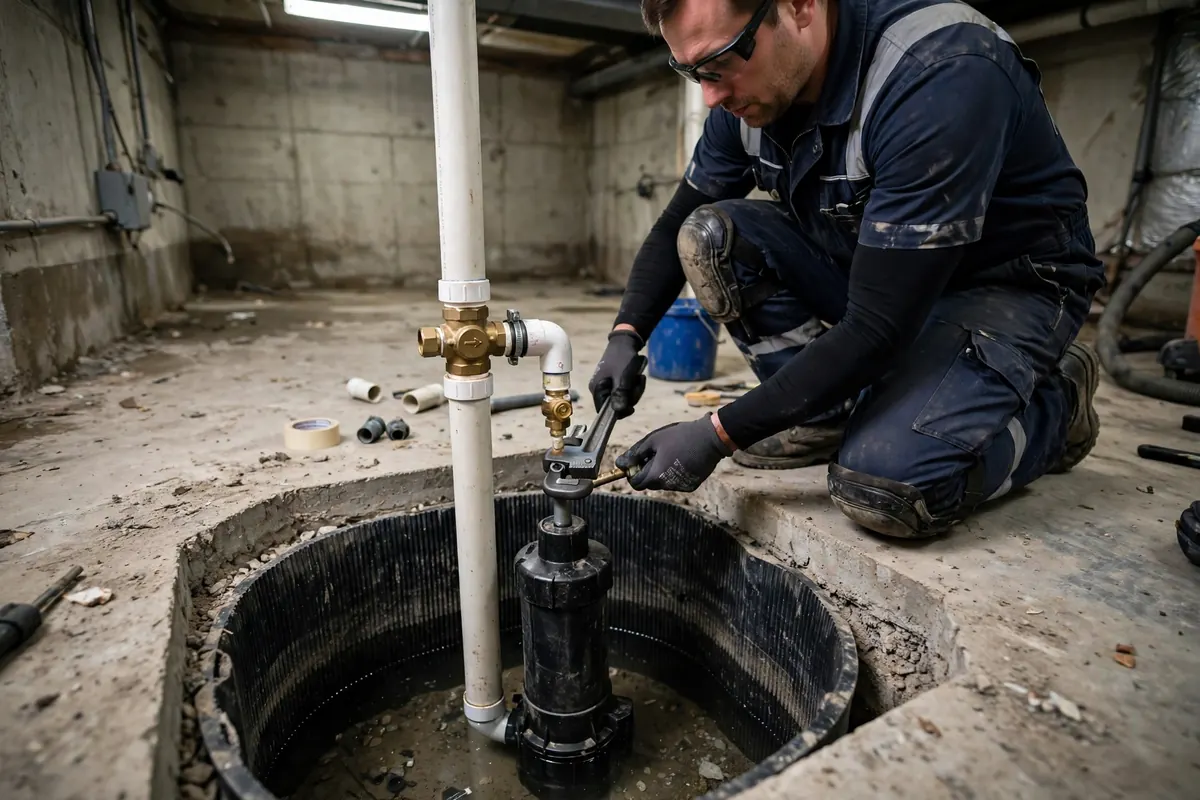 Sump Pump Installation
Sump pump installation in Youngstown, OH for basements that take on water. Submersible pumps, battery backup systems and
Learn more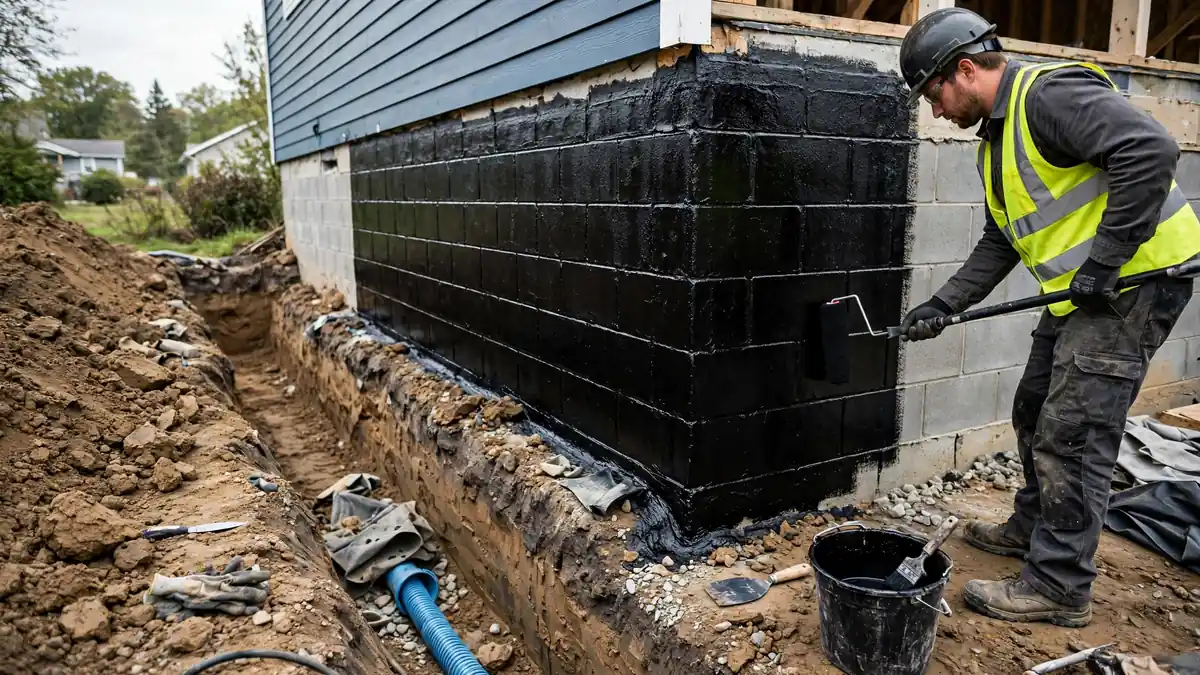 Foundation Waterproofing
Foundation waterproofing in Youngstown, OH: exterior membranes, drainage board and interior systems for block and poured
Learn more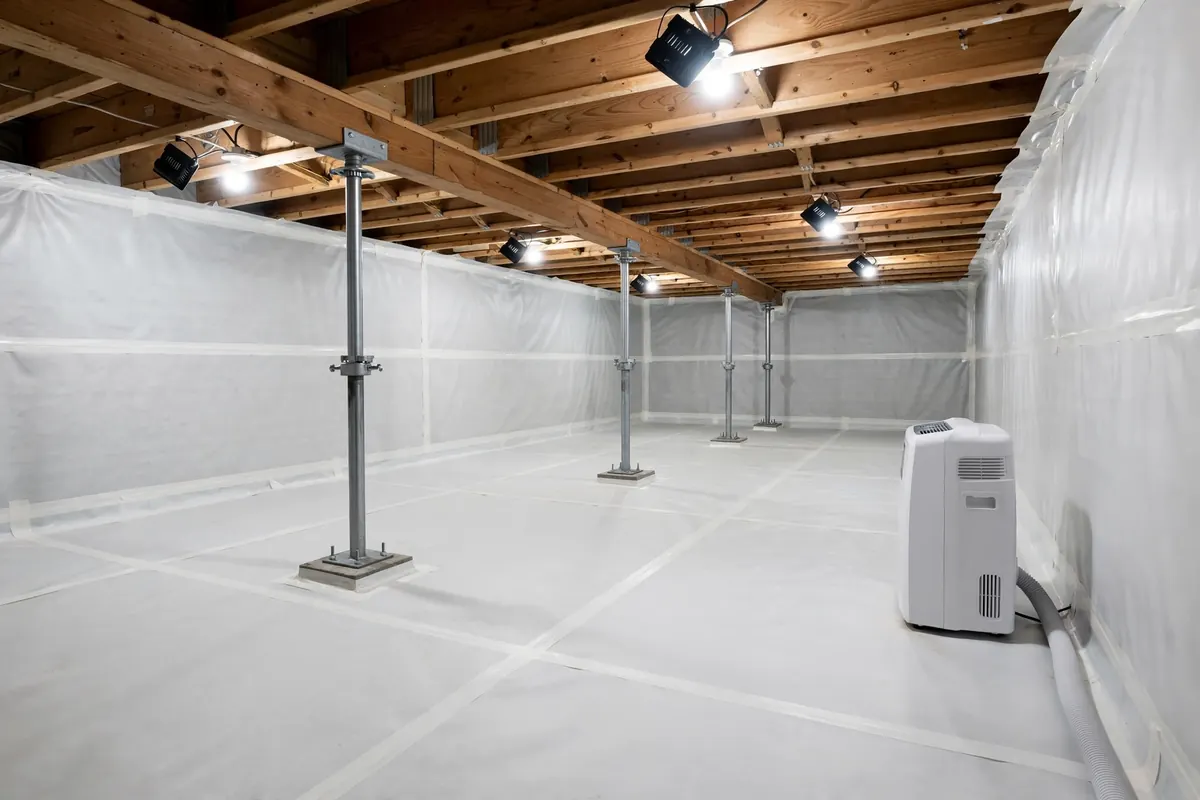 Crawl Space Waterproofing
Crawl space waterproofing in Youngstown, OH: encapsulation, vapor barriers, drainage and dehumidification for damp crawl
Learn more Basement Leak Repair
Basement leak repair in Youngstown, OH: find where the water enters and fix that path. Crack injection, joint sealing an
Learn moreQuestions, answered
It depends on the battery, the pump, and how much water is coming in. A fully charged deep-cycle battery will usually run a backup pump for many hours, often through the night, which is enough to get through most power cuts. A basement that takes on a lot of water will drain the battery faster, because the pump has to cycle more often. The battery should be checked regularly, and it should be replaced every three to five years.
If the pump rarely runs, the basement rarely takes on water, and a backup is less urgent. But the pump that rarely runs is the pump that is most likely to fail when it is needed, because it has not been tested. A backup is worth considering in any home where a flooded basement would be expensive, even if the pump rarely runs.
Yes. A backup pump, battery and charger can be added to an existing pit, as long as the pit is large enough to hold both pumps. If the pit is too small, it may need to be enlarged, or a second pit may need to be dug. The discharge line can usually be shared, with a check valve on each pump, or a separate discharge can be run for the backup.
A battery backup fails only if the battery is dead, the pump is jammed, or the discharge is blocked. All three are preventable with maintenance: the battery checked and replaced on schedule, the pump tested regularly, and the discharge checked each spring. A backup that is maintained will work. A backup that is ignored will not, and that is why the alarm is part of the system.
No more than a main pump. The backup pump is a smaller pump, and it runs only when the main pump cannot. It is in the basement, in the pit, and the sound is muffled by the water and the floor. A homeowner who can hear the main pump will hear the backup the same way, and a homeowner who cannot hear the main pump will not hear the backup either.
Test it. Unplug the main pump, pour water into the pit, and watch the backup start and run. Check that water is flowing out of the discharge outside. If the backup does not start, or if it runs without the water level dropping, it needs attention. Testing takes five minutes, and it should be done a few times a year, and especially before spring.
Talk to a local waterproofing professional
Describe what is happening in your basement and a local professional will assess the water path and the right fix.
Get in touch
Talk to a local waterproofing professional about your basement.
Hours: Mon–Fri 7:00 AM–10:00 PM ET · Sat 8:00 AM–10:00 PM ET · Sun 7:00 AM–9:00 PM ET
What to have ready
- Where the water appears, and after what kind of weather
- Whether the basement has a sump pump, and whether it runs
- Photos of the wall, the floor joint, or the water itself