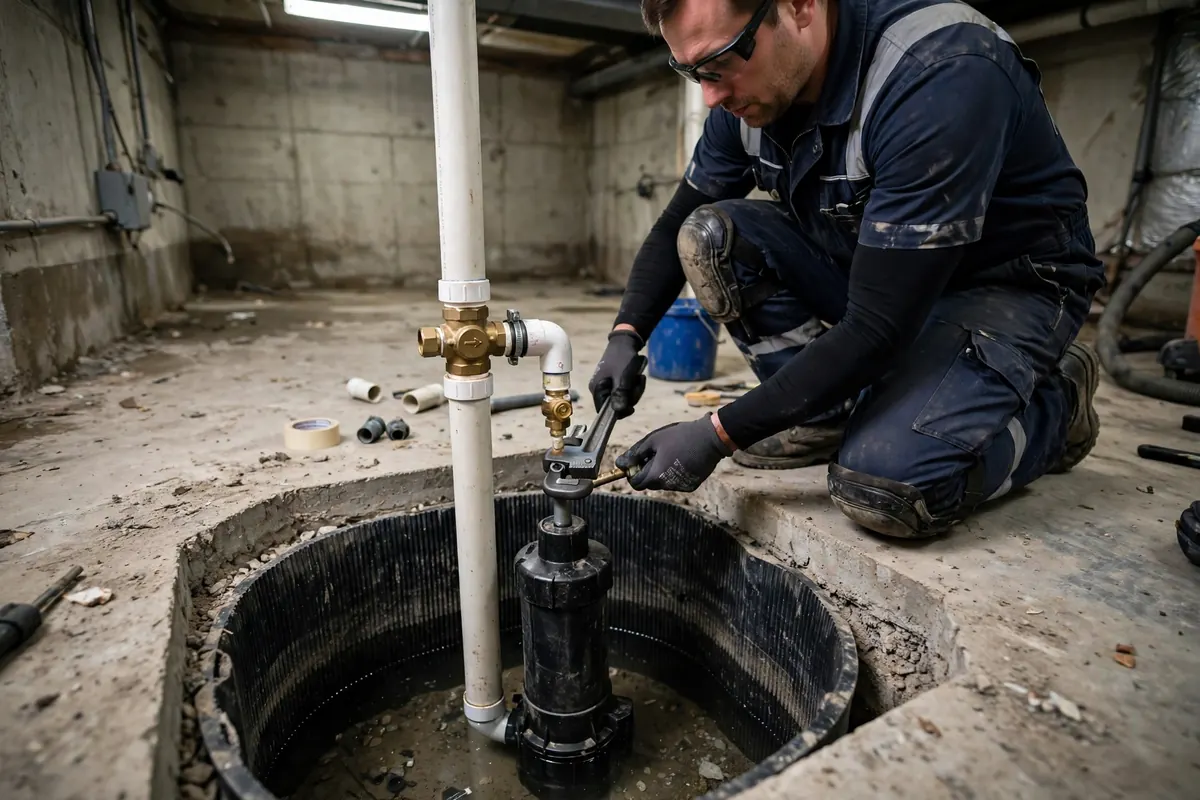
Sump Pump Installation in Youngstown, OH
A sump pump is a simple machine with one job: when water arrives in the pit, move it out of the house before it reaches the floor. In a Youngstown basement, that simple job is what stands between a wet spring and a dry one.
Talk to a local waterproofing professional
Describe what is happening in your basement and a local professional will assess the water path and the right fix.
Hours: Mon–Fri 7:00 AM–10:00 PM ET · Sat 8:00 AM–10:00 PM ET · Sun 7:00 AM–9:00 PM ET
What a sump pump does, and why it matters here
A sump pump sits in a pit, called a sump basin, dug into the lowest point of the basement floor. Groundwater that collects under and around the foundation drains into the pit, either through the soil or through an interior drain channel. When the water rises to a set level, a float switch turns the pump on, and the pump pushes the water up through a discharge pipe and out of the house. When the water falls, the float drops and the pump stops. The cycle repeats all year, quietly, whenever the ground is wet.
In the Mahoning Valley the pump earns its keep in two seasons. The first is spring, when the snowpack melts and the frozen ground cannot absorb the water, so the water table rises fast and stays high for weeks. The second is summer, when thunderstorms drop heavy rain in short bursts and the clay soil around the foundation saturates in an hour. A basement without a working pump in either season is a basement that floods.
Many Youngstown homes already have a sump pit, because a previous owner installed one after the first flood. What they often do not have is a pump that still works, a discharge line that actually carries water away, or a backup for the night the power goes out. A sump pump installation is not just the pump. It is the basin, the pump, the discharge, the check valve and the backup, all working together.
The pump also protects more than the floor. A dry basement means a dry furnace, a dry water heater, and a dry electrical panel. It means stored belongings stay dry and the air stays dry enough that mould does not take hold behind the walls. The pump is a small machine, but it guards the most expensive equipment in the house.
Signs you need a new sump pump
The most obvious sign is water on the floor while the pit is full. If the pit is full and the pump is not running, the pump has failed, the float is stuck, or the power is out. If the pump runs constantly and the water never drops, the pump is undersized for the water coming in, or the discharge line is blocked and the water is running back into the pit.
Strange noises are another warning. A pump that grinds, rattles or hums without moving water has a worn impeller or a jammed float. A pump that cycles on and off every few seconds, called short cycling, usually has a failed check valve, so the water it just pumped out runs straight back down the pipe. A pump that is more than seven or eight years old and has never been serviced is living on borrowed time, and it tends to fail during the storm that needs it most.
Rust and corrosion on the pump, a pit full of silt, or a discharge line that dribbles instead of flowing all point the same way. So does a basement that used to stay dry and now wets up after ordinary rain. The water has not changed. The pump has.
The sign that should prompt immediate action is a pump that has already failed once. A pump that failed during the last storm will fail again during the next one, and the next storm in Youngstown is never far away. Replacing a pump after it fails is more expensive than replacing it before, because the failure usually comes with a flooded basement to clean up.
Submersible or pedestal: choosing the pump
A submersible pump sits inside the pit, under the water. It is quieter, because the water muffles the motor, and it is more powerful, because it does not have to lift water from above. It also lasts longer in most installations, because the water cools the motor. Its weakness is that it is harder to reach for service, since it has to be lifted out of the pit, and it costs more up front. For a finished basement, or a basement where the pump runs often, a submersible pump is the usual choice.
A pedestal pump sits above the pit, with a long shaft reaching down to the impeller. It is louder, less powerful, and it takes up space in the room, but it is cheaper and much easier to service, because the motor is right there. It is a reasonable choice for an unfinished basement where the pump runs rarely and noise does not matter.
The choice also depends on the pit. A deep, wide pit suits a submersible pump. A shallow pit may only fit a pedestal. The inspection measures the pit, the water volume and the height the water has to be lifted, and the pump is sized to that lift. A pump that is too small for the lift will run constantly and burn out. A pump that is far too large will short-cycle and wear out its switch.
What matters more than the type is the capacity. The pump has to move the water that arrives during the heaviest rain the house sees, plus a margin. In a Youngstown home that floods deeply, that means a pump with a higher flow rate and a larger basin, so the pump does not have to start and stop every few seconds.
How a sump pump is installed
Installation starts with the pit. If the basement already has a basin, it is inspected for cracks, silt and size. If there is no basin, one is dug at the lowest point of the floor, usually in a corner, and a perforated basin is set in gravel so groundwater can drain into it. The pit is dug below the floor slab, deep enough that the pump sits under the water line.
The pump is set in the basin on a solid base, so it does not sit in silt. The discharge pipe is run up from the pump, through the wall or the rim joist, and outside. A check valve is fitted on the vertical run, close to the pump, so that when the pump stops, the water in the pipe does not fall back into the pit. The pipe outside is run downhill, away from the house, and the outlet is protected from freezing with a proper termination.
The electrical connection is a dedicated outlet near the pit, on its own circuit where possible, with a ground-fault protected outlet. The float switch is adjusted so the pump starts before the water reaches the floor and stops before the pit is empty. Then the system is tested: water is poured into the pit, the pump cycles, and the discharge is watched outside to confirm the water is actually leaving the property.
If the home has an interior drain channel, the pump installation includes connecting the channel to the basin, so the whole perimeter drains into the pit. If there is no channel, the pit collects water through its perforations from the soil under the slab, which handles a rising water table but not water entering at the wall joint.
Battery backup: the pump that works when the power does not
The most common time for a sump pump to be needed is during a storm, and a storm is the most common time for the power to go out. A battery backup pump is a second, smaller pump that sits beside the main pump in the same pit, powered by a deep-cycle battery. When the power fails, or when the main pump fails, the backup takes over automatically.
A battery backup is not a luxury in the Mahoning Valley. Summer thunderstorms and winter ice both knock out power in Youngstown, Boardman and Austintown, and the outage often lasts long enough for the pit to fill and overflow. A backup pump buys time, usually many hours of pumping on a charged battery, which is enough to get through most outages.
The backup system needs its own maintenance. The battery has to be kept charged, the connections kept clean, and the battery replaced every few years. A backup with a dead battery is no backup at all, so the system should include an alarm that sounds if the battery is low or the water in the pit rises above the backup's start level.
An alternative is a water-powered backup pump, which uses the home's water pressure to move sump water and needs no electricity at all. It uses a significant amount of municipal water while it runs, and it only works where the water pressure is adequate, but it never runs out of battery. The choice between battery and water power depends on the home's plumbing and the homeowner's preference.
The discharge line: where the water goes
The discharge line is the part of the system that is most often done badly, and it is the part that decides whether the pump actually helps. A discharge that ends at the foundation recycles the water: the pump sends it out, it soaks back into the soil, and it re-enters the pit. The pump runs all night and the basement stays wet.
A good discharge runs downhill, away from the house, and ends on ground that falls away from the foundation. In a flat Youngstown lot that may mean running the line out to the street, to a dry well, or to a drainage swale at the edge of the property. In winter, the outlet needs to be protected from freezing, because a frozen outlet blocks the line and the pump runs against a dead end. A freeze-resistant termination, or a discharge that ends below the frost line, solves that.
The discharge should also be visible. A homeowner who can see the water flowing out during a storm knows the system is working. A discharge that is buried and never seen is a discharge that can clog silently. The outlet should be checked each spring for debris, ice damage and blockages, and the line should be checked for leaks at every joint.
Mistakes that kill sump pumps
The most common mistake is a pump sitting in silt. A basin that was never cleaned fills with silt, the pump sucks it up, and the impeller wears out. A basin should be cleaned out every year or two, and the pump should sit on a brick or a stand, not directly on the bottom of the pit.
A second mistake is a float switch that is tangled or obstructed. A float that catches on the discharge pipe, the basin wall or the power cord will not rise, and the pump will not start. The float needs clear space to move, and the cords need to be secured out of its path.
A third mistake is a check valve installed backwards or not at all. Without a check valve, every time the pump stops, the water in the vertical pipe runs back into the pit, and the pump starts again a few seconds later. That short cycling wears out the switch and the motor, and it is one of the most common reasons a pump fails early.
The last mistake is never testing the pump. A pump that sits idle for months can seize, and a pump that has never been tested will fail on the night it is needed. Pouring a bucket of water into the pit a few times a year and watching the pump cycle is the simplest maintenance a homeowner can do, and it is the one most often skipped.
Sump pumps in Youngstown, Boardman and Austintown
Youngstown's West Side and the streets near the Mahoning River have some of the highest water tables in the valley, and the sump pumps there run more often and for longer. Those homes usually need a larger basin and a higher-capacity pump, and a battery backup is close to essential, because the river-side streets are also the ones that lose power first in a storm.
Boardman's ranches, built on clay soil in the 1950s and 1960s, often have a single small pit that was added long after the house was built. The pit is usually too small for the water the house takes on, so the pump short-cycles. Enlarging the basin and fitting a properly sized pump makes a bigger difference there than any other single change.
Austintown and Canfield have a similar pattern, with post-war homes whose original pumps, if they ever had one, are long past their working life. In those towns the job is often a full replacement: new basin, new pump, new discharge and a battery backup, because the original installation was undersized from the start.
What a proper job looks like
Water path found first
The inspection traces the water to its entry point, so the fix matches the cause.
Pressure relieved, not fought
A drain channel gives water a better path than your floor. Paint and sealant fight pressure and lose.
Pump sized to the house
The pump is sized to the water volume and the lift, with a battery backup for power cuts.
Tested before handover
Water is run into the channel, the pump cycles, and the discharge is checked outside.
From inspection to a dry basement
Inspection
Walk the basement and the outside of the house to find where the water enters, what the wall is made of, and where the water table sits.
Plan
Match the system to the house: drain channel, wall membrane, sump pump, discharge, and battery backup where power cuts are a concern.
Install
Cut the trench, lay the channel and gravel, fit the membrane and the pump, and run the discharge away from the house.
Restore
Re-pour the concrete flush with the floor, clean the work area, and leave the basement usable again.
Test
Run water into the channel, watch the pump cycle, and confirm the discharge flows away from the property.
More waterproofing services
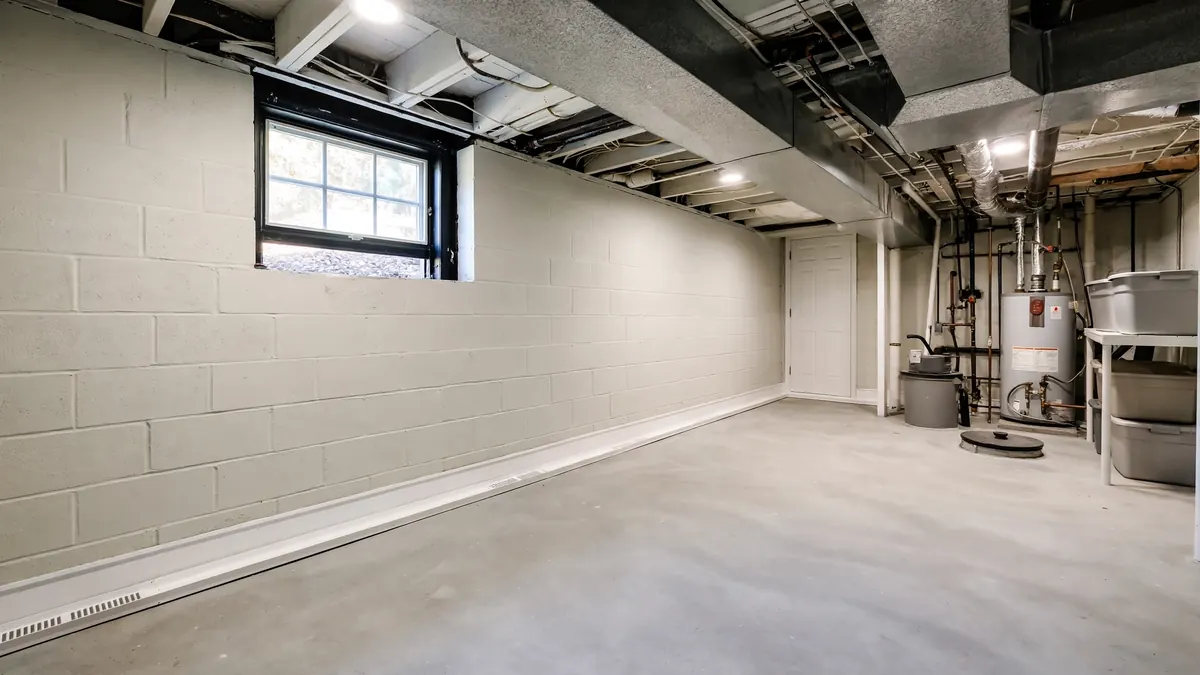 Basement Waterproofing
Basement waterproofing in Youngstown, OH for wet basements, wall leaks and seepage. Interior drains, sump pumps and foun
Learn more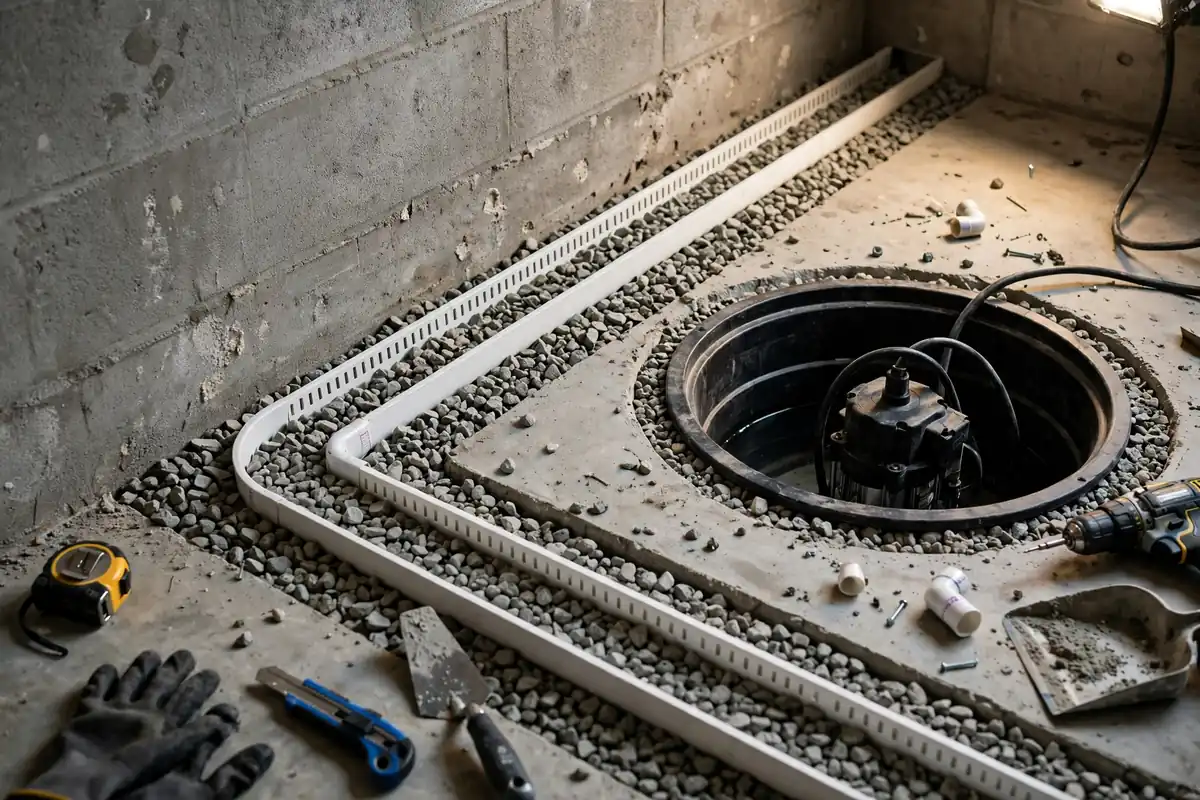 Interior Drain System
Interior drain systems in Youngstown, OH collect water at the wall-floor joint and send it to a sump pump. A proven fix
Learn more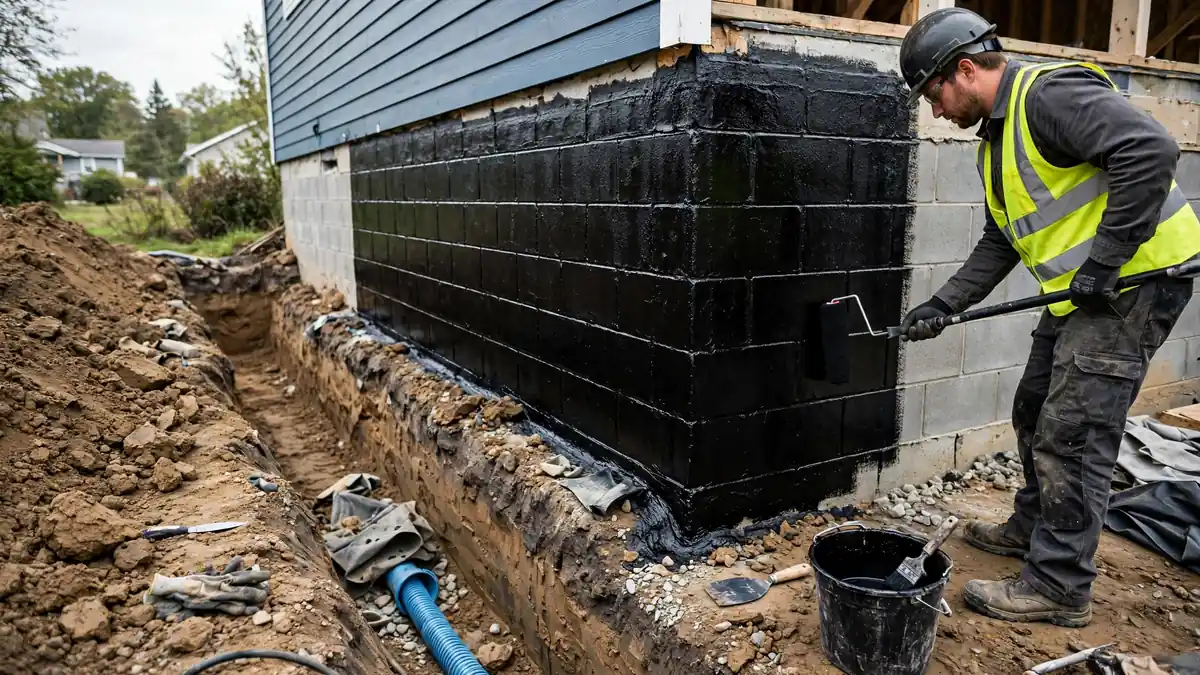 Foundation Waterproofing
Foundation waterproofing in Youngstown, OH: exterior membranes, drainage board and interior systems for block and poured
Learn more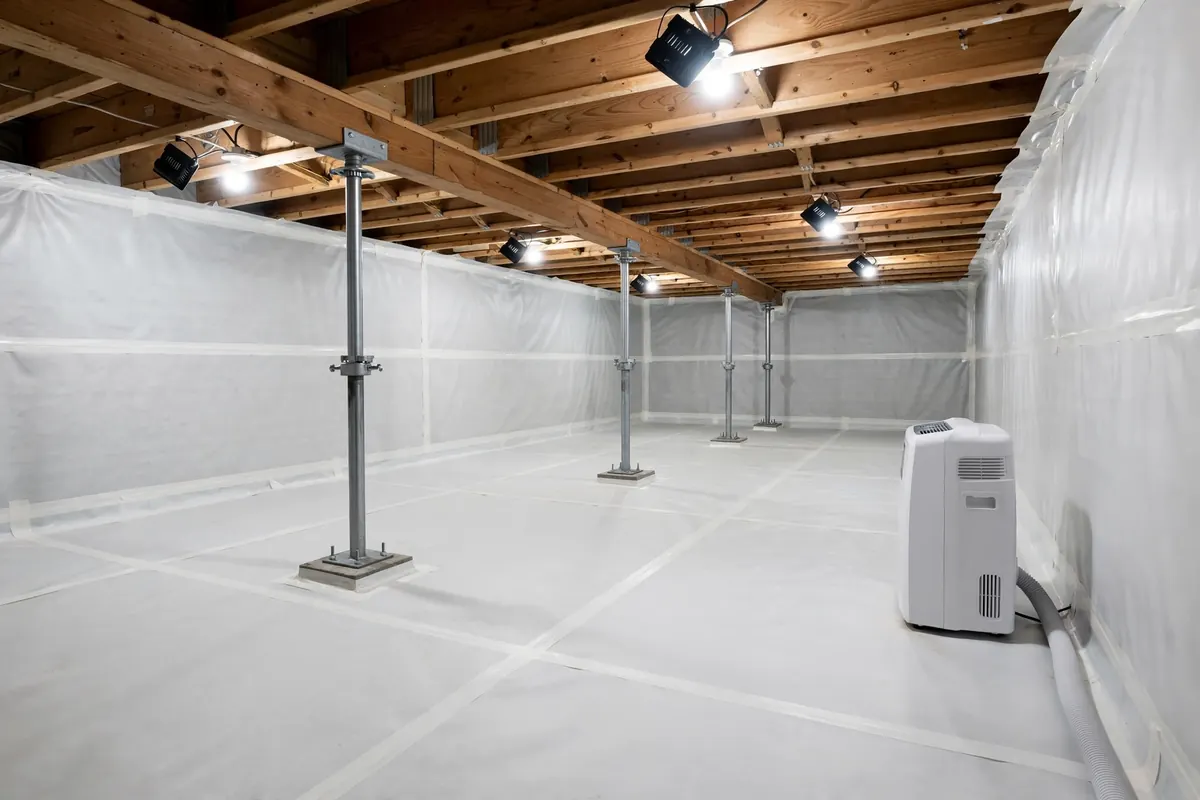 Crawl Space Waterproofing
Crawl space waterproofing in Youngstown, OH: encapsulation, vapor barriers, drainage and dehumidification for damp crawl
Learn more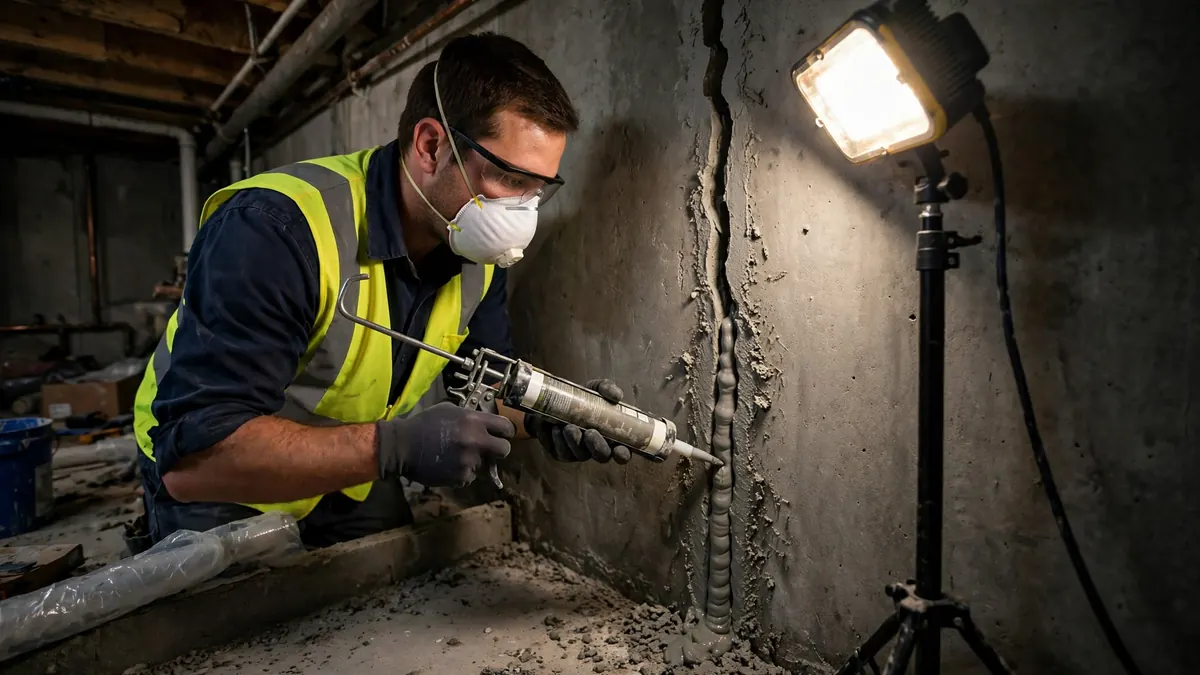 Basement Leak Repair
Basement leak repair in Youngstown, OH: find where the water enters and fix that path. Crack injection, joint sealing an
Learn more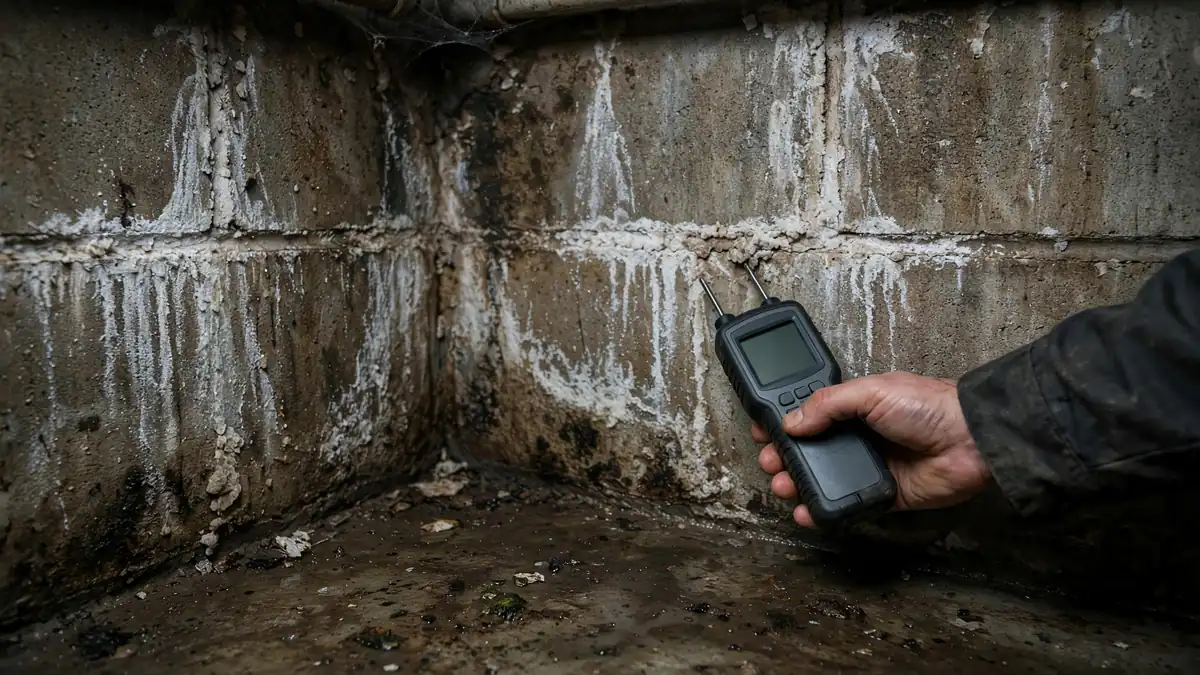 Wet Basement Repair
Wet basement repair in Youngstown, OH for damp floors, seeping walls and musty basements. Find the water path and fix it
Learn moreQuestions, answered
It depends on the weather. In a dry week it may not run at all. During a wet spring, when the snow is melting and the water table is high, it may run every few minutes, and that is normal. What is not normal is a pump that runs constantly in dry weather, which suggests a high water table or a leak feeding the pit, or a pump that runs every few seconds, which usually means a failed check valve is letting water run back into the pit.
A submersible pump that runs regularly usually lasts seven to ten years. A pump that runs rarely can last longer, and a pump that runs constantly in a wet basement can wear out sooner. The float switch often fails before the motor, and a switch can be replaced without replacing the whole pump. The most reliable way to know is to test the pump regularly and listen for changes: grinding, rattling or a pump that hums without moving water all mean it is time to have it checked.
If your basement has ever taken on water during a power cut, yes. Youngstown storms knock out power, and the heaviest rain often arrives with the outage. A battery backup pump takes over automatically when the power fails or the main pump fails, and it will keep pumping for hours on a charged battery. Without it, a power cut during a storm leaves the basement with no protection at all.
The most common reason is a failed check valve, which lets the water the pump just discharged run back into the pit, so the pump starts again immediately. Other causes are a high water table, a discharge line that ends at the foundation and recycles the water, or a pump that is undersized for the volume coming in. A technician can tell which one it is by watching the pump cycle and checking the discharge outside.
Well away from the house, on ground that falls away from the foundation. In a flat lot that may mean running the line to the street, to a dry well, or to a drainage swale. It should never end at the foundation, in a window well, or on a sidewalk that pitches back toward the house. In winter the outlet needs to be protected from freezing, or the pump will run against a blocked line.
Yes, if it is part of a system. A pump on its own only removes the water that reaches the pit. A finished basement also needs an interior drain channel to collect water along the walls, and a sealed basin lid to keep moisture and radon out of the room. With the channel, the pump and the discharge all working together, a finished basement can stay dry through the wettest Youngstown spring.
It depends on how much water arrives and how high it has to be lifted. The pump has to move the volume that comes in during the heaviest rain, up the height from the pit to the discharge outlet, with some margin left over. A pump that is too small runs constantly and burns out. A pump that is far too large short-cycles and wears out its switch. The inspection measures the pit, the lift and the water volume, and the pump is sized to those numbers.
Yes, a few times a year, and especially before spring. Pour a bucket of water into the pit slowly and watch the pump start, run, and stop. Check that water is flowing out of the discharge outside. If the pump does not start, hums without pumping, or runs without the water level dropping, it needs attention. Testing takes five minutes and it is the simplest way to avoid finding out the pump has failed during a storm.
Talk to a local waterproofing professional
Describe what is happening in your basement and a local professional will assess the water path and the right fix.
Get in touch
Talk to a local waterproofing professional about your basement.
Hours: Mon–Fri 7:00 AM–10:00 PM ET · Sat 8:00 AM–10:00 PM ET · Sun 7:00 AM–9:00 PM ET
What to have ready
- Where the water appears, and after what kind of weather
- Whether the basement has a sump pump, and whether it runs
- Photos of the wall, the floor joint, or the water itself