French Drain Installation in Youngstown, OH
A French drain is a simple idea that solves a stubborn problem: give water a gravel-filled trench and a pipe to follow, and it will follow them instead of pooling against your foundation.
Talk to a local waterproofing professional
Describe what is happening in your basement and a local professional will assess the water path and the right fix.
Hours: Mon–Fri 7:00 AM–10:00 PM ET · Sat 8:00 AM–10:00 PM ET · Sun 7:00 AM–9:00 PM ET
What a French drain is
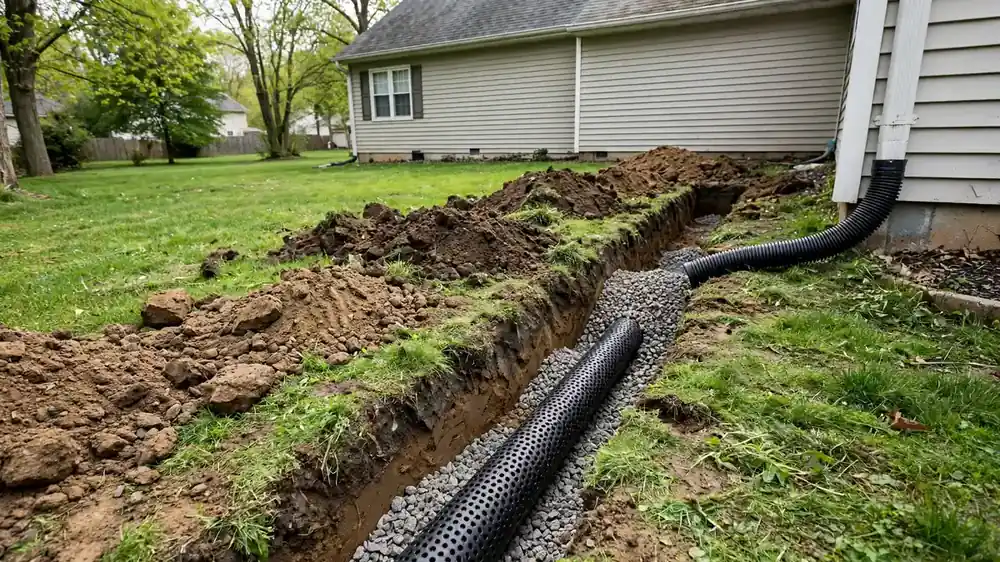
A French drain is a trench filled with gravel and a perforated pipe, designed to collect groundwater and surface water and carry it away from a house. The pipe is laid with small holes facing down, so water in the soil seeps into the pipe, and the pipe is pitched so the water flows by gravity to an outlet. The gravel around the pipe filters the water and keeps the pipe from clogging with silt.
French drains come in two kinds. An exterior French drain runs around the outside of a house, usually along the foundation or across a low part of the yard, and it intercepts surface water and groundwater before they reach the wall. An interior French drain runs inside the basement, along the wall-floor joint, and it collects the water that enters at the cove joint. The interior version is covered in detail on the interior drain system page. This page is about the exterior drain, and about yard drainage in general.
The drain works because water follows the path of least resistance. A gravel trench is far more permeable than the clay soil around it, so water in the soil moves into the trench, into the pipe, and away. It is a passive system: it has no pump, no moving parts, and nothing to fail, as long as it is pitched correctly and the outlet is clear.
Signs you need a French drain
A yard that holds standing water after rain is the clearest sign. If water ponds in the same part of the yard for days after a storm, the soil is not draining, and a French drain across the low area will collect the water and carry it away. A yard that is always soggy, even in dry weather, usually has a high water table, and a drain will help there too.
Water that runs toward the house is another sign. If the lot slopes toward the foundation, or if the driveway pitches water at the garage wall, a French drain along the foundation will intercept the water before it reaches the wall. A basement that wets up after every rain, even though the grading looks reasonable, often has a surface water problem that a French drain will solve.
A soggy lawn that kills the grass, a driveway that ices over in winter because water pools on it, and a garden bed that stays wet are all signs that the yard is not draining. A French drain is the standard answer for all of them, because it gives the water somewhere to go.
How a French drain is installed
Installation starts with the layout. The technician walks the yard after rain, when the water path is visible, and marks where the water collects and where it should go. The drain is laid across the low area, or along the foundation, and pitched toward an outlet, which may be a dry well, a drainage swale, or the street, depending on the lot.
The trench is dug, usually about a foot wide and eighteen inches to two feet deep, and the bottom is pitched so water flows to the outlet. A filter fabric is laid in the trench, then a bed of washed gravel, then the perforated pipe, with the holes facing down, then more gravel, and then the fabric is folded over the top. The trench is backfilled with soil and the lawn is restored.
The outlet is the most important part. A drain with no outlet fills with water and stops working. The outlet has to be lower than the drain, so the water flows by gravity, and it has to be clear, so the water can leave. A drain that ends in a dry well needs a well that is large enough and deep enough to hold the water until it soaks away.
Most yard drains in a typical Youngstown lot take a day to install, and the lawn is usable again within a few weeks, once the grass has grown back over the trench.
Mistakes that ruin a French drain
The most common mistake is no pitch, or the wrong pitch. A drain that is level holds standing water, and standing water deposits silt. Within a few seasons the pipe is half full of silt and the drain stops working. The pitch is small, a fraction of an inch per foot, but it has to be there, and it has to run toward the outlet.
A second mistake is using the wrong gravel, or no fabric. Fine gravel and crushed stone with dust in it pack tight and block flow. The trench needs washed, rounded gravel that leaves voids for water to move through, and a filter fabric to keep the soil out of the gravel. A drain buried in dirt is a drain that will clog.
A third mistake is a pipe with the holes facing up. The holes should face down, so water in the soil seeps up into the pipe from below. Holes facing up let soil and silt fall into the pipe, and the pipe clogs. It is a small detail, and it decides whether the drain works.
The last mistake is an outlet that is higher than the drain, or an outlet that is blocked. A drain cannot move water uphill, and it cannot move water into a blocked outlet. The outlet has to be lower, clear, and checked regularly.
French drains in the Mahoning Valley
Youngstown's clay soil is the reason French drains are so useful here. Clay drains slowly, and it holds water against the foundation for days after a storm. A gravel trench cuts through the clay and gives the water a fast path away, which is why a French drain works where regrading alone does not.
Boardman's flat lots are a natural fit for a French drain, because the water has nowhere to go on its own. A drain across the low part of the yard, or along the foundation, collects the water that would otherwise pond against the wall. Austintown and Canfield have a similar pattern, with flat lots and clay soil, and the drain is sized the same way.
In Youngstown itself, the older lots on the South Side and the West Side often have a French drain that was installed decades ago and has long since clogged. Those drains need to be replaced, not repaired, because a clogged drain cannot be cleaned reliably. A new drain, properly pitched and properly filtered, will last for decades.
What a proper job looks like
Water path found first
The inspection traces the water to its entry point, so the fix matches the cause.
Pressure relieved, not fought
A drain channel gives water a better path than your floor. Paint and sealant fight pressure and lose.
Pump sized to the house
The pump is sized to the water volume and the lift, with a battery backup for power cuts.
Tested before handover
Water is run into the channel, the pump cycles, and the discharge is checked outside.
From inspection to a dry basement
Inspection
Walk the basement and the outside of the house to find where the water enters, what the wall is made of, and where the water table sits.
Plan
Match the system to the house: drain channel, wall membrane, sump pump, discharge, and battery backup where power cuts are a concern.
Install
Cut the trench, lay the channel and gravel, fit the membrane and the pump, and run the discharge away from the house.
Restore
Re-pour the concrete flush with the floor, clean the work area, and leave the basement usable again.
Test
Run water into the channel, watch the pump cycle, and confirm the discharge flows away from the property.
More waterproofing services
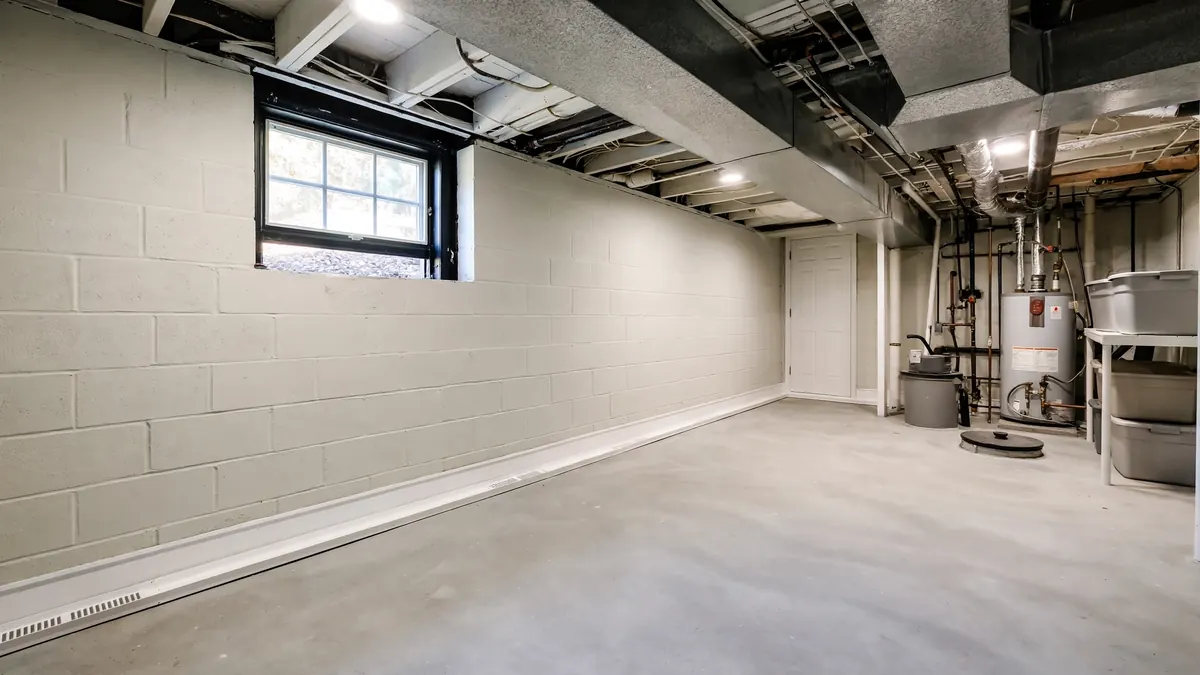 Basement Waterproofing
Basement waterproofing in Youngstown, OH for wet basements, wall leaks and seepage. Interior drains, sump pumps and foun
Learn more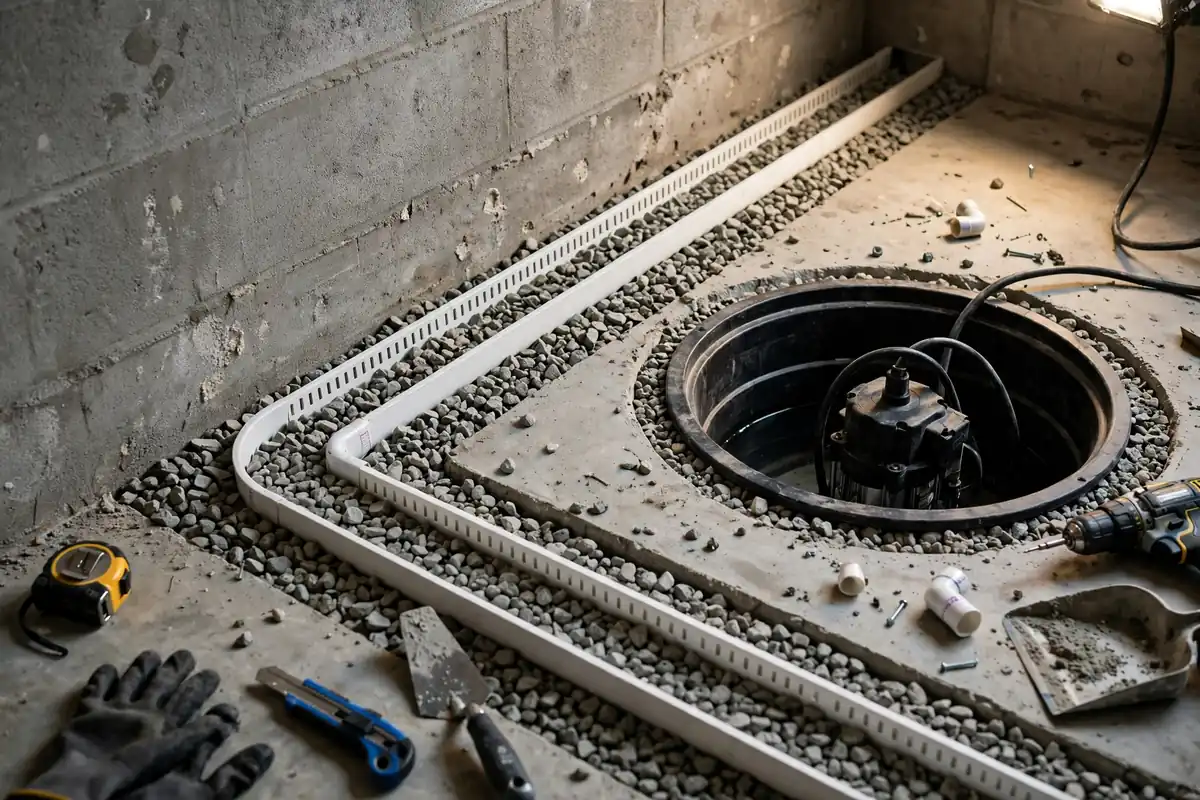 Interior Drain System
Interior drain systems in Youngstown, OH collect water at the wall-floor joint and send it to a sump pump. A proven fix
Learn more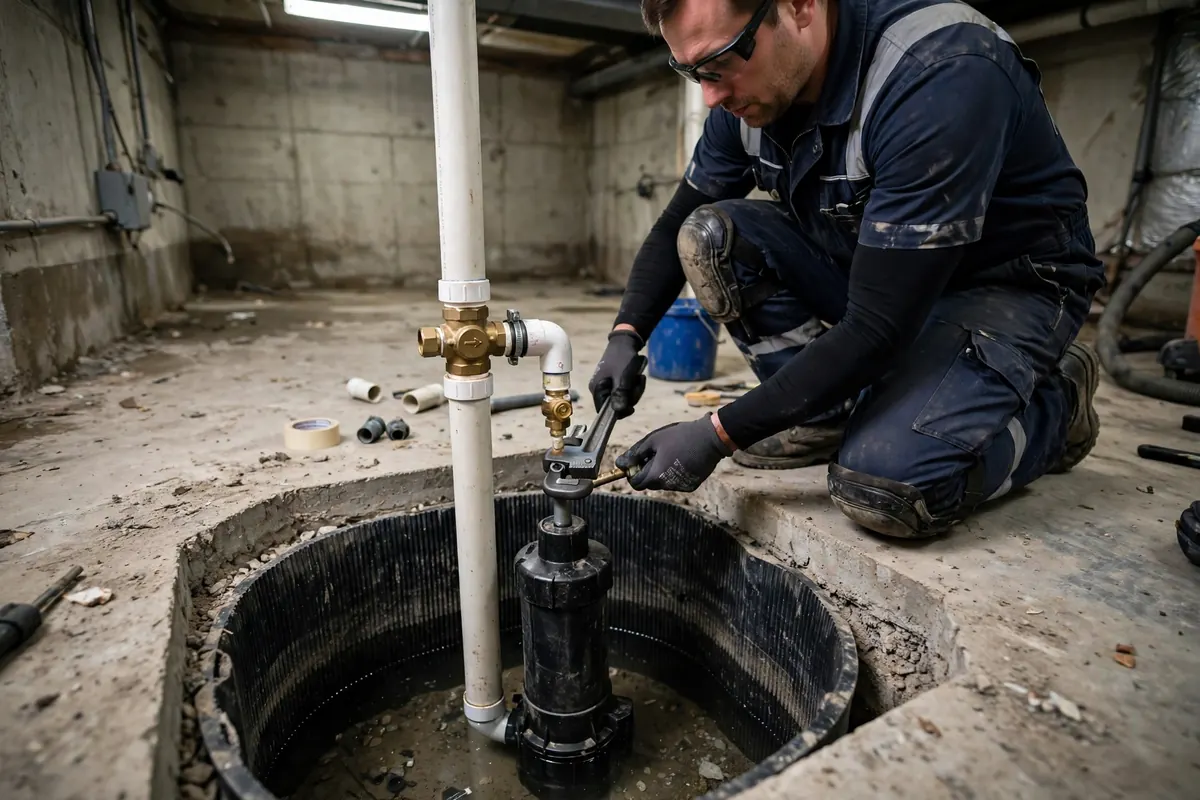 Sump Pump Installation
Sump pump installation in Youngstown, OH for basements that take on water. Submersible pumps, battery backup systems and
Learn more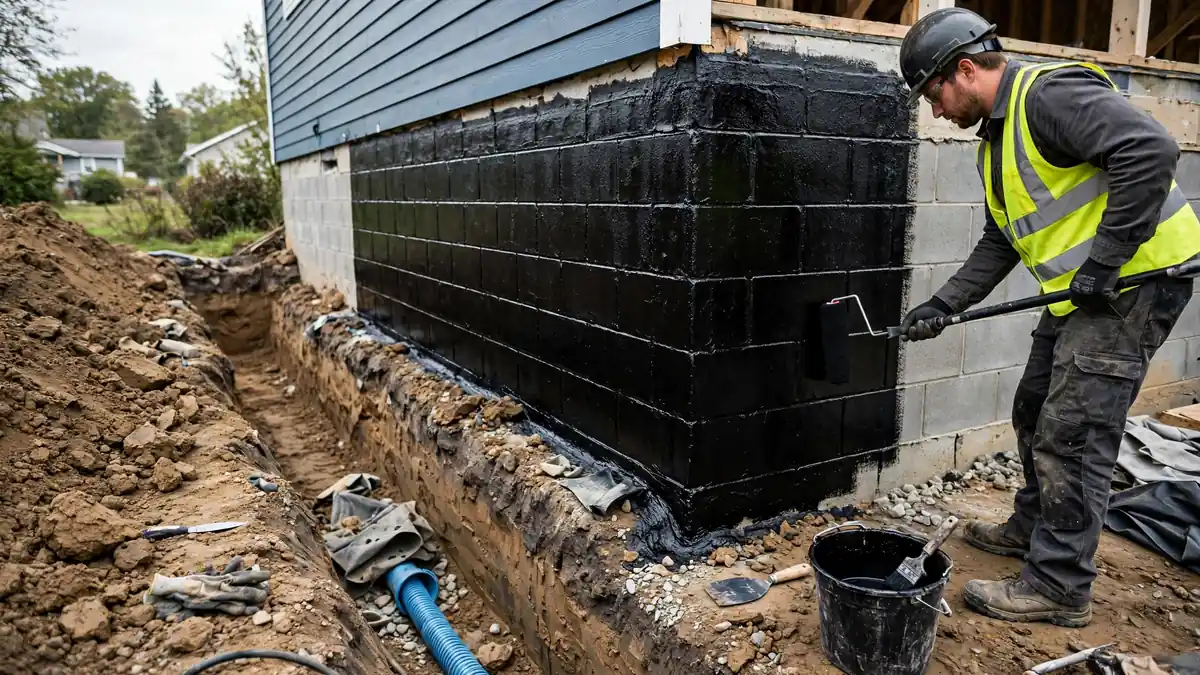 Foundation Waterproofing
Foundation waterproofing in Youngstown, OH: exterior membranes, drainage board and interior systems for block and poured
Learn more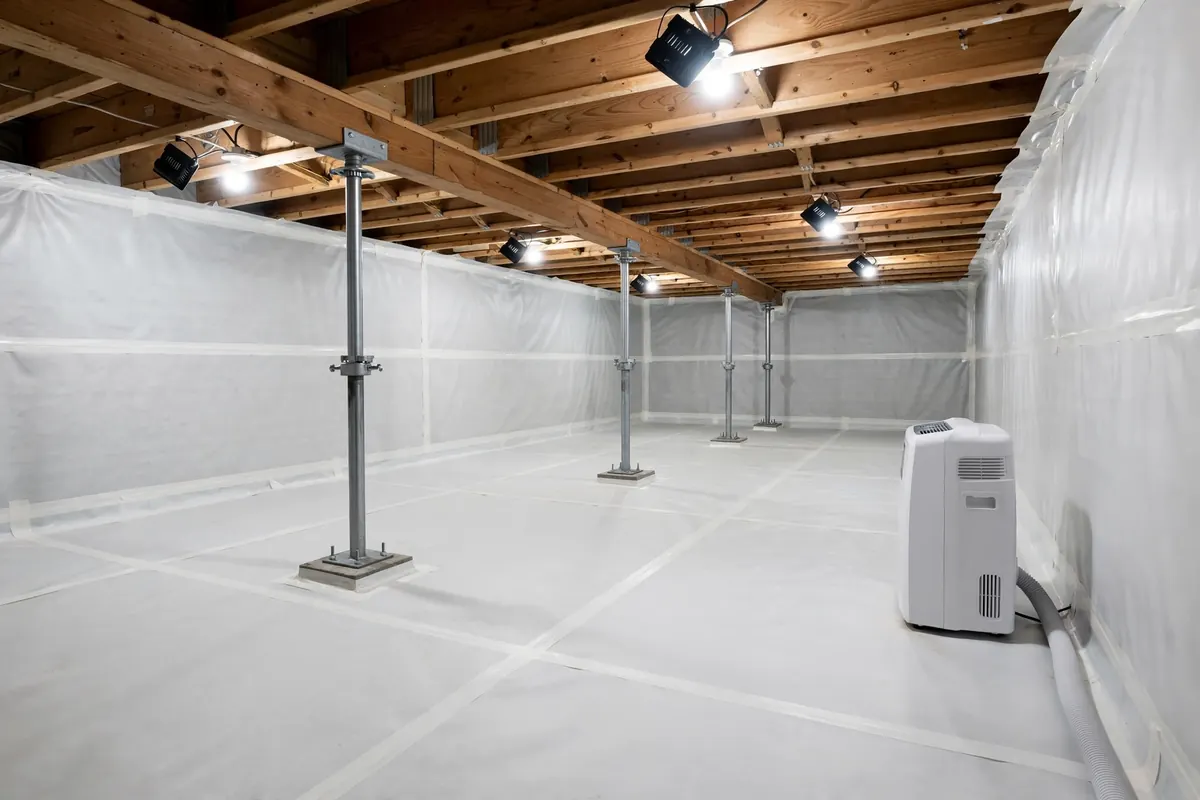 Crawl Space Waterproofing
Crawl space waterproofing in Youngstown, OH: encapsulation, vapor barriers, drainage and dehumidification for damp crawl
Learn more Basement Leak Repair
Basement leak repair in Youngstown, OH: find where the water enters and fix that path. Crack injection, joint sealing an
Learn moreQuestions, answered
A properly installed French drain lasts for decades. The pipe and the gravel do not wear out. The drain fails only if it clogs with silt, which happens when the pitch is wrong, the gravel is wrong, or the filter fabric is missing. With the right pitch, washed gravel and a filter fabric, the drain stays open and keeps working.
It will help, if the water is coming from the surface. A French drain along the foundation intercepts surface water and groundwater before they reach the wall, which reduces the amount of water the basement has to handle. It will not fix a high water table or a leaking cove joint on its own, and those need an interior drain and a sump pump. The two systems work together.
To a dry well, a drainage swale, or the street, depending on the lot. The outlet has to be lower than the drain, so the water flows by gravity, and it has to be clear. A drain that ends at the foundation, or in a low spot that holds water, is not a drain at all, because the water has nowhere to go.
It is difficult, because frozen ground is hard to dig. Exterior drainage work is usually scheduled in the warmer months. Interior drainage work, by contrast, can be done year-round, because it happens inside the basement. If a yard drain is needed urgently, it can be installed in winter, but it will take longer.
Deep enough to collect the water that is causing the problem, and shallow enough to drain by gravity to the outlet. A yard drain is usually eighteen inches to two feet deep. A drain along a foundation is deeper, down to the footing, so it can intercept the water before it reaches the wall. The depth is decided by the layout and the outlet, not by a standard number.
The trench will disturb the lawn along its length, and the grass will need to grow back, which usually takes a few weeks. The lawn is restored as part of the job, and the trench is backfilled and levelled. A drain that is installed properly leaves no lasting damage, and the lawn is often healthier afterwards, because the soil is no longer waterlogged.
Talk to a local waterproofing professional
Describe what is happening in your basement and a local professional will assess the water path and the right fix.
Get in touch
Talk to a local waterproofing professional about your basement.
Hours: Mon–Fri 7:00 AM–10:00 PM ET · Sat 8:00 AM–10:00 PM ET · Sun 7:00 AM–9:00 PM ET
What to have ready
- Where the water appears, and after what kind of weather
- Whether the basement has a sump pump, and whether it runs
- Photos of the wall, the floor joint, or the water itself