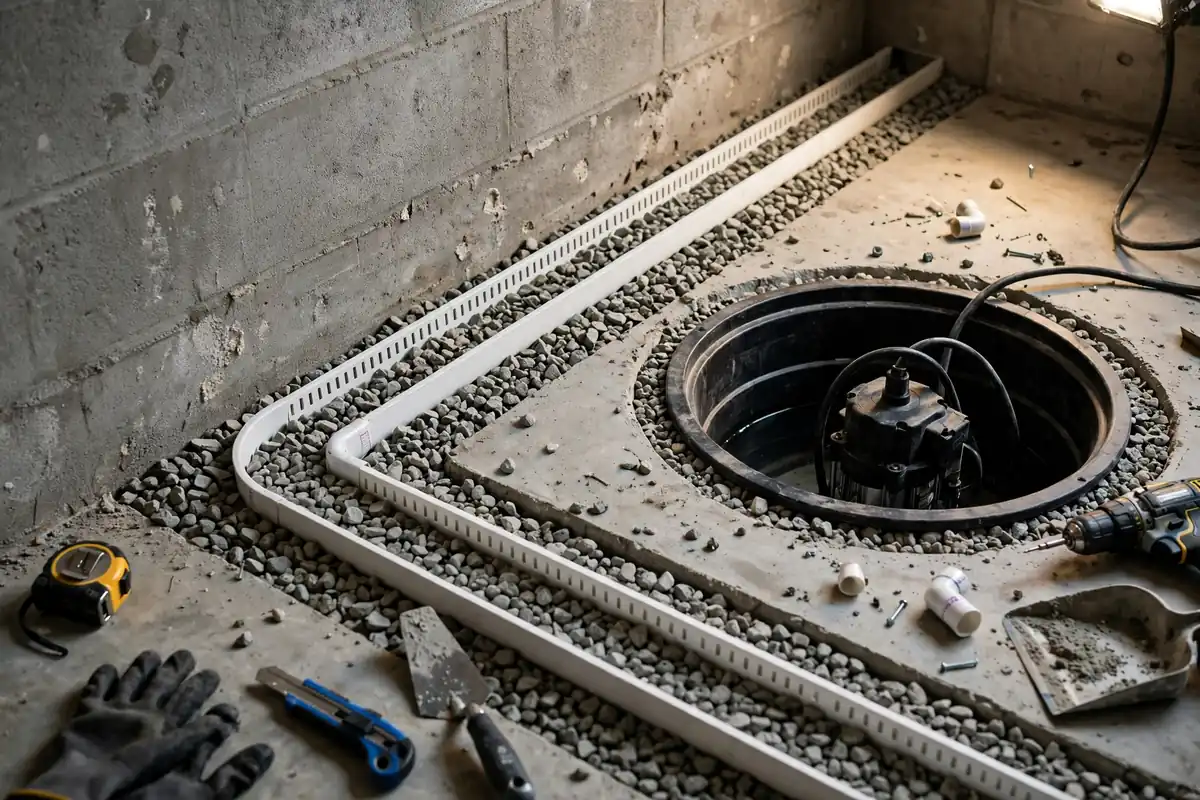
Commercial Basement Waterproofing in Youngstown, OH
A commercial basement that takes on water is not an inconvenience. It is inventory at risk, equipment at risk, tenants at risk, and a building that cannot be used the way it was meant to be used.
Talk to a local waterproofing professional
Describe what is happening in your basement and a local professional will assess the water path and the right fix.
Hours: Mon–Fri 7:00 AM–10:00 PM ET · Sat 8:00 AM–10:00 PM ET · Sun 7:00 AM–9:00 PM ET
What water does to a commercial building
A commercial basement in Youngstown is often the largest single space in the building, and it is often the space that holds the most value: inventory, records, mechanical equipment, and sometimes tenant space. Water in that space does not just damage the floor. It damages the inventory, it rusts the equipment, it ruins the records, and it makes the space unusable.
The damage is also a liability. A tenant who slips on a wet floor, a customer who is injured in a flooded stairwell, or a business that loses inventory to water damage are all risks that a building owner carries. A dry basement is a building that can be insured, leased and used without that risk hanging over it.
Commercial buildings in Youngstown are often older, with block foundations and large footprints, and they take on water the same way residential basements do: at the cove joint, through the block wall, and through the floor slab. The difference is the scale. A commercial basement is larger, the water volume is higher, and the system has to be sized for the building, not for a house.
Common commercial basement problems
A leaking cove joint is the most common problem in a commercial basement, just as it is in a house. The water enters at the joint where the wall meets the floor, after every sustained rain, and it spreads across a large floor area. The fix is an interior drain channel that runs the full perimeter, with a high-capacity sump pump that can move the volume.
Seepage through a large block wall is the second most common problem, especially in older commercial buildings. The wall is long, the mortar joints are many, and the seepage appears across a wide area. The fix is a wall membrane that catches the seepage and directs it into the drain channel, and the membrane has to be continuous, because a gap in a long wall is a leak.
A failed sump pump is the third most common problem, and it is the one that causes the most damage in a commercial building, because the water volume is higher and the space is larger. A commercial pump needs to be sized for the building, with a backup pump and a battery backup or a generator, because a power cut during a storm will flood a commercial basement faster than a residential one.
A floor slab that leaks is a problem that is more common in commercial buildings than in houses, because the slab is larger and the water table has more area to press against. A slab that leaks needs a drain system under the slab, or a sump pump that can handle the volume, and the system has to be designed for the building, not for a house.
How a commercial basement is waterproofed
Every job starts with an inspection that looks at the building as a whole: the basement, the outside, the grading, the drainage, and the use of the space. The inspection maps the water paths, measures the water volume, and decides the system. A commercial inspection takes longer than a residential one, because the building is larger and the water volume is higher.
For most commercial basements, the answer is a full interior system: a drain channel around the full perimeter, a wall membrane on the full wall, and a high-capacity sump pump, often with a second pump as a backup. The system is installed from the inside, so there is no excavation, and it can be done in sections, so the building can stay in use during the work.
The pump is the critical part. A commercial pump has to move the volume that arrives during the heaviest rain, plus a margin, and it has to do it reliably. A second pump, on a separate circuit, is often fitted, so that if one pump fails, the other takes over. A battery backup or a generator connection is fitted where power cuts are a concern.
The work is scheduled to minimise disruption, and the sections are done in order, so the building can be used throughout. The last step is testing: water is run into the channel at several points, the pumps cycle, and the discharge is watched outside to confirm the water is actually leaving the property.
Protecting inventory and equipment
A dry basement protects inventory, records and equipment, and that protection is the point of the work. Inventory that is stored on pallets, off the floor, is safer than inventory stored directly on the slab, and a dry basement means the pallets stay dry. Records that are stored in a dry basement will not go musty, and equipment that sits on a dry floor will not rust from the bottom up.
The waterproofing system should be designed with the use of the space in mind. A basement that holds inventory needs a system that can handle a flood without the inventory being damaged, which means a high-capacity pump and an alarm that sounds if the water rises. A basement that holds mechanical equipment needs a system that keeps the floor dry, because the equipment is the most expensive thing in the room.
A water alarm in the sump pit, and a second alarm on the floor, are worth fitting in a commercial basement, because they give the building manager time to act before the water reaches the inventory or the equipment. An alarm that is heard in time can save a basement, and in a commercial building, it can save a business.
What a proper job looks like
Water path found first
The inspection traces the water to its entry point, so the fix matches the cause.
Pressure relieved, not fought
A drain channel gives water a better path than your floor. Paint and sealant fight pressure and lose.
Pump sized to the house
The pump is sized to the water volume and the lift, with a battery backup for power cuts.
Tested before handover
Water is run into the channel, the pump cycles, and the discharge is checked outside.
From inspection to a dry basement
Inspection
Walk the basement and the outside of the house to find where the water enters, what the wall is made of, and where the water table sits.
Plan
Match the system to the house: drain channel, wall membrane, sump pump, discharge, and battery backup where power cuts are a concern.
Install
Cut the trench, lay the channel and gravel, fit the membrane and the pump, and run the discharge away from the house.
Restore
Re-pour the concrete flush with the floor, clean the work area, and leave the basement usable again.
Test
Run water into the channel, watch the pump cycle, and confirm the discharge flows away from the property.
Services for Commercial Buildings
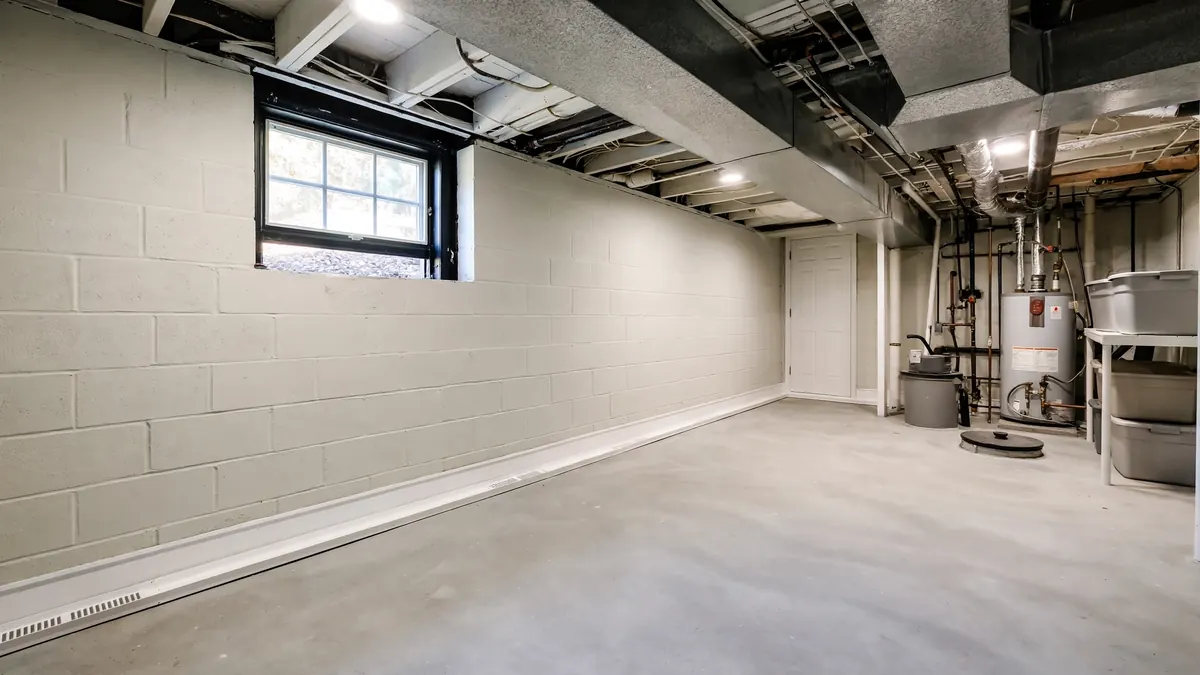 Basement Waterproofing
Basement waterproofing in Youngstown, OH for wet basements, wall leaks and seepage. Interior drains, sump pump
Learn moreInterior Drain SystemInterior drain systems in Youngstown, OH collect water at the wall-floor joint and send it to a sump pump. A p
Learn more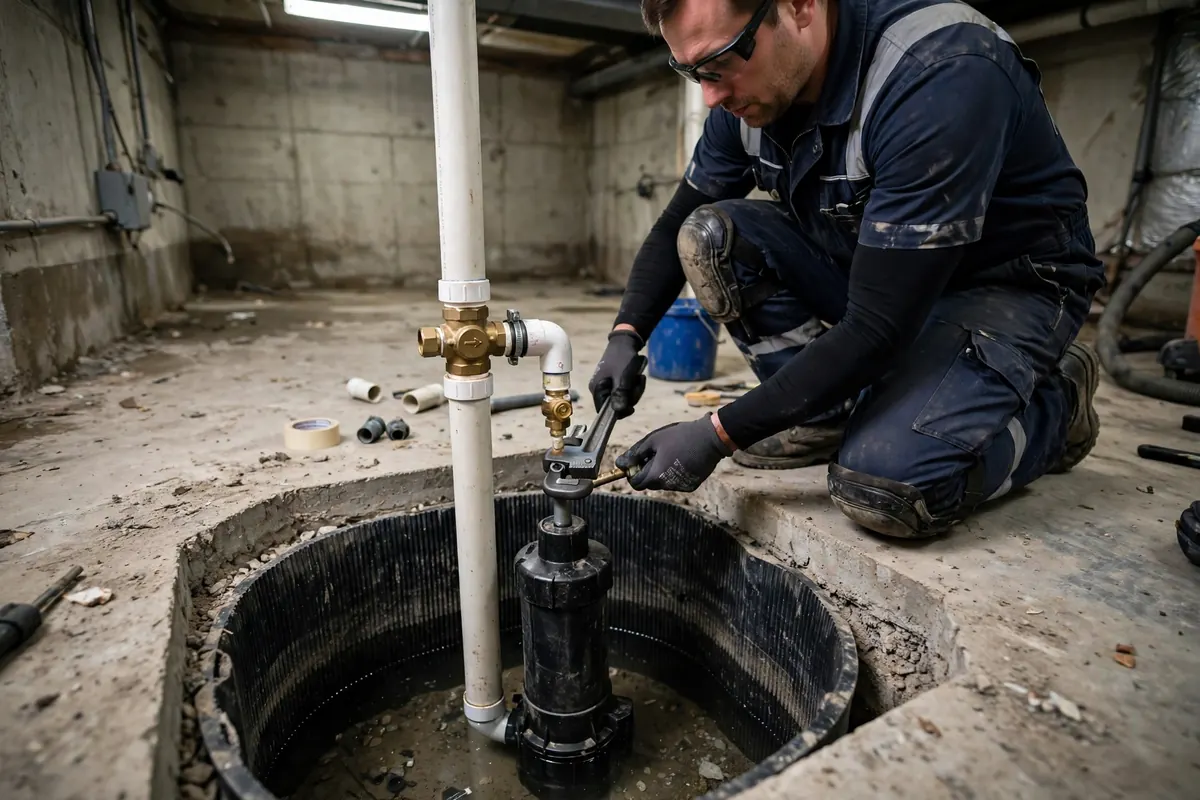 Sump Pump Installation
Sump pump installation in Youngstown, OH for basements that take on water. Submersible pumps, battery backup s
Learn more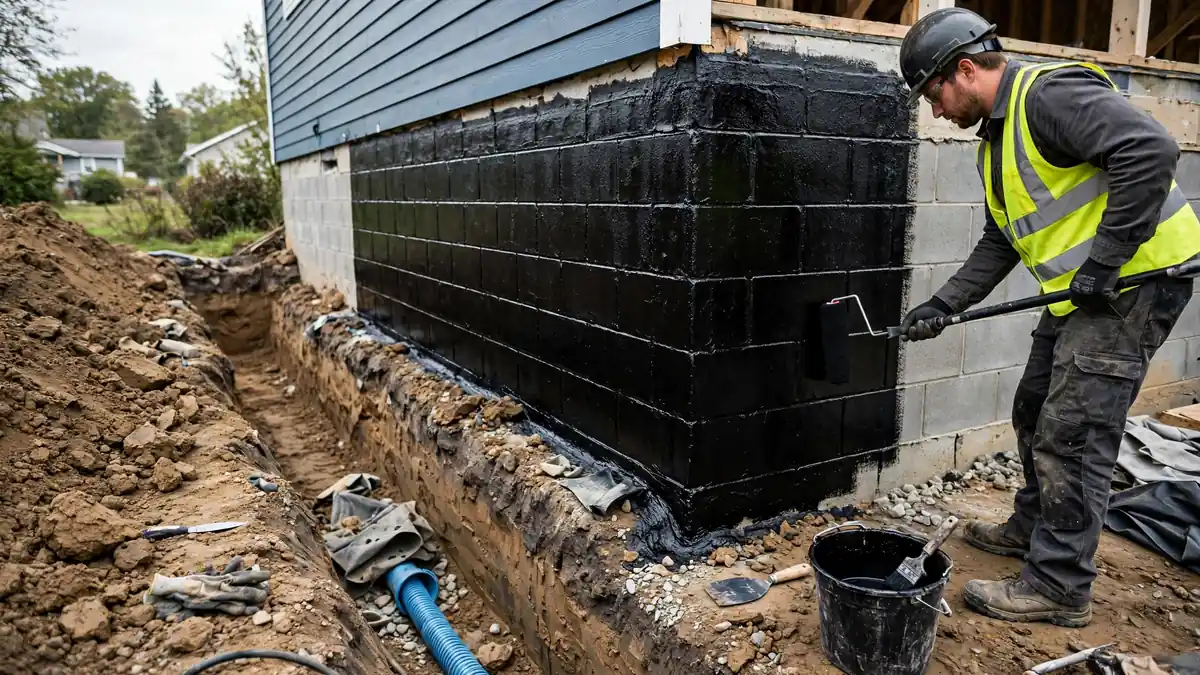 Foundation Waterproofing
Foundation waterproofing in Youngstown, OH: exterior membranes, drainage board and interior systems for block
Learn more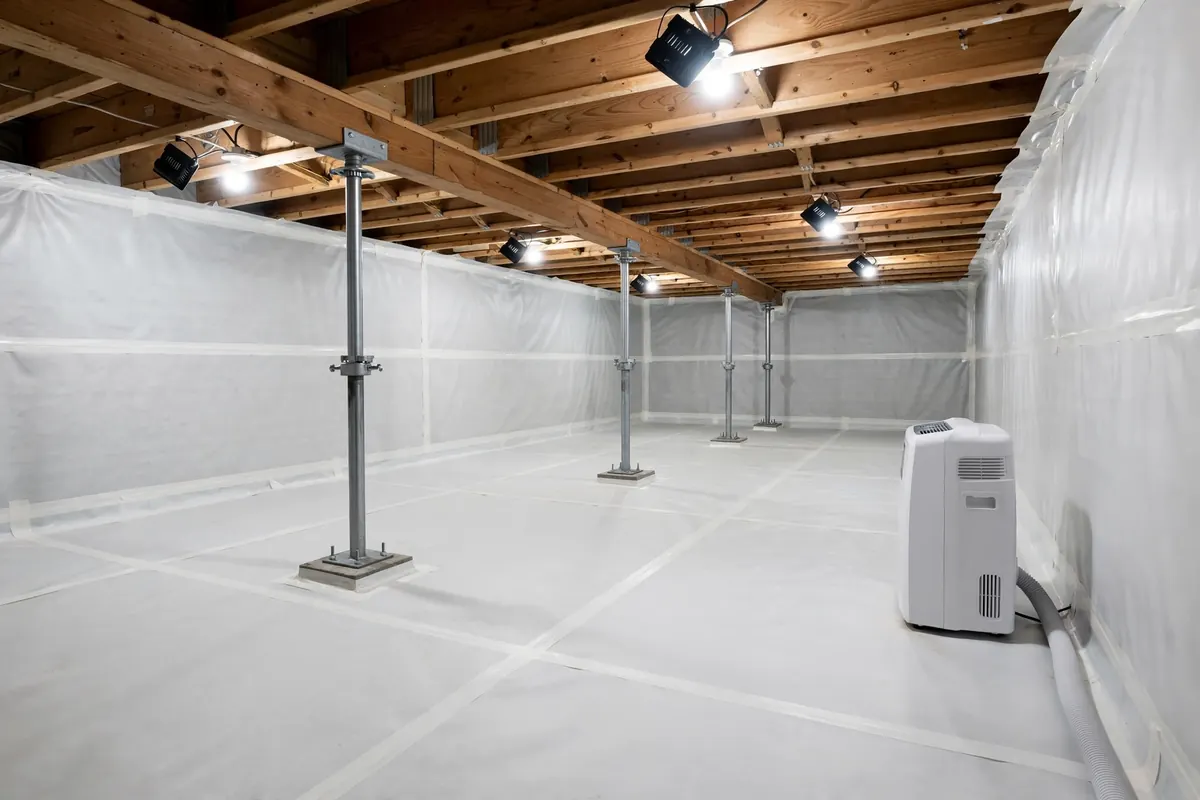 Crawl Space Waterproofing
Crawl space waterproofing in Youngstown, OH: encapsulation, vapor barriers, drainage and dehumidification for
Learn more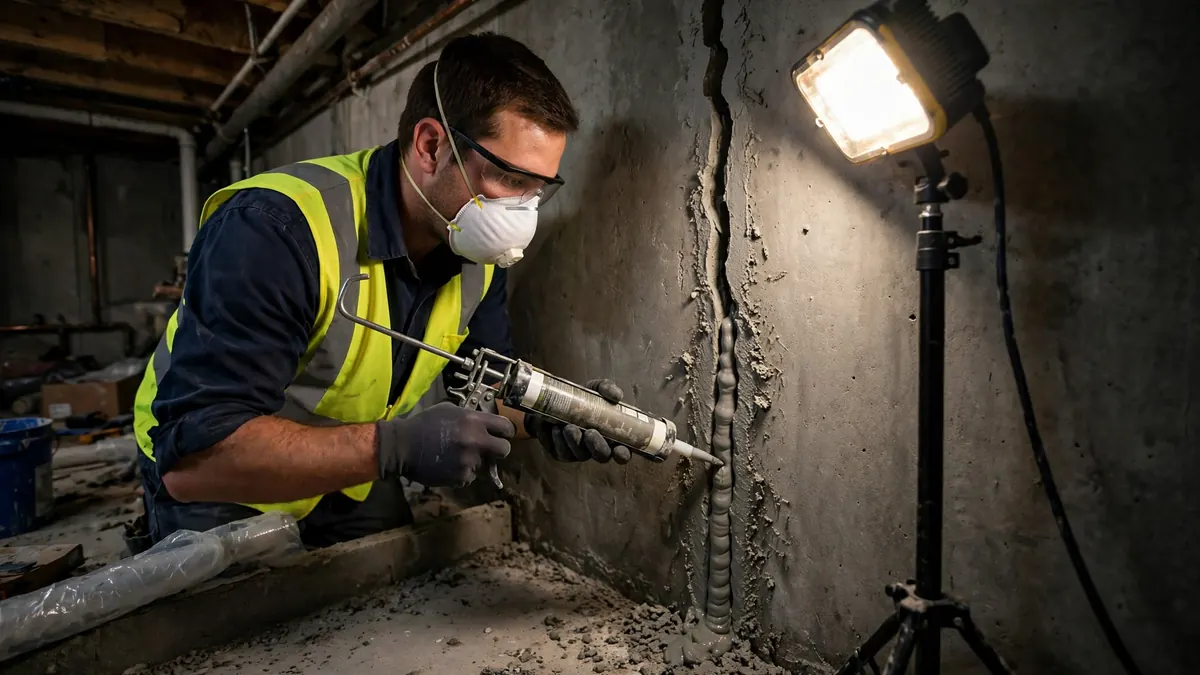 Basement Leak Repair
Basement leak repair in Youngstown, OH: find where the water enters and fix that path. Crack injection, joint
Learn moreQuestions, answered
Yes. Interior work is done in sections, so the building can stay in use during the work. The sections are done in order, and the disruption is limited to the area being worked on. Exterior work is more disruptive, because the yard is dug up, but it is usually done on one wall at a time, so the building can still be used.
It is larger, more powerful, and it is usually fitted in pairs, so that if one pump fails, the other takes over. A commercial basement takes on more water, because the footprint is larger, and the pump has to move the volume that arrives during the heaviest rain, plus a margin. A commercial pump is also more likely to have a battery backup or a generator connection, because a power cut during a storm will flood a commercial basement faster than a residential one.
Interior work is done in sections, and the disruption is limited to the area being worked on. The noise is the main disruption, and it is scheduled to minimise it. Exterior work is more disruptive, because the yard is dug up, but it is usually done on one wall at a time. The schedule is agreed with the building owner before the work starts, so the disruption is planned, not a surprise.
A full interior system includes the drain channel, the wall membrane, the sump basin and pumps, the discharge line with check valves, and the concrete restoration. It should also include a sealed basin lid, a water alarm in the pit, and a discharge outlet that is protected from freezing. A commercial system often includes a second pump, on a separate circuit, and a battery backup or a generator connection.
The same way as a residential system, but more often, because the water volume is higher. Test the pumps regularly, keep the pits clean, check the discharge each spring, and check the battery backup. A commercial system should be checked quarterly, and the pumps should be serviced annually. A few minutes of checking each season keeps the system ready for the storm that matters.
Yes, but only after the basement has stayed dry through a wet season. Finishing a basement before the water problem is fixed means the finished walls will hide the water until the damage is already done. Waterproof first, test through a spring, and only then finish. It is far simpler to waterproof an unfinished basement than to repair a finished one.
Talk to a local waterproofing professional
Describe the building and what is happening in the basement, and a local professional will assess the water path and the right fix.
Get in touch
Talk to a local waterproofing professional about your basement.
Hours: Mon–Fri 7:00 AM–10:00 PM ET · Sat 8:00 AM–10:00 PM ET · Sun 7:00 AM–9:00 PM ET
What to have ready
- Where the water appears, and after what kind of weather
- Whether the basement has a sump pump, and whether it runs
- Photos of the wall, the floor joint, or the water itself