Wet Basement Repair in Youngstown, OH
A wet basement is not a single problem. It is a set of small problems that all end in the same place: water where it does not belong, and a house that slowly pays for it.
Talk to a local waterproofing professional
Describe what is happening in your basement and a local professional will assess the water path and the right fix.
Hours: Mon–Fri 7:00 AM–10:00 PM ET · Sat 8:00 AM–10:00 PM ET · Sun 7:00 AM–9:00 PM ET
What a wet basement really is
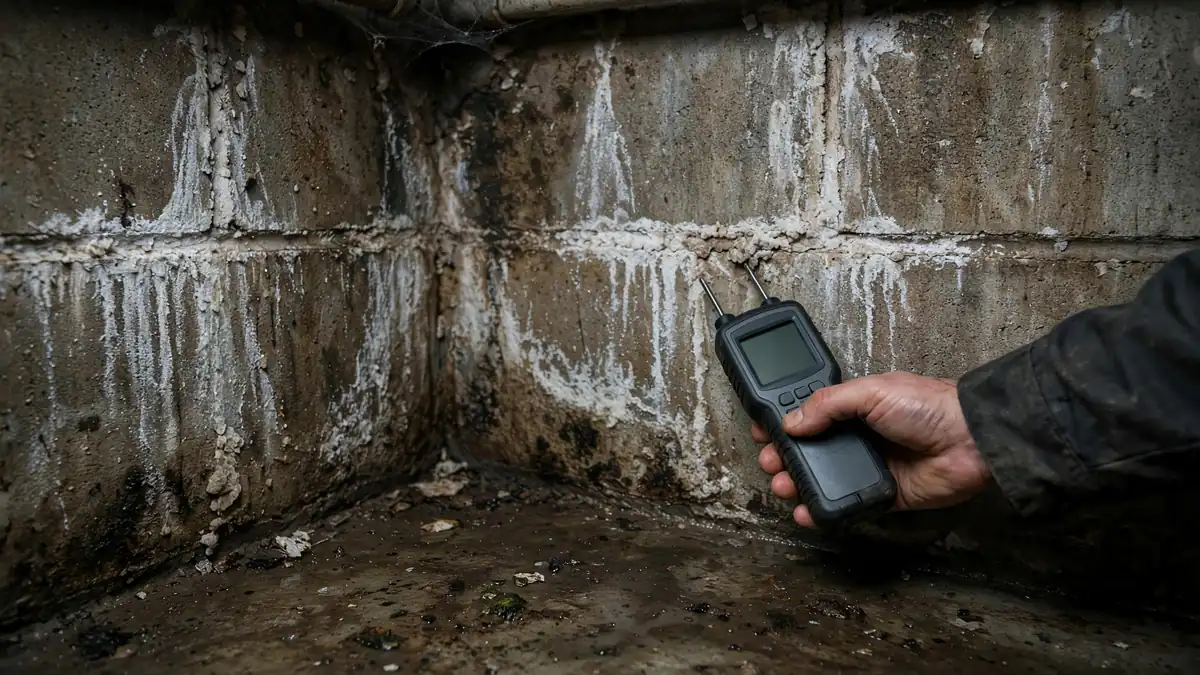
A wet basement is a basement that takes on water regularly enough that the house is damaged by it. It may flood, or it may never flood. It may show a puddle after every storm, or it may only show a damp floor, a musty smell, and white mineral stains on the wall. All of those are the same problem at different stages: water is getting in, and it is staying long enough to do damage.
The damage is not always visible. Water that soaks a block wall weakens the mortar. Water that sits on a floor slab raises the humidity in the whole house. Water that keeps a basement damp feeds mould behind finished walls, rusts the furnace and the water heater from the bottom up, and rots the wood sill plate where the house meets the foundation. A basement that is merely damp is a basement that is being damaged slowly, and the damage is more expensive the longer it goes on.
Youngstown basements get wet for a combination of reasons, and most wet basements have more than one. The water table is high in the valley, the soil is clay-heavy and holds water against the wall, the housing stock is old and the exterior defences are gone, and the grading on many lots sends water toward the house. A repair that addresses only one of those reasons will leave the others open.
The first step in repairing a wet basement is to stop thinking of it as one problem and start thinking of it as a set of water paths. Each path is found, each path is closed, and the basement is tested through the next wet season. A basement that stays dry through a Youngstown spring is a basement that has been repaired.
The four ways water gets into a Youngstown basement
The first path is the cove joint, where the wall meets the floor. It is the most common path in the valley, and it is the one that produces a wet strip along the base of the wall after rain. The water arrives from below, pushed up by the water table, and it enters at the seam because the seam is the weakest point in the foundation.
The second path is through the wall itself. Block walls are porous, and water moves through the mortar joints and the block cores, appearing on the inside face as damp patches, efflorescence, or a slow seep that never quite forms a puddle. Poured walls leak through cracks and cold joints. A wall that is wet through its full thickness is a wall that needs a membrane, inside or outside, to catch or stop the seepage.
The third path is over the top: window wells that fill and spill over the sill, a bulkhead door that lets in driving rain, or a wall that leaks just below the sill plate because the soil line is too high. These leaks are the easiest to miss, because they only appear during a storm from a particular direction, and they are the easiest to fix, because the cause is usually drainage, not the wall.
The fourth path is from below, through the floor slab itself. A slab that is cracked, or a floor drain that backs up, can let water rise into the room. A floor leak is less common than a joint leak, but it is more serious, because it means the water table is high enough to push through the slab, and it usually needs a sump pump and a drain system to manage.
Diagnosing a wet basement
Diagnosis starts with observation. The technician walks the basement during or just after rain, when the water paths are visible, and maps them: where the water appears, how far it spreads, and whether it comes from the joint, the wall, a window or the floor. The homeowner's record of when the basement gets wet, and after what kind of weather, is part of the diagnosis.
The outside is checked next. The grading is measured to see whether the ground falls away from the house or toward it. The gutters are checked for clogs and for downspouts that discharge at the foundation. The driveway and the sidewalk are checked for a pitch that sends water to the wall. The soil line is checked against the sill, because soil piled too high against the wall will let water in at the top.
The sump pit, if there is one, is checked for water level, for silt, and for whether the pump runs. A pit that is full while the floor is wet means the pump has failed or the discharge is blocked. A pit that is dry while the floor is wet means the water is entering somewhere the pit cannot reach, and a drain channel is needed to connect the two.
The diagnosis ends with a plan that lists each water path and the fix for it. A plan that lists one path is a plan for a leak. A plan that lists all of them is a plan for a dry basement.
Repair options for a wet basement
An interior drain system is the core repair for most wet basements in the valley. A channel along the wall-floor joint collects the water that enters at the cove joint and through the lower wall, and a sump pump sends it outside. It handles the water table, the joint and the lower wall in one system, and it can be installed year-round.
A wall membrane is the repair for a wall that seeps across a wide area. The membrane is fixed to the inside face of the wall and directs the seepage down into the drain channel. It does not stop the wall from getting wet on the outside, but it stops the water from reaching the room, and that is what matters for the basement.
Exterior waterproofing is the repair for a wall that is deteriorating, or for a leak that is localised to one wall. The wall is excavated, sealed with a membrane and a drainage board, and the drain tile at the footing is replaced. It is the most disruptive repair, and it is the only one that stops water from touching the wall at all.
Grading and drainage work is the repair for water that arrives from the surface. Regrading the ground so it falls away from the house, extending downspouts, and rebuilding a window well so it drains are all part of keeping water away from the foundation. They do not replace a drain system, but they reduce the amount of water the system has to handle, and they make every other repair work better.
Drying out a basement that has been wet for years
A basement that has been wet for years does not dry in a day, even after the water path is closed. The walls have absorbed moisture, the slab is damp through, and the air is humid. Once the system is installed, the basement needs time to dry, and a dehumidifier helps. The dehumidifier should be sized to the space and drained to the sump pit, so it can run without being emptied.
Stored items that have been in a damp basement should be checked before they are put back. Cardboard boxes, fabric and paper absorb moisture and mould, and they should be replaced rather than returned to the basement. Metal shelving should be checked for rust, and any wood that is soft or discoloured should be assessed before it is covered up.
The musty smell will fade as the basement dries, but it may take weeks. The smell comes from mould, and mould needs moisture to grow. Once the moisture is gone, the mould stops growing, but the smell lingers until the air has been exchanged and the surfaces have dried. Ventilation and a dehumidifier speed that up.
A basement that has been wet for a long time should also be checked for mould on the joists and the subfloor above, because the moisture rises. If mould is found, it needs to be addressed as part of the repair, not covered up with a finished wall.
Mistakes that keep a basement wet
The most common mistake is fixing one path and ignoring the others. A homeowner seals a crack, and the basement still gets wet, because the water was also coming through the joint. A homeowner installs a sump pump, and the basement still gets wet, because the pump has no channel feeding it. A wet basement needs a plan that covers every path, not a single repair.
A second mistake is relying on waterproof paint. Paint will hold for a few weeks, then peel, because the water pressure behind it does not go away. It also hides the leak, so the homeowner does not notice it getting worse. Paint is a cosmetic step, not a repair.
A third mistake is discharging the sump pump at the foundation. The water leaves the pit, soaks back into the soil, and re-enters the basement. The pump runs all night and the basement stays wet. The discharge has to end well away from the house, on ground that falls away from the foundation.
The last mistake is waiting for the basement to dry on its own. A wet basement in the Mahoning Valley does not dry on its own. The water table, the soil and the climate keep it wet, and the damage gets worse every season. A basement that is repaired when it is damp is a manageable job. A basement that is repaired after years of damp is a major one.
Wet basements in the Mahoning Valley towns
Youngstown's West Side, near the Mahoning River, has the wettest basements in the cluster, because the water table is highest there and the homes are oldest. Those basements usually need a full system: an interior drain, a sump pump with a battery backup, and a wall membrane, because the water comes from below, from the joint and from the wall all at once.
Boardman's ranches are wet for a different reason: clay soil and flat lots. The water does not come from a high water table so much as from surface water that cannot drain away. Those basements often improve dramatically with a drain system plus grading and downspout work, because the surface water is the main source.
Austintown and Canfield have a mix, with post-war homes whose basements wet up in spring and stay damp all summer. Those homes usually need a drain and a dehumidifier, because the problem is both the water that enters and the humidity that stays.
How a wet basement is tested after repair
A repaired basement should be tested through the next wet season, and the test is simple: watch it during and after rain. A basement that stays dry through a Youngstown spring, with its snowmelt and its thunderstorms, is a basement that has been repaired. A basement that wets up again has a water path that was missed, and the path needs to be found.
The test should cover the whole basement, not just the wall that was repaired. Water that was entering at the joint may now enter through a window well, or through a crack that was hidden behind stored items. A basement has many possible water paths, and fixing one does not fix the others, so the watch after the repair has to cover the whole room.
The homeowner should keep a record of when the basement gets wet, and after what kind of weather. A wet strip that appears after every rain, a musty smell that is stronger in summer, or a pump that runs constantly are all useful records, and they help the inspection. The record is part of the diagnosis, and it is the homeowner's contribution to keeping the basement dry.
If the basement stays dry through a spring and a summer, the repair has worked, and the basement can be used again. It can be finished, if the homeowner wants to, but only after it has stayed dry through a wet season. A dry basement is a basement that can be trusted, and a basement that can be trusted is a basement that can be lived in.
What a proper job looks like
Water path found first
The inspection traces the water to its entry point, so the fix matches the cause.
Pressure relieved, not fought
A drain channel gives water a better path than your floor. Paint and sealant fight pressure and lose.
Pump sized to the house
The pump is sized to the water volume and the lift, with a battery backup for power cuts.
Tested before handover
Water is run into the channel, the pump cycles, and the discharge is checked outside.
From inspection to a dry basement
Inspection
Walk the basement and the outside of the house to find where the water enters, what the wall is made of, and where the water table sits.
Plan
Match the system to the house: drain channel, wall membrane, sump pump, discharge, and battery backup where power cuts are a concern.
Install
Cut the trench, lay the channel and gravel, fit the membrane and the pump, and run the discharge away from the house.
Restore
Re-pour the concrete flush with the floor, clean the work area, and leave the basement usable again.
Test
Run water into the channel, watch the pump cycle, and confirm the discharge flows away from the property.
More waterproofing services
 Basement Waterproofing
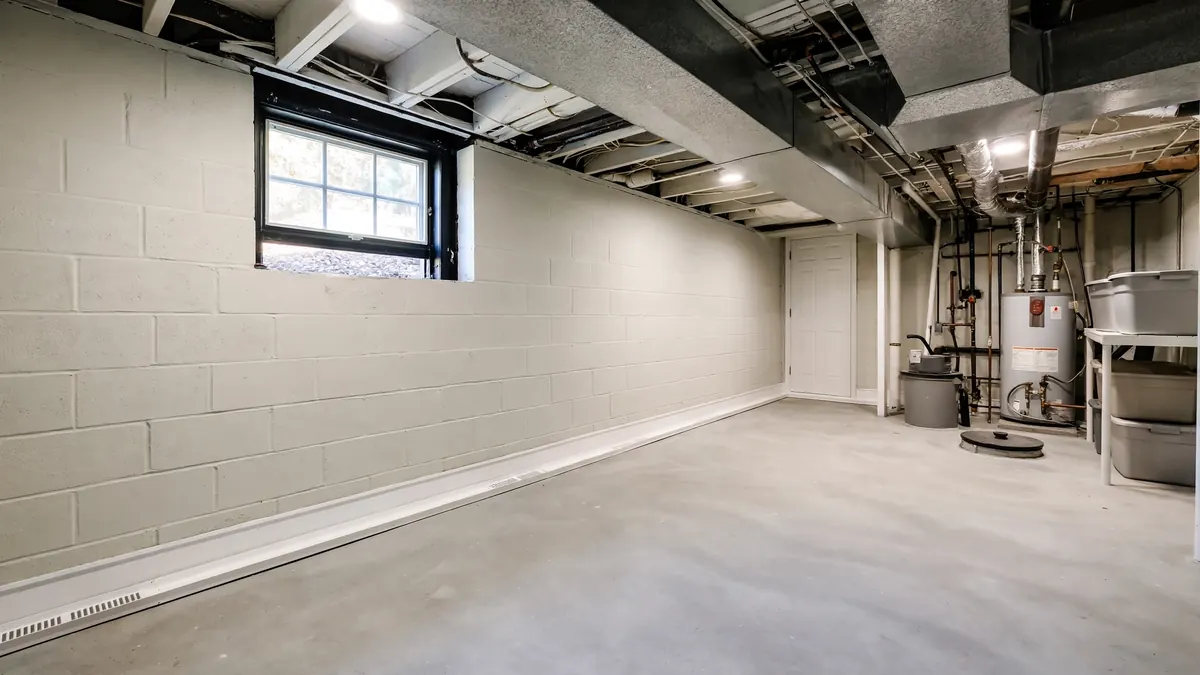
Basement waterproofing in Youngstown, OH for wet basements, wall leaks and seepage. Interior drains, sump pumps and foun
Learn more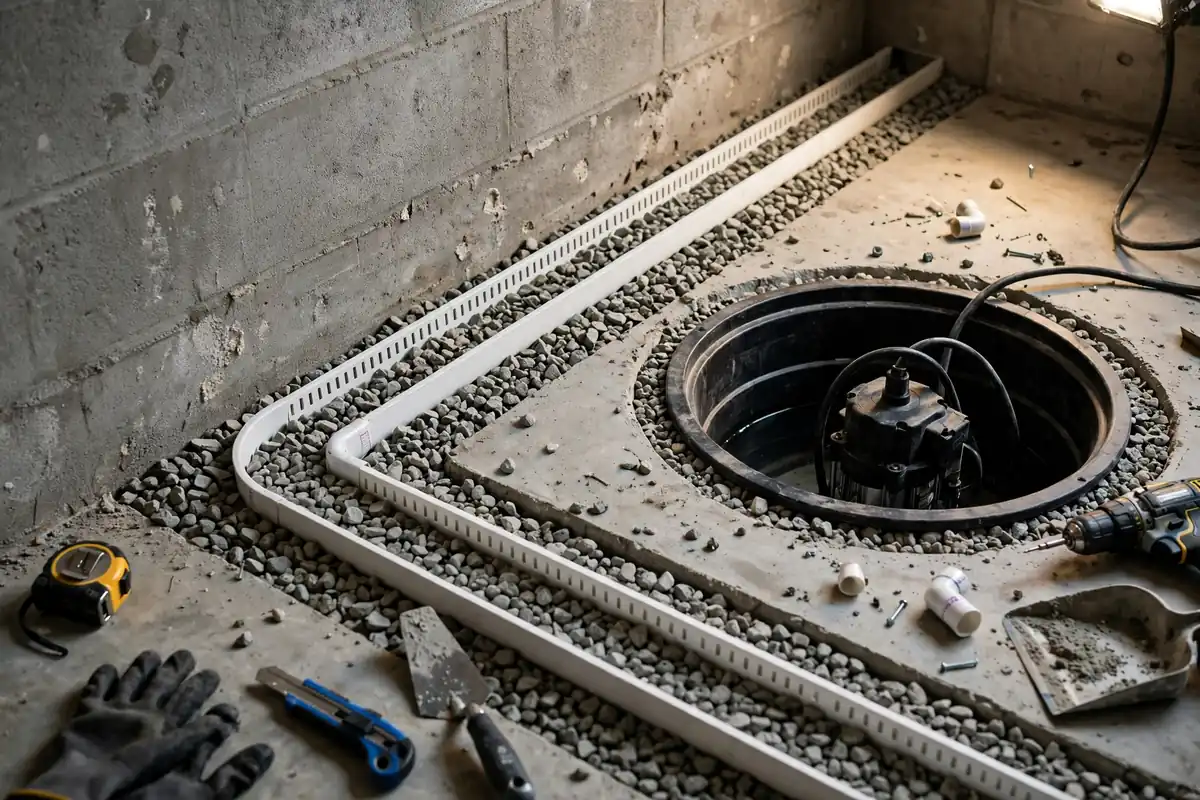 Interior Drain System
Interior drain systems in Youngstown, OH collect water at the wall-floor joint and send it to a sump pump. A proven fix
Learn more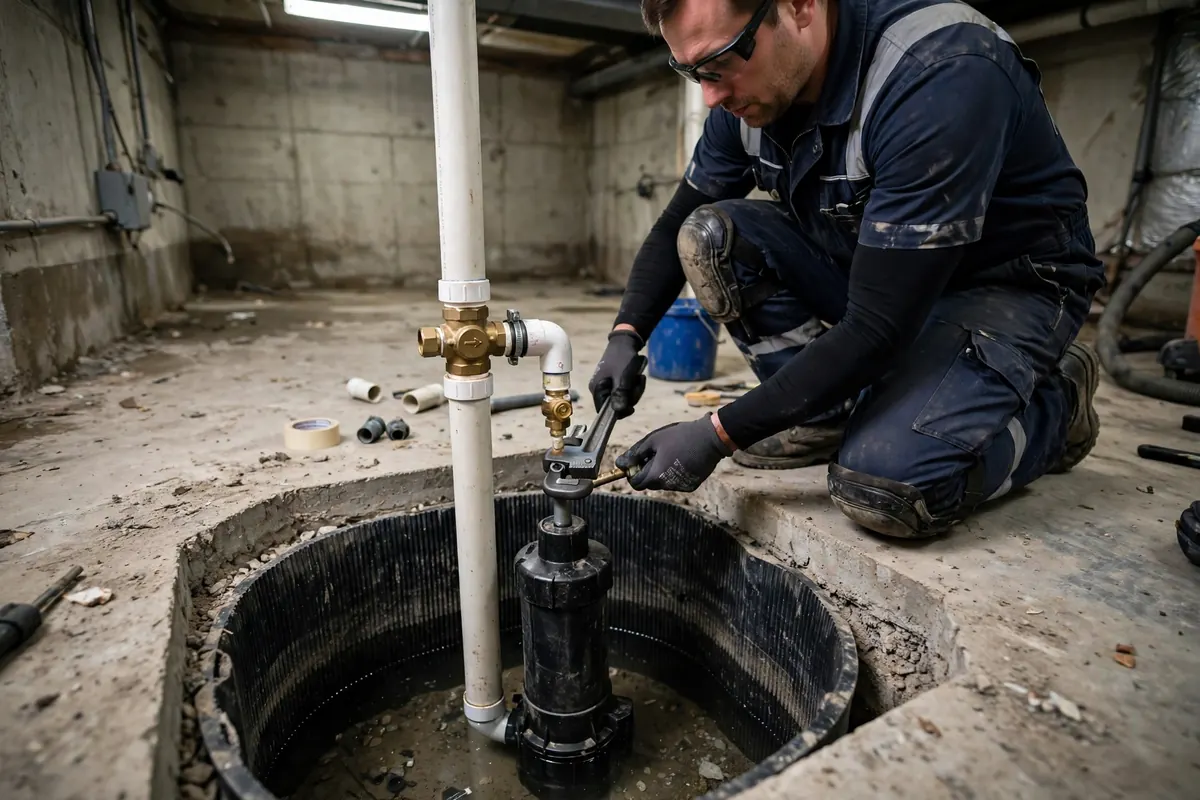 Sump Pump Installation
Sump pump installation in Youngstown, OH for basements that take on water. Submersible pumps, battery backup systems and
Learn more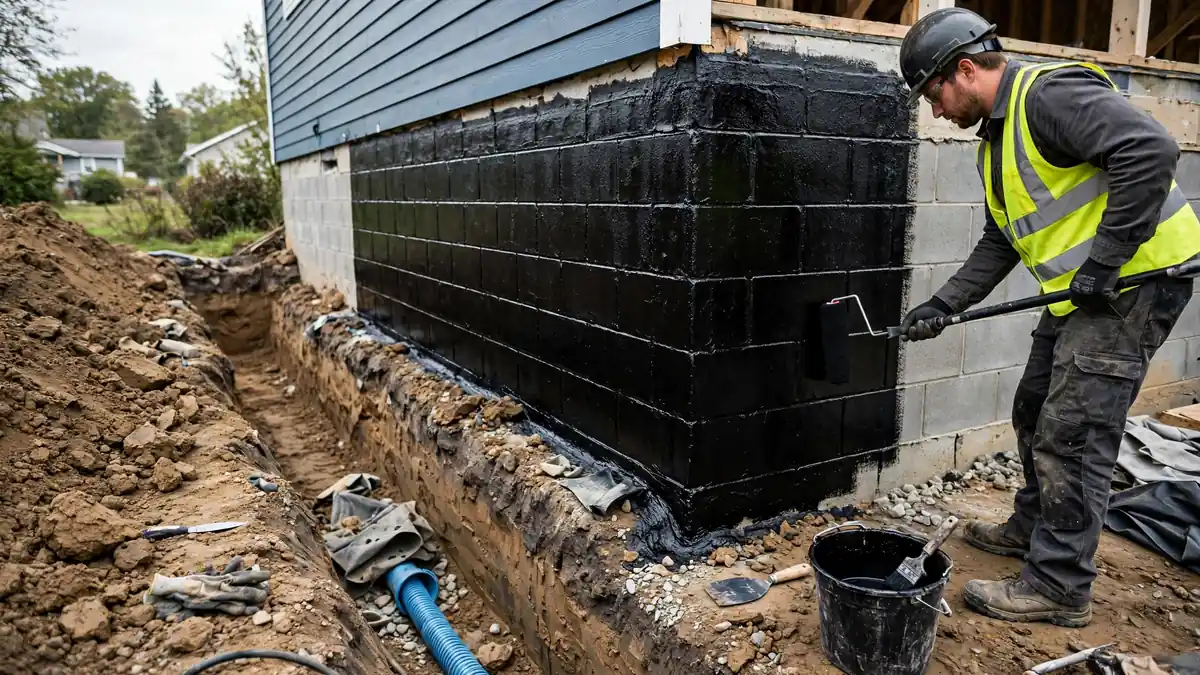 Foundation Waterproofing
Foundation waterproofing in Youngstown, OH: exterior membranes, drainage board and interior systems for block and poured
Learn more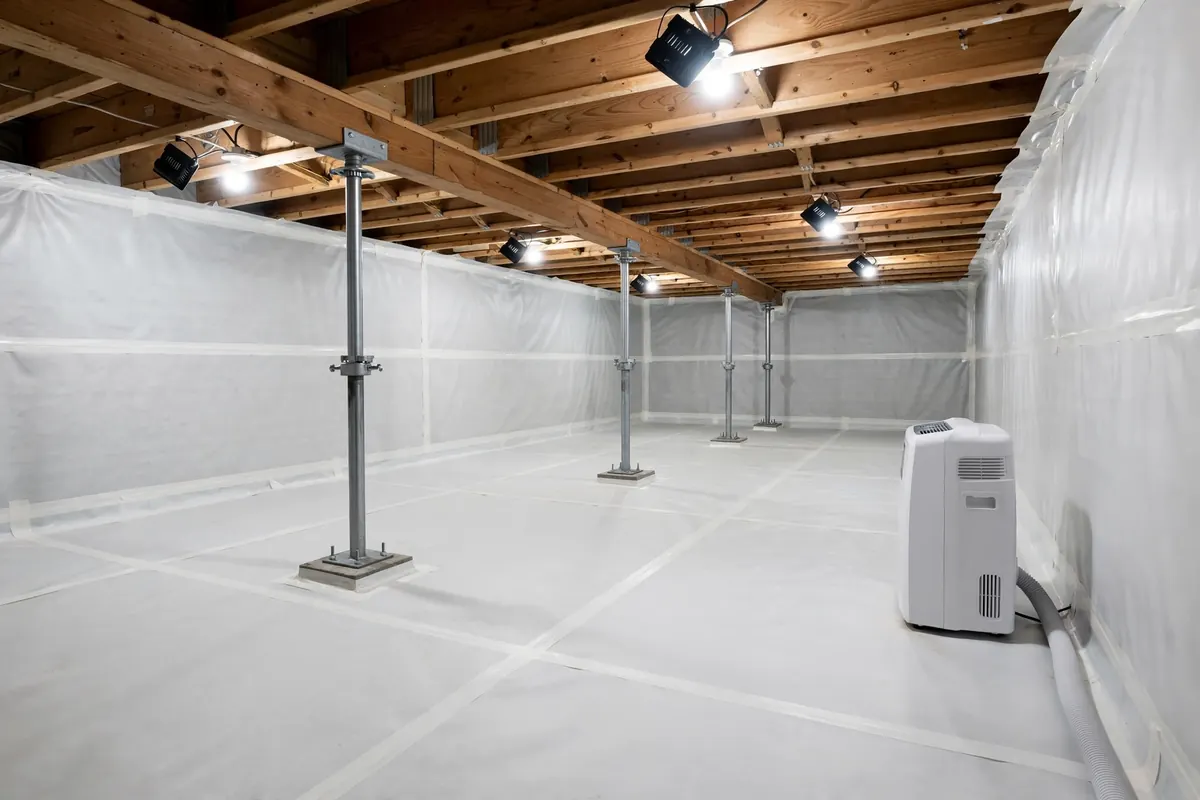 Crawl Space Waterproofing
Crawl space waterproofing in Youngstown, OH: encapsulation, vapor barriers, drainage and dehumidification for damp crawl
Learn more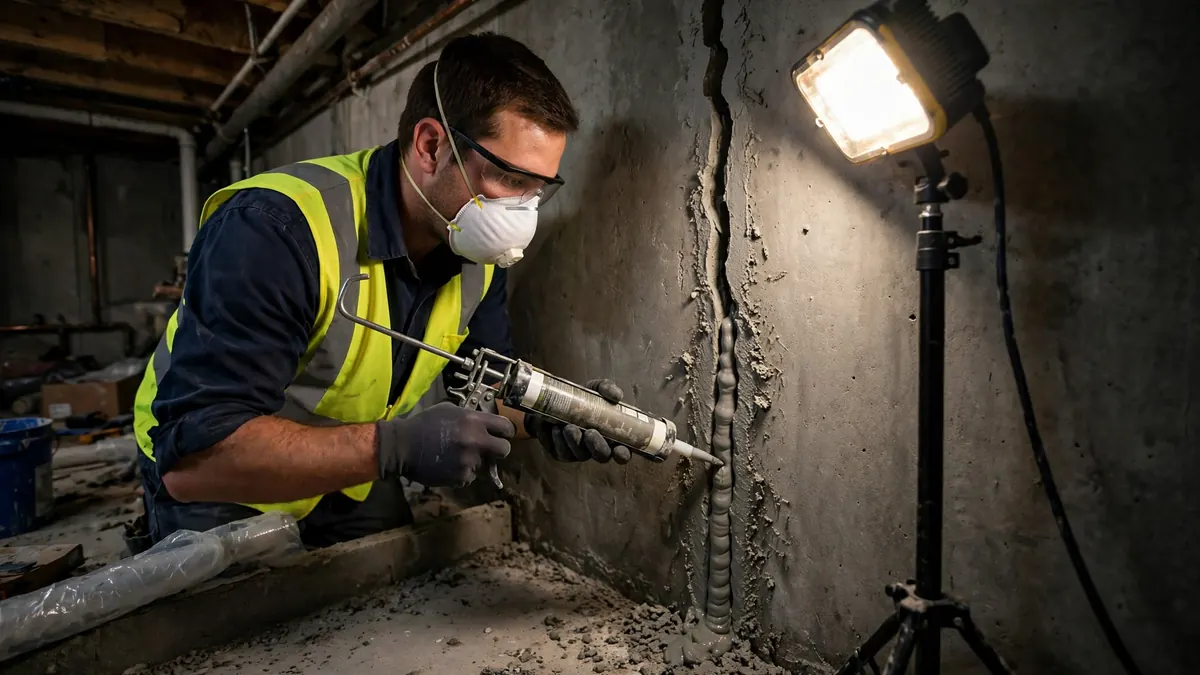 Basement Leak Repair
Basement leak repair in Youngstown, OH: find where the water enters and fix that path. Crack injection, joint sealing an
Learn moreQuestions, answered
Because the water table is high. After a wet spring, the ground stays saturated for weeks, and groundwater keeps pressing against the foundation long after the rain stops. A basement that is wet in dry weather is usually a basement with a high water table, and it needs a drain system and a sump pump, not a crack repair. The water is coming from below, not from the sky.
It will help with the humidity, but it will not fix the water. A dehumidifier removes moisture from the air, and it is a useful part of keeping a basement dry after the water path is closed. But it cannot keep up with water entering through the joint or the wall, and it will run constantly while the floor stays wet. The water path has to be fixed first, and then the dehumidifier keeps the air dry.
If the water appears regularly, if the wall shows efflorescence or the paint is flaking, if the basement smells musty, or if the furnace or water heater is rusting at the base, it is serious. Those are signs that water is damaging the house, not just wetting the floor. A horizontal crack or a bowing wall is the most serious sign, and it needs a foundation assessment right away.
Yes, if the repair matches the cause. A joint leak is fixed permanently by a drain channel. A crack is fixed permanently by injection. A wall that seeps is fixed permanently by a membrane and a drain. What does not work permanently is a surface patch, because the water pressure behind it never goes away. A permanent fix is a system, not a coating.
Not until it is dry, and not until it has stayed dry through a wet season. Finishing a wet basement hides the water behind finished walls, where it does mould damage that is not visible until it is serious. Waterproof first, test through a spring, and then finish. It is far simpler to waterproof an unfinished basement than to repair a finished one.
Efflorescence is the white, chalky mineral deposit left on a wall when water moves through the masonry and evaporates on the inside face. It means water is travelling through the wall, even on days when the floor looks dry. It is one of the earliest signs of a water problem, and it should not be ignored. A wall with efflorescence in bands, low on the wall, is telling you where the water sits after wet weather.
Because summer is when the humidity is highest and the mould grows fastest. The moisture in a damp basement feeds mould on the joists, the subfloor and stored items, and the mould produces the musty smell. The smell is stronger in summer because the warm, humid air carries it further. Closing the water path and running a dehumidifier will fade the smell as the basement dries.
A single crack repair takes an hour or two. An interior drain system for a typical basement takes two to three days. An exterior waterproofing job takes a week or more. The drying takes longer: a basement that has been wet for years may take weeks to dry out fully after the system is installed, even with a dehumidifier. The repair is fast. The drying is slow, and it should not be rushed.
Talk to a local waterproofing professional
Describe what is happening in your basement and a local professional will assess the water path and the right fix.
Get in touch
Talk to a local waterproofing professional about your basement.
Hours: Mon–Fri 7:00 AM–10:00 PM ET · Sat 8:00 AM–10:00 PM ET · Sun 7:00 AM–9:00 PM ET
What to have ready
- Where the water appears, and after what kind of weather
- Whether the basement has a sump pump, and whether it runs
- Photos of the wall, the floor joint, or the water itself