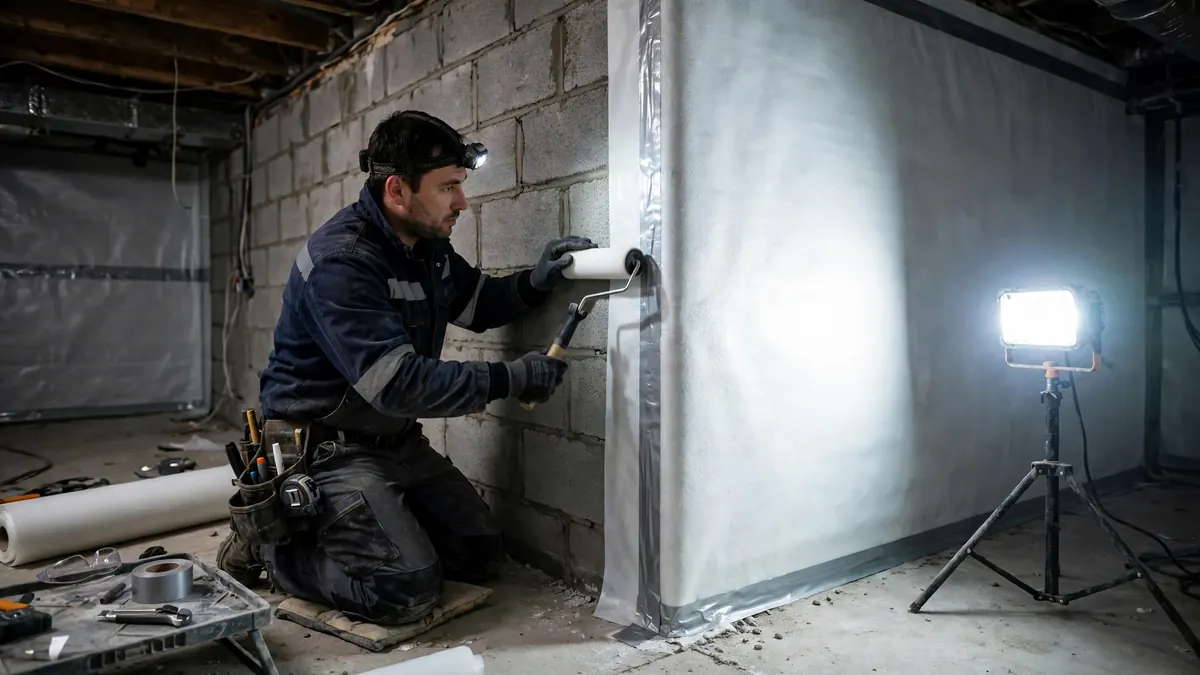
Vapor Barrier Installation in Youngstown, OH
A vapor barrier is a simple sheet with a demanding job: stop ground moisture from reaching the air in your basement or crawl space, and keep it stopped for decades.
Talk to a local waterproofing professional
Describe what is happening in your basement and a local professional will assess the water path and the right fix.
Hours: Mon–Fri 7:00 AM–10:00 PM ET · Sat 8:00 AM–10:00 PM ET · Sun 7:00 AM–9:00 PM ET
What a vapor barrier does
A vapor barrier is a heavy, reinforced polyethylene liner that is laid across the floor of a basement or a crawl space and up the walls, with the seams sealed and taped. It stops moisture in the ground from evaporating into the air, and it stops moisture in the air from condensing on the cold surfaces. In a crawl space, it is the core of encapsulation. In a basement, it is used on the walls to catch seepage and to keep humid air from reaching the cold masonry.
The barrier works because it is continuous. A liner with gaps, tears or unsealed seams is not a barrier, because moisture will find the gaps. The seams are sealed with tape and mastic, the liner is fastened to the wall and sealed at the top, and every penetration, such as a pipe or a pier, is wrapped and sealed. The installation is only as good as its weakest seam.
The liner is heavy for a reason. A thin plastic sheet will tear, puncture and pull away from the wall within a year or two. A reinforced liner, usually 20 mil thick, is strong enough to walk on, to hold up to the wall, and to last for decades. It is the difference between a barrier and a sheet of plastic.
Where a vapor barrier is used
In a crawl space, the barrier covers the floor and the walls, and it is the main defence against ground moisture. It is laid over the drainage system, so water is collected underneath the liner and never reaches the air. It is sealed at the piers, the pipes and the wall, so there is no path for moisture to get through.
In a basement, the barrier is used on the walls, as a drainage membrane that catches seepage through the block and directs it into the drain channel. It is also used on the floor, under a finished floor, to stop moisture from rising through the slab. A basement that is being finished should have a vapor barrier under the flooring, or the flooring will absorb moisture and fail.
A vapor barrier is not a substitute for drainage. It stops moisture vapour, but it does not stop liquid water. A basement or a crawl space that takes on standing water needs a drain and a sump pump first, and the barrier goes on after the water is managed. A barrier laid over standing water will trap the water underneath, and the water will find its way out at the seams.
How a vapor barrier is installed
Installation starts with preparation. The space is cleaned, debris and fallen insulation are removed, and any standing water is drained. The ground is graded so water runs toward a drain or a sump pit, and the drainage system is installed first, because the barrier goes over it.
The liner is laid across the floor, with the seams overlapped and sealed with tape and mastic. It is run up the walls, usually to the top of the foundation, and fastened and sealed there. The piers are wrapped, the pipes are sealed, and every penetration is closed. The seams are the most important part, and they are sealed carefully, because a seam that is not sealed is a gap.
The last step is to check the barrier. The installer walks the space, looking for tears, gaps and loose seams, and every one is sealed. A barrier that is installed properly is a continuous, sealed envelope, with no path for moisture to get through.
Mistakes that ruin a vapor barrier
The most common mistake is a thin liner. A 6 mil plastic sheet from a hardware store will tear, puncture and pull away from the wall within a year or two. Encapsulation needs a heavy, reinforced liner, sealed at the seams and fastened to the wall, or it is not encapsulation at all.
A second mistake is unsealed seams. A liner with seams that are overlapped but not taped is a liner with gaps, and moisture will find the gaps. The seams have to be sealed with tape and mastic, and they have to be checked after the installation, because a seam that looks sealed may not be.
A third mistake is laying the liner over standing water or wet soil. The liner will trap the water underneath, and the water will find its way out at the seams or at the piers. The space has to be drained and dried first, with a pump and a channel if needed, and only then sealed.
The last mistake is ignoring the penetrations. A pipe that passes through the liner, a pier that is not wrapped, or a wire that is not sealed are all paths for moisture. Every penetration has to be sealed, or the barrier is not continuous.
Vapor barriers in Youngstown homes
Youngstown's crawl spaces, particularly in the ranches in Boardman and Austintown, are the most common place for a vapor barrier. Those spaces have dirt floors, and the ground moisture rises directly into the air. A heavy liner, sealed at the seams and the walls, changes the space completely.
Basements in Youngstown use a vapor barrier on the walls, as a drainage membrane that catches seepage and directs it into the drain channel. The membrane is the part of the system that keeps the wall seepage out of the room, and it is essential in a block foundation, where the wall seeps across a wide area.
Finished basements in Canfield and Poland use a vapor barrier under the flooring, to stop moisture from rising through the slab and damaging the finish. A finished floor without a barrier will absorb moisture, and the flooring will fail. The barrier is a small part of the finishing job, and it is the part that decides whether the finish lasts.
What a proper job looks like
Water path found first
The inspection traces the water to its entry point, so the fix matches the cause.
Pressure relieved, not fought
A drain channel gives water a better path than your floor. Paint and sealant fight pressure and lose.
Pump sized to the house
The pump is sized to the water volume and the lift, with a battery backup for power cuts.
Tested before handover
Water is run into the channel, the pump cycles, and the discharge is checked outside.
From inspection to a dry basement
Inspection
Walk the basement and the outside of the house to find where the water enters, what the wall is made of, and where the water table sits.
Plan
Match the system to the house: drain channel, wall membrane, sump pump, discharge, and battery backup where power cuts are a concern.
Install
Cut the trench, lay the channel and gravel, fit the membrane and the pump, and run the discharge away from the house.
Restore
Re-pour the concrete flush with the floor, clean the work area, and leave the basement usable again.
Test
Run water into the channel, watch the pump cycle, and confirm the discharge flows away from the property.
More waterproofing services
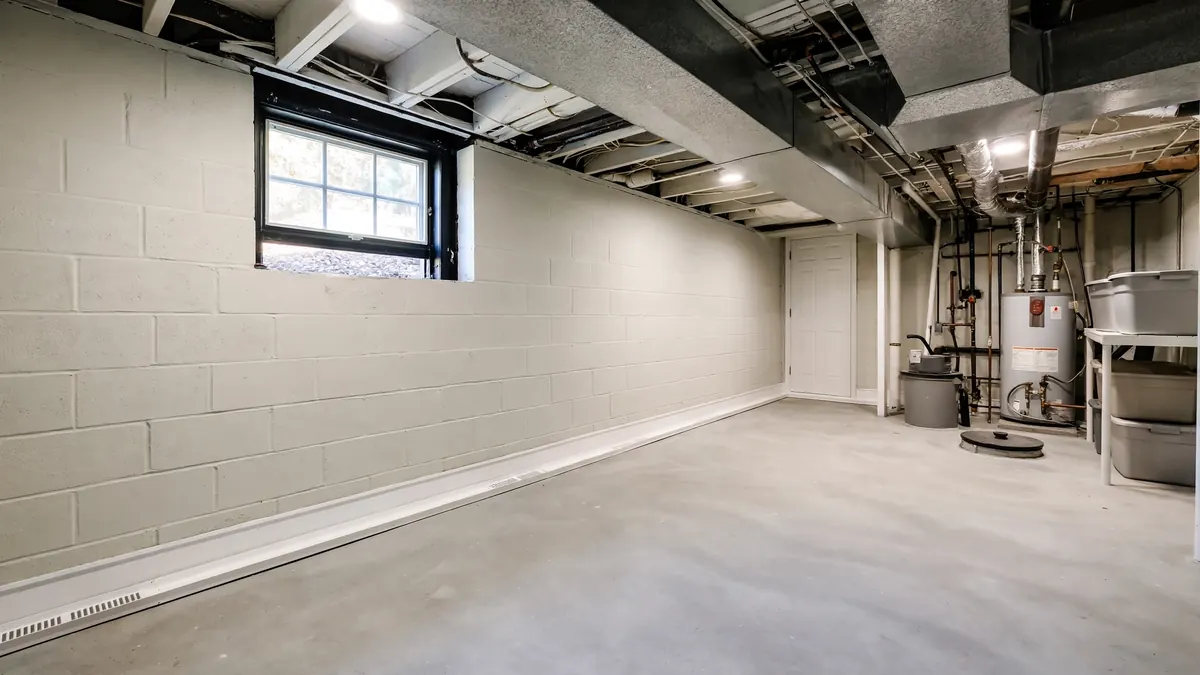 Basement Waterproofing
Basement waterproofing in Youngstown, OH for wet basements, wall leaks and seepage. Interior drains, sump pumps and foun
Learn more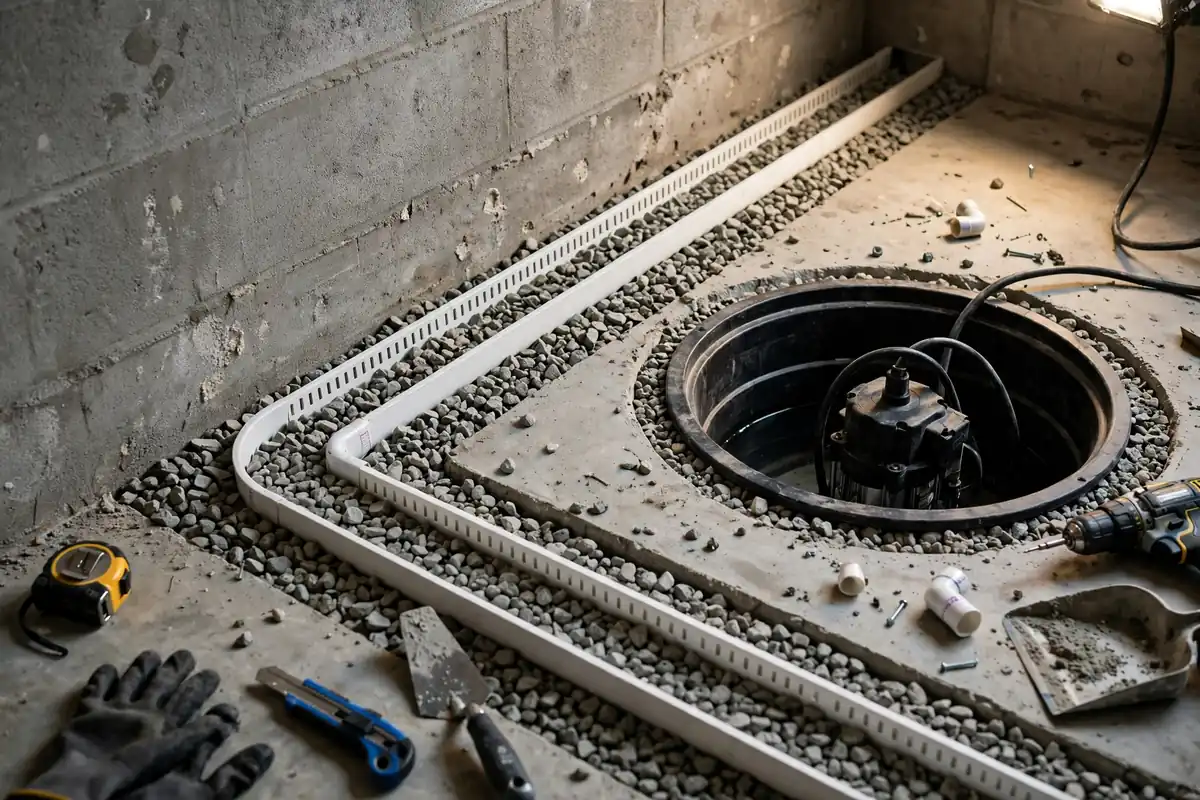 Interior Drain System
Interior drain systems in Youngstown, OH collect water at the wall-floor joint and send it to a sump pump. A proven fix
Learn more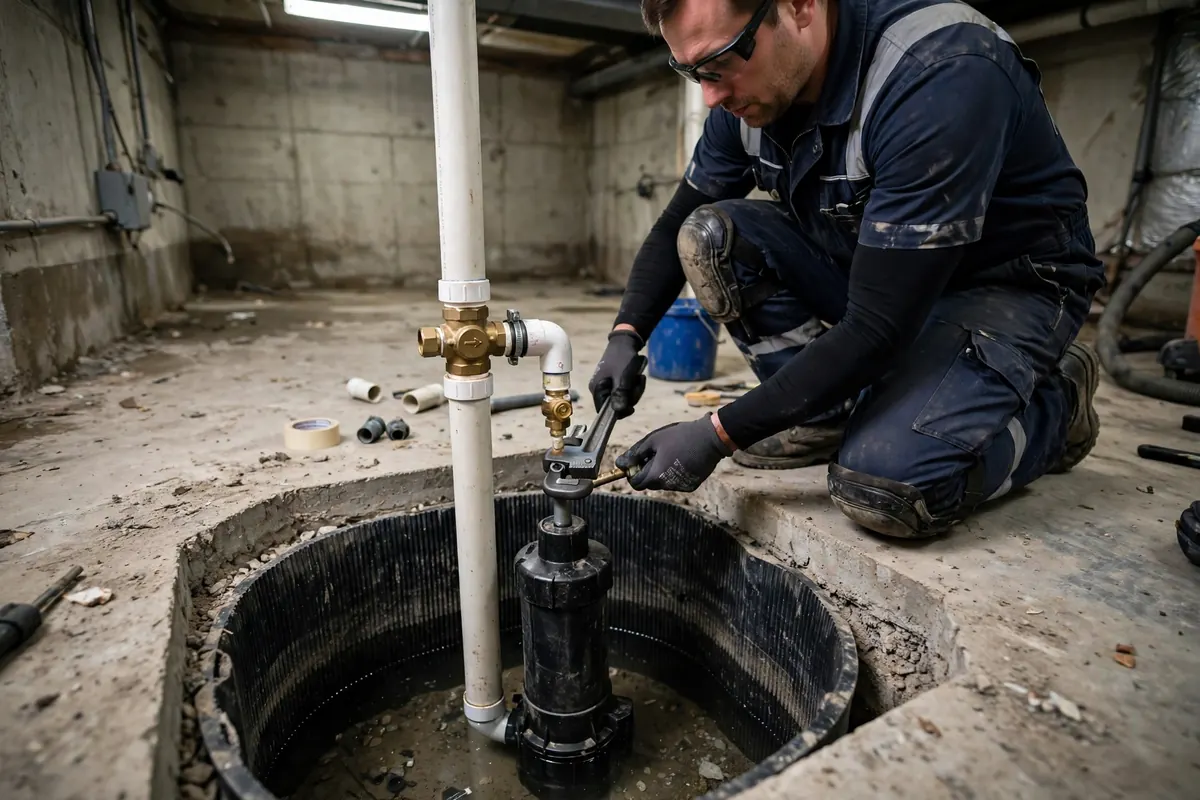 Sump Pump Installation
Sump pump installation in Youngstown, OH for basements that take on water. Submersible pumps, battery backup systems and
Learn more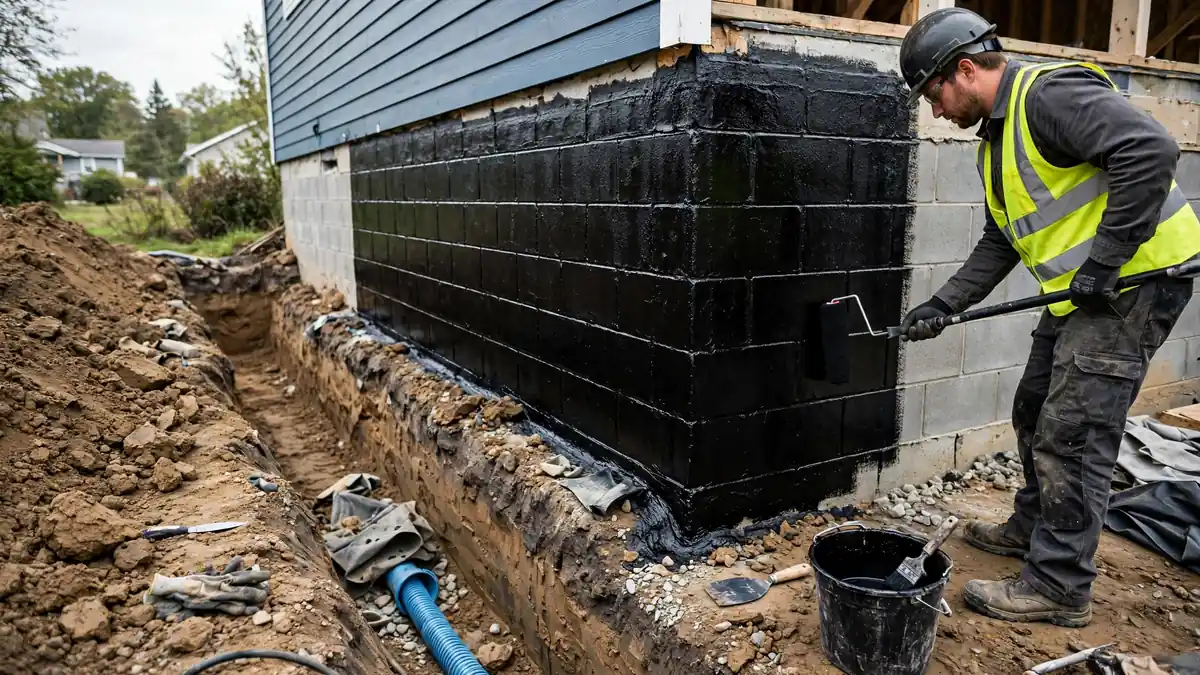 Foundation Waterproofing
Foundation waterproofing in Youngstown, OH: exterior membranes, drainage board and interior systems for block and poured
Learn more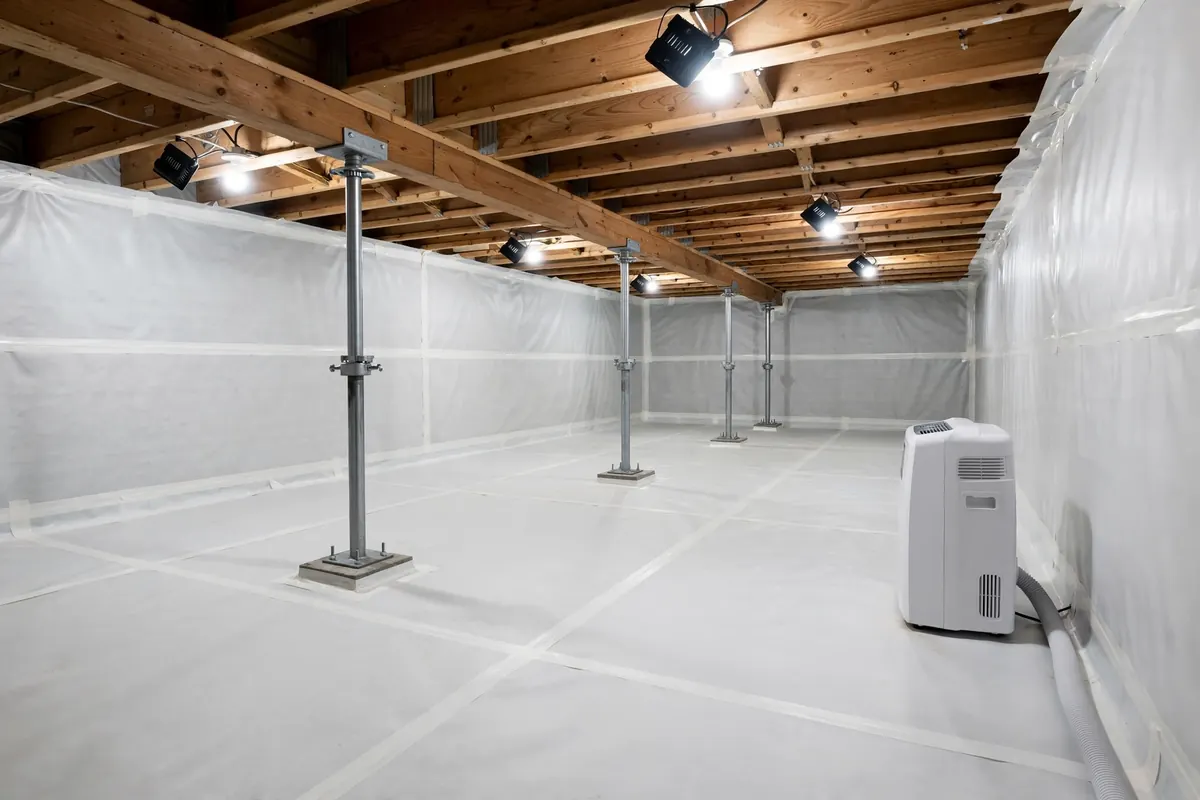 Crawl Space Waterproofing
Crawl space waterproofing in Youngstown, OH: encapsulation, vapor barriers, drainage and dehumidification for damp crawl
Learn more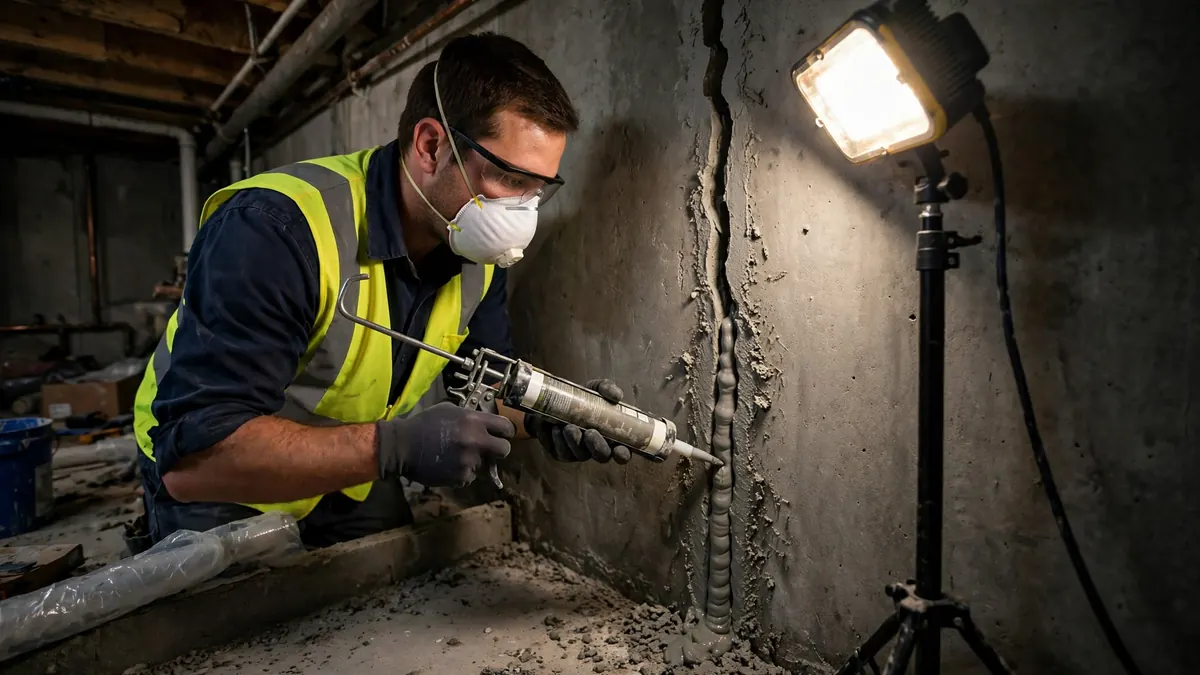 Basement Leak Repair
Basement leak repair in Youngstown, OH: find where the water enters and fix that path. Crack injection, joint sealing an
Learn moreQuestions, answered
A vapor barrier is a heavy, reinforced polyethylene liner that is laid across the floor and up the walls of a basement or a crawl space, with the seams sealed and taped. It stops moisture in the ground from evaporating into the air, and it stops moisture in the air from condensing on cold surfaces. It is the core of crawl space encapsulation, and it is used on basement walls as a drainage membrane.
A crawl space liner should be at least 20 mil thick, and reinforced, so it is strong enough to walk on and to last for decades. A thin 6 mil sheet will tear and puncture within a year or two, and it is not suitable for encapsulation. A basement wall membrane is usually a thinner, dimpled sheet, because its job is to catch seepage and direct it to a drain, not to be walked on.
It will help, but it will not fix it on its own. A vapor barrier stops moisture vapour, but it does not stop liquid water. A basement that takes on standing water needs a drain and a sump pump first, and the barrier goes on after the water is managed. A barrier laid over standing water will trap the water underneath, and the water will find its way out at the seams.
A heavy, reinforced liner, properly sealed and fastened, lasts for decades. It does not wear out in normal use, because it is protected from sunlight and from damage. The seams should be checked annually for tears or loose tape, and any damage should be sealed. A barrier that is maintained will last for the life of the home.
In a crawl space, yes, it is laid over the dirt floor. In a basement, a vapor barrier is usually installed under a new finished floor, or on the walls as a drainage membrane. It is not laid over an existing finished floor, because the moisture would be trapped underneath. The barrier has to be part of the system, not an addition on top of it.
It stops the moisture that mould needs to grow. Mould needs moisture and organic material, and a vapor barrier removes the moisture. Once the space is dry, the mould stops growing. A barrier will not remove mould that is already there, and any existing mould should be addressed before the barrier is installed, because covering it up does not remove it.
Talk to a local waterproofing professional
Describe what is happening in your basement and a local professional will assess the water path and the right fix.
Get in touch
Talk to a local waterproofing professional about your basement.
Hours: Mon–Fri 7:00 AM–10:00 PM ET · Sat 8:00 AM–10:00 PM ET · Sun 7:00 AM–9:00 PM ET
What to have ready
- Where the water appears, and after what kind of weather
- Whether the basement has a sump pump, and whether it runs
- Photos of the wall, the floor joint, or the water itself