Frequently Asked Questions | Basement Waterproofing Youngstown OH
Answers to the questions Youngstown homeowners ask most about wet basements, sump pumps, interior drains, and foundation waterproofing.
Basement waterproofing is the work of keeping groundwater and surface water out of the lowest level of a home, and managing the water that cannot be kept out. In a Youngstown basement that usually means a way to stop water pressing through the wall or the floor joint, and a way to collect and remove the water that still arrives.
Youngstown sits in the Mahoning River valley with a high water table, clay-heavy soil that holds water against the foundation, and a housing stock built mostly before 1980. The city averages roughly 39 to 41 inches of precipitation a year, with about 40 to 45 inches of snow, and the spring thaw sends it all at foundations while the ground is still frozen.
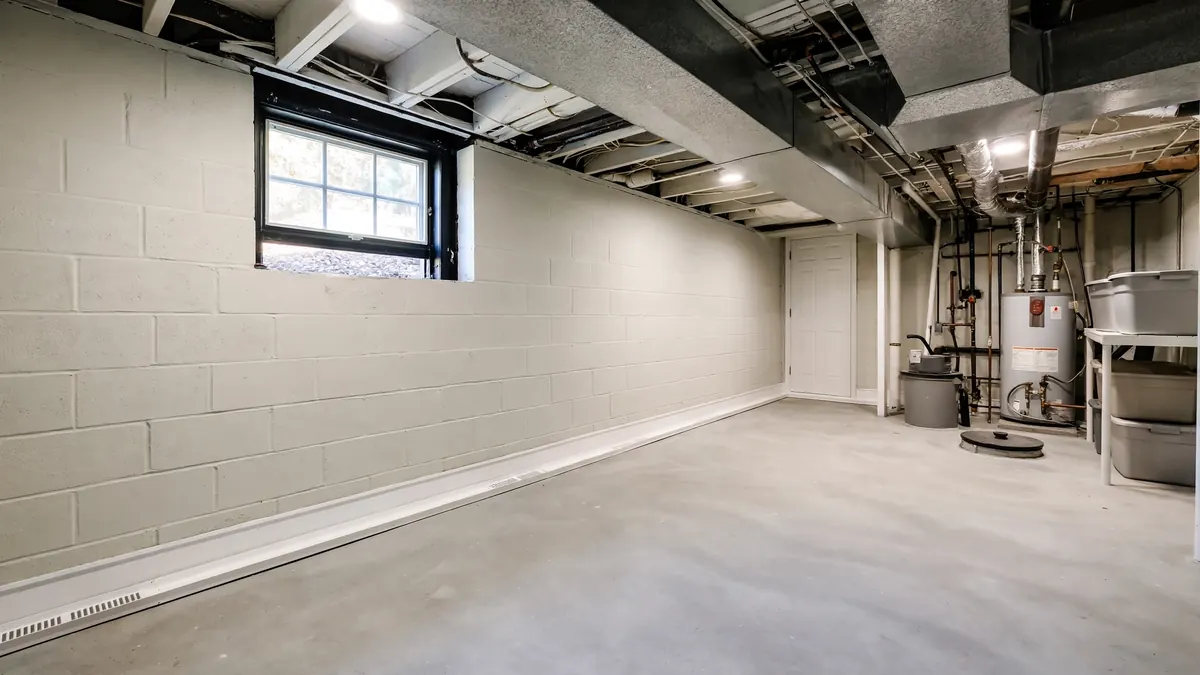
The cove joint is the seam where the foundation wall meets the floor slab. It exists because the wall and the floor were poured at different times, and they never become one piece. It is the weakest point in the foundation, and it is where water enters first when the water table rises.
Interior work manages water after it arrives, and it is the right answer for a high water table and a leaking cove joint. Exterior work stops water before it touches the wall, and it is the right answer for a deteriorating wall. Many homes end up with both, and the inspection decides the mix.
A French drain is a trench filled with gravel and a perforated pipe, designed to collect groundwater and surface water and carry it away from a house. An exterior French drain runs around the outside of the house or across a low part of the yard. An interior French drain runs inside the basement, along the wall-floor joint.
Pour a bucket of water into the pit slowly and watch the pump start, run, and stop. Check that water is flowing out of the discharge outside. If the pump does not start, hums without pumping, or runs without the water level dropping, it needs attention. Testing takes five minutes, and it should be done a few times a year, and especially before spring.
Stay safe first: if the water reaches electrical outlets, the furnace or the panel, do not walk through it. Turn the power off from the main panel only if you can reach it safely. Then find the source if you can, move what can be saved, and get the water out with the sump pump, a portable pump or a wet vacuum.
Youngstown and the Mahoning Valley, including Boardman, Austintown, Canfield, Poland, Liberty, Girard, and Niles, in ZIP codes 44501 through 44515 and the surrounding towns.
Questions, answered
If water appears in the same place after more than one storm, or if the wall shows efflorescence, a musty smell or flaking paint, the problem is a water path, not a one-time leak. A single crack that leaks only during a driving rain can often be repaired on its own. A cove joint that runs water every spring, or a wall that seeps across a wide area, needs a system that collects and removes water, not a patch. An inspection that traces the water path will tell you which one you are dealing with.
An interior drain system is designed for exactly that: it collects water at the wall-floor joint and along the wall, and the sump pump discharges it outside. During a heavy storm the pump will cycle more often, which is normal. What matters is that the discharge line runs well away from the house and does not freeze or clog, and that the pump has a backup if the power fails. A system that is sized to the house and maintained will handle the storms Youngstown gets, including the fast summer downpours.
It fixes the cause of the smell in most cases. A musty smell usually means moisture is feeding mould growth on organic material in the basement, behind stored items, under carpet or inside a finished wall. Once the water path is closed and the basement dries out, the moisture source is gone. If the smell persists after the basement is dry, the cause may be a separate issue such as a sewer gas leak or a damp crawl space, and that needs its own inspection.
Interior waterproofing can be installed year-round, because the work happens inside the basement. Winter is often a good time to schedule it, since the ground is frozen and the basement is at its driest, which makes the inspection clearer. Exterior waterproofing is weather-dependent and is usually scheduled in the warmer months, when the ground can be excavated and the membrane can cure properly.
Get in touch
Talk to a local waterproofing professional about your basement.
Hours: Mon–Fri 7:00 AM–10:00 PM ET · Sat 8:00 AM–10:00 PM ET · Sun 7:00 AM–9:00 PM ET
What to have ready
- Where the water appears, and after what kind of weather
- Whether the basement has a sump pump, and whether it runs
- Photos of the wall, the floor joint, or the water itself