Crawl Space Moisture Problems in Ohio
A crawl space is the part of a house that nobody looks at and everybody breathes. The air down there does not stay down there, and when it is damp, the whole house feels it.
The short version
Ohio crawl spaces get wet for the same reasons Ohio basements get wet: the water table is high, the soil is clay-heavy, and the housing stock is old. The clay soil holds water against the foundation, the spring thaw raises the water table, and the summer thunderstorms saturate the ground. A crawl space with a dirt floor absorbs that moisture directly, because there is no slab to stop it. The vents make it worse. A
Why Ohio crawl spaces get wet
Ohio crawl spaces get wet for the same reasons Ohio basements get wet: the water table is high, the soil is clay-heavy, and the housing stock is old. The clay soil holds water against the foundation, the spring thaw raises the water table, and the summer thunderstorms saturate the ground. A crawl space with a dirt floor absorbs that moisture directly, because there is no slab to stop it.
The vents make it worse. A vented crawl space in a humid summer pulls in warm, moist air, which hits the cool joists and ductwork and condenses. The condensation drips onto the soil, the soil stays wet, and the cycle continues. Venting was designed for a dry climate, and Ohio is not a dry climate. A vented crawl space in Ohio is a damp crawl space, and it will stay damp until the vents are sealed and the space is conditioned.
Grading is a common cause. Many ranch homes in the Mahoning Valley were built on flat lots, and the ground around the foundation is level or slopes toward the house. Rain runs off the roof, out of the gutters, and straight to the foundation wall, where it seeps under the footing and into the crawl space. A downspout that discharges at the foundation is enough to keep a crawl space wet all year.
Signs of a crawl space moisture problem
A musty smell in the house that does not go away, even after cleaning, is the most common sign. The smell comes from mould growing on damp joists or on the soil, and it rises with the air. If the smell is stronger in summer, when the humidity is high, the crawl space is the likely source.
Cupping or gapping hardwood floors, a floor that feels spongy or cold in one area, and doors that stick in summer are all signs that moisture is moving up from below. So is insulation that has fallen from between the joists, which happens when fibreglass insulation absorbs moisture, gets heavy, and drops.
Standing water in the crawl space after rain is the most direct sign, and it should not be ignored. Even an inch of water is enough to soak the soil, raise the humidity, and start the cycle. A crawl space that floods in spring will be damp all year, because the soil stays wet long after the standing water is gone.
Visible mould on the joists or the subfloor, or wood that is soft when pressed with a screwdriver, is rot, not just moisture, and it means the structure is being damaged. A crawl space with rot needs the moisture stopped and the damaged wood assessed before anything else is covered up.
What moisture does to a house
Moisture in a crawl space does not stay in the crawl space. It rises into the house, through gaps around pipes and wires, and into the rooms where the family lives. The air carries mould spores, and the musty smell is the sign that they are there. A damp crawl space is a health concern, especially for children and for anyone with allergies or asthma.
Moisture also damages the structure. The joists and the subfloor absorb moisture, and the wood softens, rots, and loses strength. Insulation that absorbs moisture sags and falls, and the house loses heat in winter and gains heat in summer. Ductwork that sits in a damp crawl space rusts, and the air that flows through it carries moisture and mould into the house.
The damage is slow, and it is expensive. A crawl space that has been wet for years will have rotted joists, failed insulation, and rusted ductwork, and the repair will mean replacing all of them. A crawl space that is waterproofed early is a crawl space that will last, because the moisture is stopped before it does damage.
How a crawl space is fixed
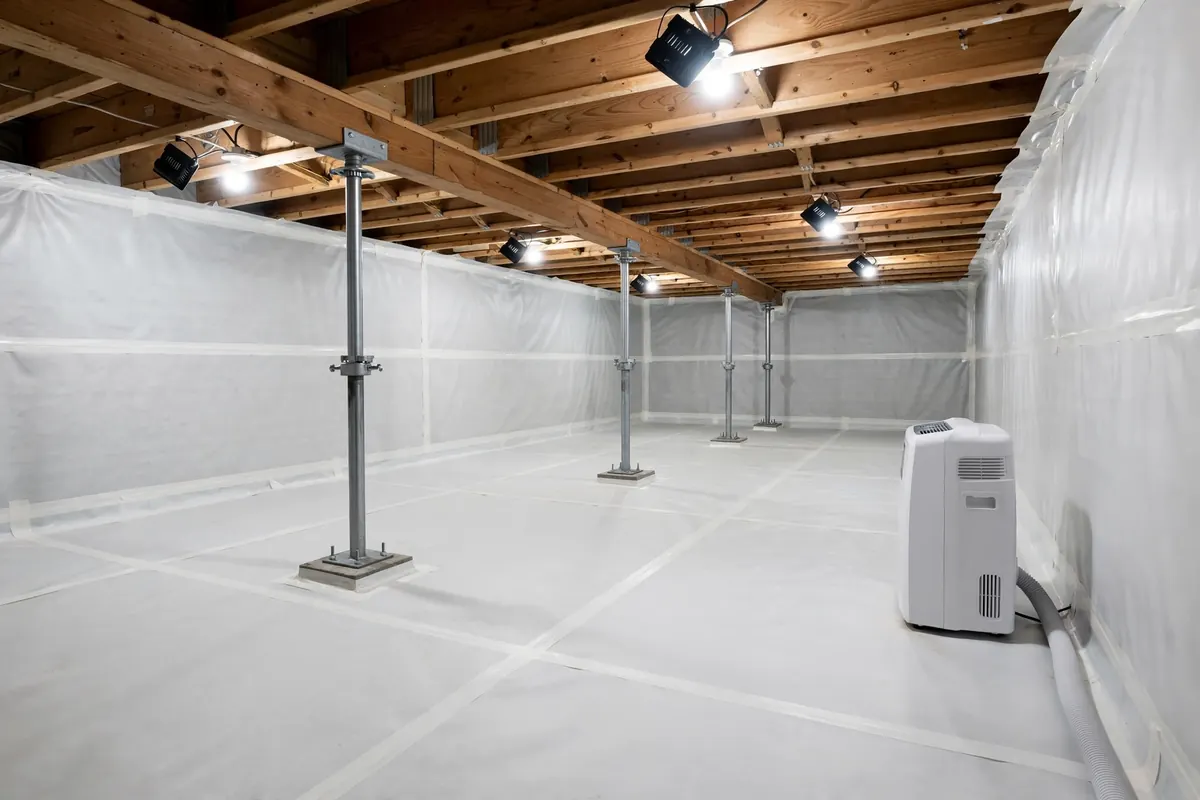
Encapsulation is the standard answer for a crawl space that is wet, musty or mouldy. A heavy vapour barrier is laid across the floor and up the walls, with the seams sealed and taped. The vents are closed, a drainage system and a sump pump are installed if water enters, and a dehumidifier controls the humidity. The result is a dry, clean, conditioned space instead of a damp void.
The work starts with cleaning. Debris, fallen insulation and any standing water are removed, and the ground is graded so water runs toward a drain or a sump pit. A drainage mat or a shallow interior drain is installed along the perimeter if water enters at the footing, and a sump pump is fitted where the water table is high.
The vapour barrier goes on next, and it is the core of the job. A heavy, reinforced liner, usually 20 mil thick, is laid across the floor and up the walls, with the seams sealed and taped. The liner is fastened to the wall and sealed at the top, so ground moisture cannot pass through it. The piers and any penetrations are wrapped and sealed too, because a barrier with gaps is not a barrier.
The dehumidifier is the last piece. A commercial-grade unit, sized to the space, holds the relative humidity below the level where mould grows, and it drains to the sump pit or outside, so it never needs emptying. With the liner, the sealed vents and the dehumidifier working together, the crawl space becomes a dry, clean extension of the house.
Drainage and dehumidification
Not every crawl space needs a sump pump, but many do. If water stands in the crawl space after rain, or if the soil is saturated for weeks in spring, a pump is needed. A shallow basin is set at the low point, a drain channel runs along the footing to feed it, and the pump discharges outside, away from the house, exactly as it does for a basement.
The dehumidifier should be sized to the space and ducted properly, with a drain to the sump pit or outside so it never needs to be emptied by hand. A unit that is too small will run constantly and still not keep up. A unit that is too large will short-cycle and wear out. The sizing is part of the job, not an afterthought.
The air quality improvement is usually the first thing a homeowner notices. The musty smell fades, the floors feel warmer and drier, and the house smells like a house rather than a basement. That change happens because the air rising from the crawl space is now dry, clean air rather than damp, mouldy air.
Mistakes to avoid
The most common mistake is a thin vapour barrier. A 6 mil plastic sheet from a hardware store will tear, puncture and pull away from the wall within a year or two. Encapsulation needs a heavy, reinforced liner, sealed at the seams and fastened to the wall, or it is not encapsulation at all.
A second mistake is sealing the vents without adding dehumidification. A sealed space with no humidity control will still be damp, because the moisture has nowhere to go. The liner, the sealed vents and the dehumidifier are one system, and leaving out any one of them leaves the space wet.
A third mistake is laying the liner over standing water or wet soil. The liner will trap the water underneath, and the water will find its way out at the seams or at the piers. The space has to be drained and dried first, with a pump and a channel if needed, and only then sealed.
The last mistake is ignoring the plumbing. A slow drain leak, a sweating cold water line, or a disconnected duct will keep a sealed crawl space wet from the inside. The inspection should check every pipe and duct before the work begins, and any leak should be repaired first.
Crawl spaces in the Mahoning Valley
Boardman's ranches are the most common crawl space homes in the cluster. Built in the 1950s and 1960s, they often have a shallow crawl space with a dirt floor, fibreglass insulation that has long since fallen, and vents that have been open for sixty years. Those spaces are usually damp, musty and mouldy, and encapsulation changes them completely.
Austintown has a similar stock, with many homes that have a crawl space under an addition or a garage conversion. Those partial crawl spaces are often the wettest part of the house, because the addition was built on a lower footing and the water collects there first.
Youngstown's older homes sometimes have a crawl space under one section and a basement under another, and the crawl space is usually the damper of the two. The inspection in those homes checks the transition between the basement and the crawl space, because water often moves from one to the other through the dividing wall.
How to check your own crawl space
Checking a crawl space is not a job most homeowners look forward to, but it is a job that should be done at least once a year. Put on old clothes, take a flashlight, and look at the soil, the joists, the insulation and the ductwork. The soil should be dry. The joists should be dry and sound. The insulation should be in place, not fallen. The ductwork should be dry and without rust.
Look for standing water, for a musty smell, for mould on the joists, and for wood that is soft when pressed with a screwdriver. Look for insulation that has fallen, for a vapour barrier that is torn or missing, and for vents that are open. Any one of those is a sign that the crawl space needs attention, and the attention should come before the next wet season.
If the crawl space is too low to enter, or if the mould is extensive, do not go in. An inspection by a professional will map the moisture, check the structure, and decide the system, without the homeowner having to crawl through a damp, mouldy space. The inspection is the safe way to find out what is down there.
A crawl space that is checked once a year, and repaired when the signs are small, is a crawl space that will last. A crawl space that is never checked is a crawl space that will rot, and the rot will spread to the house above it, one joist at a time.
More from the blog
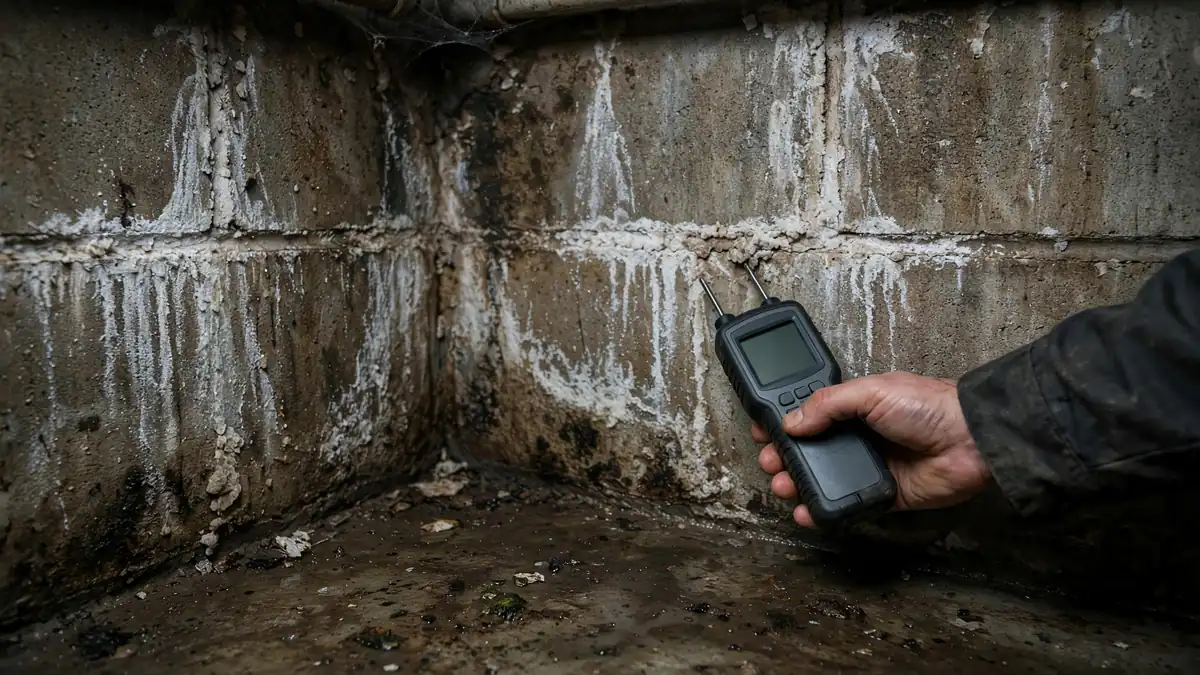 Why Basements Leak in Youngstown, OH | The Mahoning Valley W
Why do Youngstown basements leak? The water table, clay soil, old foundations and spring thaw explain most wet
Learn more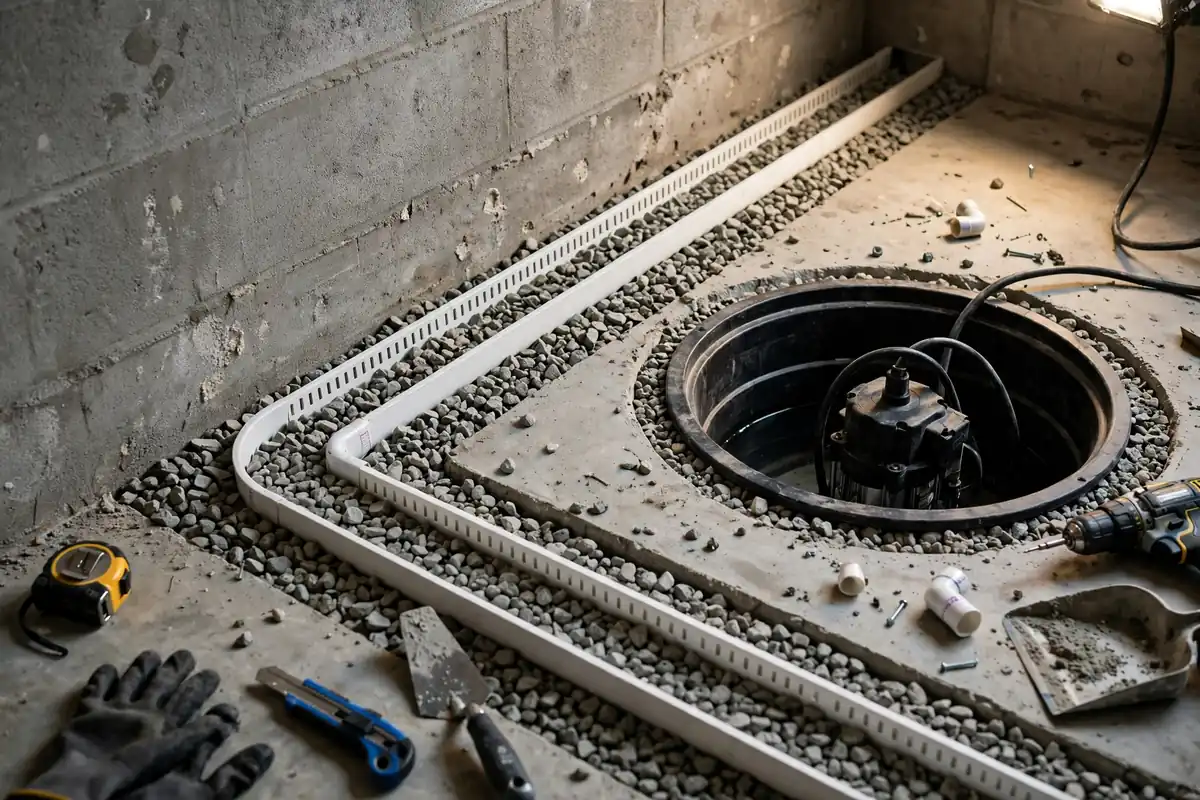 Sump Pump vs Interior Drain System | Which Does Your Basemen
Sump pump vs interior drain system: what each one does, why a pump alone is not enough, and how the two work t
Learn more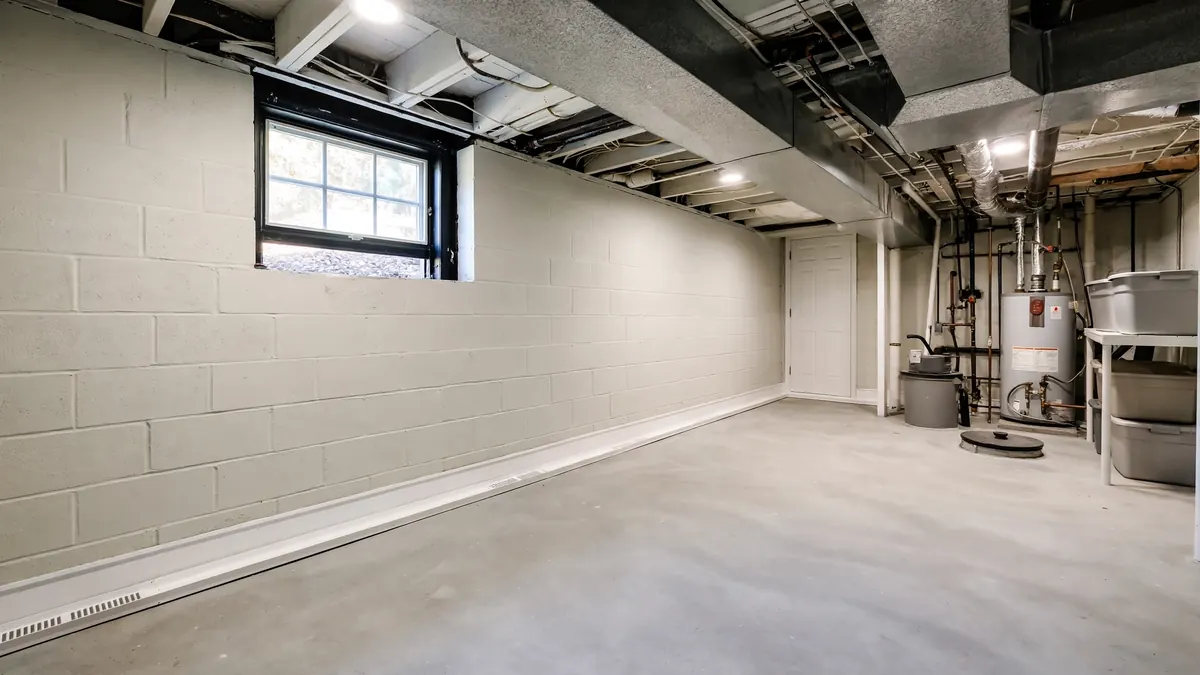 7 Signs Your Basement Needs Waterproofing | Youngstown Homeo
Seven signs your Youngstown basement needs waterproofing: water at the joint, efflorescence, musty smell, flak
Learn moreQuestions, answered
It means turning the crawl space from an open, damp void into a sealed, dry room: a heavy liner across the floor and walls with sealed seams, closed vents, drainage and a pump where water enters, and a dehumidifier that holds the humidity down. The liner stops ground moisture, the sealed vents stop humid summer air, and the dehumidifier keeps the air dry. Together they change the space completely.
Check the rooms above it. Cupping hardwood, a floor that feels cold or spongy, doors that stick in summer, and a musty smell that is stronger downstairs than upstairs all point below the floor. The only sure test is to look underneath: wet soil, mould on the joists, fallen insulation and standing water after rain are all visible from inside the space.
It should fade over a few weeks as the space dries. The smell is mould, and mould needs moisture. Once the liner is down, the vents are sealed and the dehumidifier is running, the moisture is gone and the mould stops growing. The smell lingers until the air has been exchanged and the surfaces have dried, but it does fade, and the rooms above feel drier and warmer.
Yes, because the liner stops ground moisture but not humidity. A sealed space with no dehumidification will still be damp, because the moisture has nowhere to go. The dehumidifier is sized to the space, drained to the sump pit or outside, and it holds the humidity below the level where mould grows. It is part of the system, not an optional extra.
Yes. The work happens under the house, out of the weather, so it can be done in any season. Winter is often a good time, because the space is at its driest and the inspection is clearest. The only weather-dependent part is the discharge line outside, which is installed to resist freezing.
For the life of the home, if the system is maintained. The liner is a heavy reinforced sheet that lasts for decades. The dehumidifier and the pump are mechanical, and they need to be serviced and replaced on schedule. A few minutes of checking each year, looking for tears, loose seams and a pump that runs, keeps the space dry.
Talk to a local waterproofing professional
Describe what is happening in your basement and a local professional will assess the water path and the right fix.
Get in touch
Talk to a local waterproofing professional about your basement.
Hours: Mon–Fri 7:00 AM–10:00 PM ET · Sat 8:00 AM–10:00 PM ET · Sun 7:00 AM–9:00 PM ET
What to have ready
- Where the water appears, and after what kind of weather
- Whether the basement has a sump pump, and whether it runs
- Photos of the wall, the floor joint, or the water itself