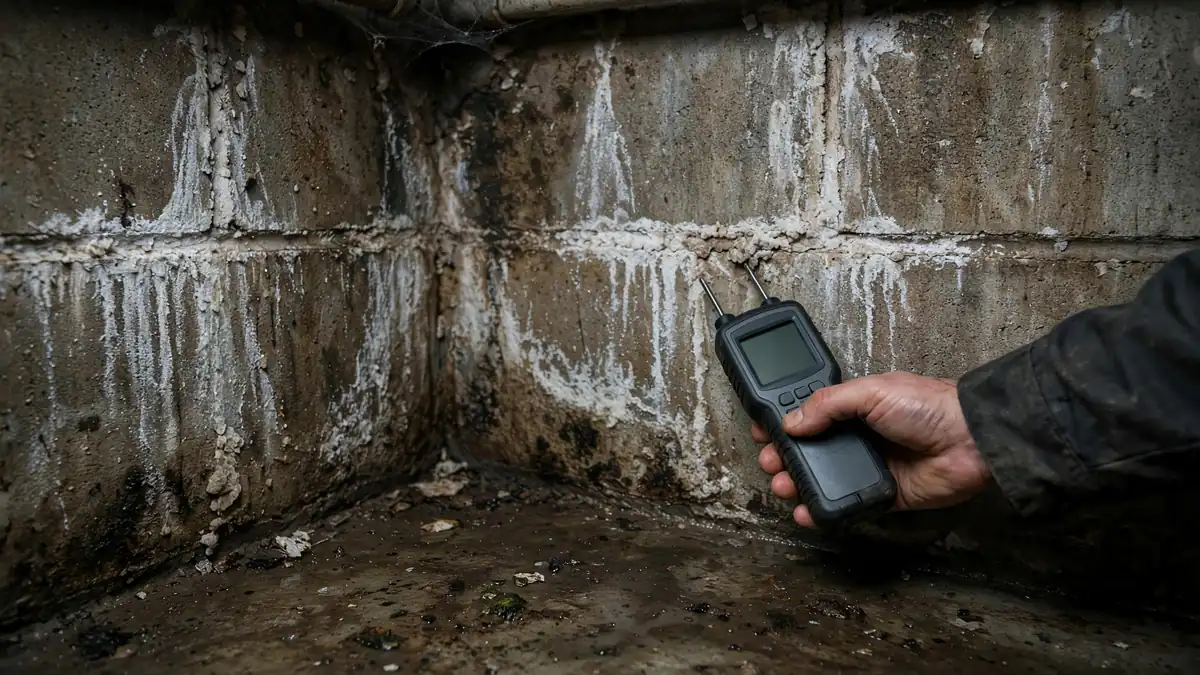
Why Basements Leak in Youngstown, OH
If your Youngstown basement leaks, it is not because your house is unusual. It is because your house is normal for the Mahoning Valley, and the valley is wet.
The short version
Youngstown basements leak because the city sits in a river valley with a high water table, clay-heavy soil that holds water against the foundation, and a housing stock built mostly before 1980 with foundations whose exterior defences are long gone. The city averages roughly 39 to 41 inches of precipitation a year, with about 40 to 45 inches of snow, and the spring thaw sends a large volume of water at foundations all
The short answer
Youngstown basements leak because the city sits in a river valley with a high water table, clay-heavy soil that holds water against the foundation, and a housing stock built mostly before 1980 with foundations whose exterior defences are long gone. The city averages roughly 39 to 41 inches of precipitation a year, with about 40 to 45 inches of snow, and the spring thaw sends a large volume of water at foundations all at once, while the ground is still frozen.
That combination means water is pressing against almost every foundation in the valley, for weeks at a time, every year. A foundation that was built to stay dry in a drier climate, or with a coating that was meant to last a few decades, will leak in those conditions. The leak is not a mystery. It is the predictable result of water, soil and age, and it is fixed by giving the water a path that does not cross the basement floor.
The water table in the Mahoning Valley
The water table is the level below which the ground is saturated with water, and in the Mahoning Valley it is high. The valley was carved by the Mahoning River, and the ground near the river and its tributaries holds water close to the surface. In spring, when the snow melts, the water table rises fast, and it stays high for weeks, because the ground is frozen and the water cannot drain away.
A high water table means water is pressing against the foundation from below and from the side, all the time, not just during a storm. The pressure is strongest at the bottom of the wall, where the wall meets the floor, and that is why the cove joint is the most common leak point in the valley. A basement that is dry in summer and wet in spring is a basement with a water-table problem, and the water table does not go away in summer. It just drops low enough that the leak stops, until the next spring.
The water table is higher near the river, on the West Side and in Girard and Niles, and it is lower on the higher ground in Canfield and Poland. But it is high enough across the whole valley to wet a basement, because the soil is clay and the precipitation is spread across all four seasons. There is no part of the Mahoning Valley where the water table is low enough to ignore.
Clay soil and what it does
The soil around Youngstown homes is clay-heavy, and clay is the worst soil for a foundation. It drains slowly, it holds water for days after a storm, and it swells when it is wet and shrinks when it dries. In a wet spring the soil against the wall swells and presses hard against the masonry. In a dry summer it shrinks and pulls away, leaving a gap that fills with water during the next storm.
The wall is pushed and released, pushed and released, year after year, and the mortar joints are what give way first. A block wall that has been pushed and released for sixty years will have soft mortar, spalled faces and a porous surface, and it will let water through. A poured wall will crack at its weakest point, usually a vertical shrinkage crack, and the water will come through the crack.
Clay also means the water does not drain away from the house on its own. A lot that is graded flat, or that slopes toward the house, will hold water against the wall for days, and the water will find the joint or the crack. Regrading the lot so it falls away from the house helps, but it does not change the soil, and the soil will still hold water against the wall after a heavy rain.
Old foundations and failed defences
Much of Youngstown was built between the 1920s and the 1960s, and the foundations from that era were built with defences that were never meant to last a century. The exterior coating, usually a thin tar or asphalt layer, breaks down over decades. The drain tile at the footing, often clay pipe, shifts, cracks and clogs with silt. Once the exterior defence is gone, the wall itself becomes the defence, and block walls are porous by nature.
A typical home in ZIP 44512 was built around 1960, and many homes on the South Side and the West Side are older still, dating from the 1920s and 1930s. Those foundations have had eighty or ninety years of freeze-thaw cycles, and the mortar has softened, the block faces have spalled, and the wall has become more porous. Each winter, water that has soaked into the block freezes, expands, and pries the surface apart, and each spring the wall is a little more porous than it was the year before.
The age of the foundation is not a reason to think it cannot be waterproofed. It is a reason to waterproof it from the inside, where the work can be done without excavation, or from the outside, where the wall can be repaired and sealed properly. A wall that is sound can be protected. A wall that is failing needs to be stabilised first, and then protected.
The spring thaw: the hardest season
Spring is the hardest season for a Youngstown basement, and it is the season that catches most homeowners by surprise. The snowpack melts in March and April, while the ground is still frozen, which sends a large volume of water at foundations all at once. The water cannot soak into the frozen ground, so it runs along the surface and against the wall, and it raises the water table fast.
A basement that is dry all winter and wet every spring is a basement with a thaw problem, and the thaw will come every year. The sump pump has to work harder in spring than at any other time of year, and a pump that is undersized, or a discharge line that is blocked or frozen, will be overwhelmed. A basement that floods in spring needs a drain system and a pump that is sized for the spring volume, not for the summer average.
The thaw is also the season when the damage is done. A basement that is wet for weeks in spring will grow mould, rust the furnace, and soak the stored belongings, and the damage will not be visible until the basement is opened up in summer. A basement that is waterproofed before spring is a basement that will stay dry through it.
Summer storms and the cove joint
Summer brings a different pattern: short, heavy thunderstorms that drop an inch of rain in an hour onto soil that is already wet. The water does not soak away. It ponds against the wall, saturates the soil, and pushes sideways and upward. The pressure is called hydrostatic pressure, and it is strongest at the bottom of the wall, exactly where the cove joint is.
The cove joint exists because of how basements were built. The footing is poured first, then the wall is built on the footing, and then the floor slab is poured inside the wall. The floor and the wall never become one piece. There is always a seam, and that seam is the weakest point in the whole foundation. In a dry climate it hardly matters. In the Mahoning Valley, where the ground stays wet for weeks at a time, it matters a great deal.
A basement that wets up after a summer thunderstorm, with a wet strip along the base of the wall, is a basement with a cove joint leak, and the fix is an interior drain channel that collects the water at the joint and sends it to a sump pump. The channel is the direct answer, because it intercepts the water at the point of entry, and it relieves the pressure instead of fighting it.
What to do about it
The first step is to find where the water is entering. Walk the basement during or just after rain, when the path is visible, and note where the water appears, how far it spreads, and whether it comes from the joint, the wall, a window or the floor. The homeowner's record of when the basement gets wet, and after what kind of weather, is part of the diagnosis.
The second step is to fix the outside. Keep the gutters clean, extend the downspouts away from the house, and make sure the ground slopes away from the foundation. Those are the small things that reduce the amount of water the system has to handle, and they make every other repair work better.
The third step is to install the system. For most Youngstown homes, that means an interior drain channel along the wall-floor joint, a wall membrane that catches the seepage, and a sump pump that sends the water outside, with a battery backup for the night the power goes out. The system is installed from the inside, so there is no excavation, and it can be done year-round.
A Youngstown basement can be kept dry. The water, the soil and the age are not reasons to accept a wet basement. They are reasons to install a system that is designed for the valley, and to maintain it, so the basement stays dry through the next spring and the one after that.
The homes that stay dry, and why
Not every Youngstown basement leaks, and the ones that stay dry are not lucky. They are the ones with a working drain system, a properly sized sump pump, good grading, and downspouts that discharge away from the house. The water, the soil and the age are the same for every house in the valley. The difference is the system, not the house.
A home with a drain channel, a wall membrane and a sump pump will stay dry through a spring thaw and a summer thunderstorm, because the water has a path that does not cross the floor. A home with good grading and clean gutters will take on less water in the first place, because the surface water runs away from the wall rather than toward it. A home with a battery backup will stay dry during a power cut, because the pump keeps working when the power does not.
The lesson is not that Youngstown basements are doomed to leak. It is that a Youngstown basement needs a system that is designed for the valley, and that the system needs to be maintained. A basement that is waterproofed properly, and maintained regularly, will stay dry for decades, and the house will last longer because the foundation is no longer being damaged by water.
If your basement leaks, the answer is not to accept it. It is to find the water path, fix the outside, install the system, and test it through the next wet season. A Youngstown basement can be kept dry, and the homeowners who do it are the ones who stop paying for the same water, season after season.
More from the blog
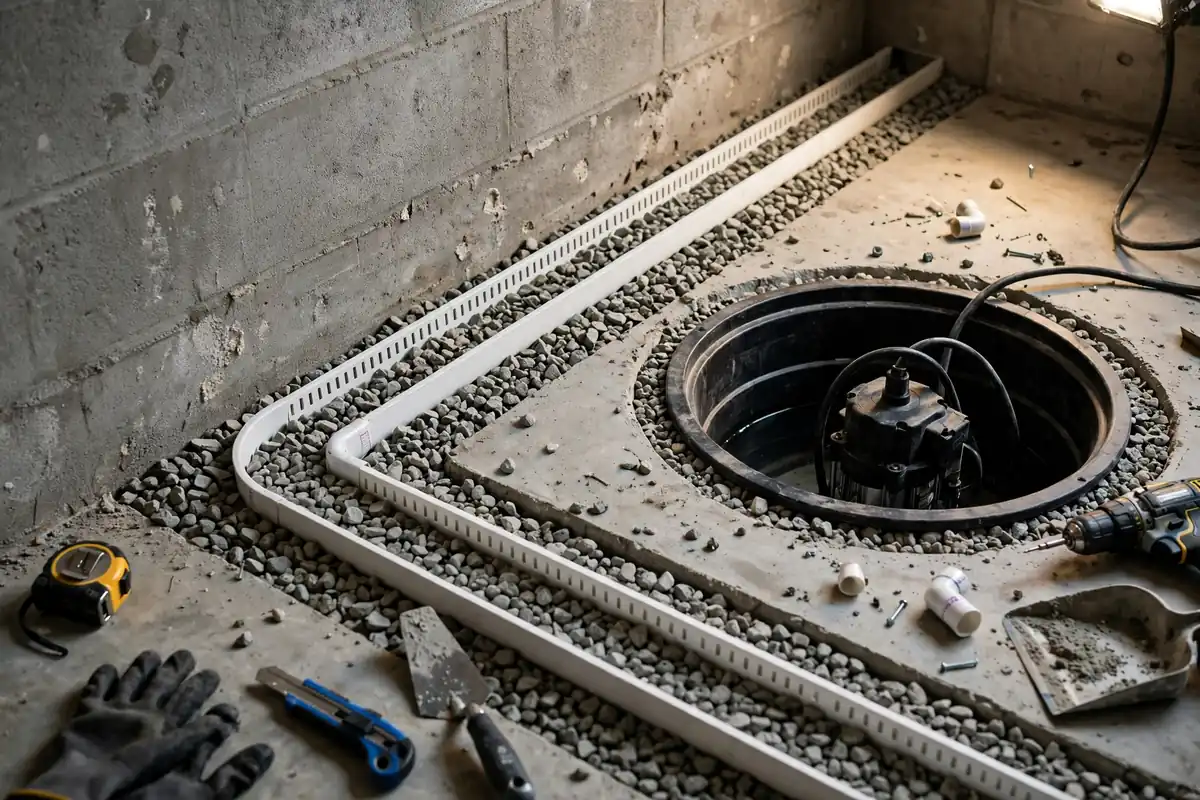 Sump Pump vs Interior Drain System | Which Does Your Basemen
Sump pump vs interior drain system: what each one does, why a pump alone is not enough, and how the two work t
Learn more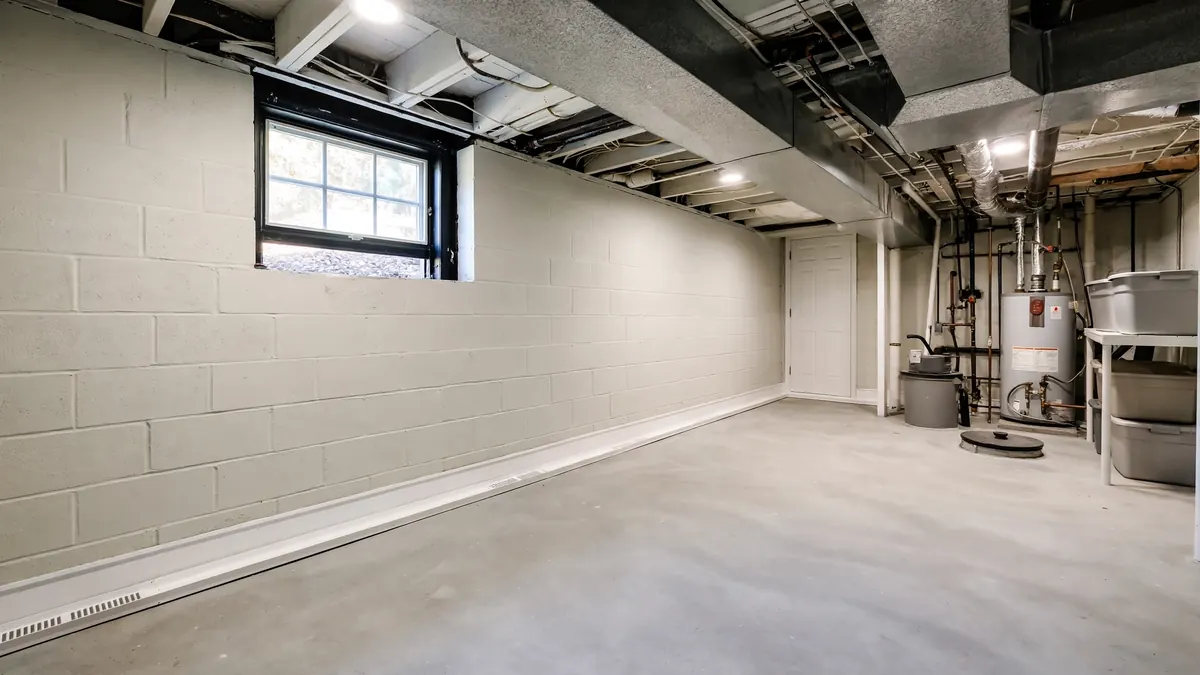 7 Signs Your Basement Needs Waterproofing | Youngstown Homeo
Seven signs your Youngstown basement needs waterproofing: water at the joint, efflorescence, musty smell, flak
Learn more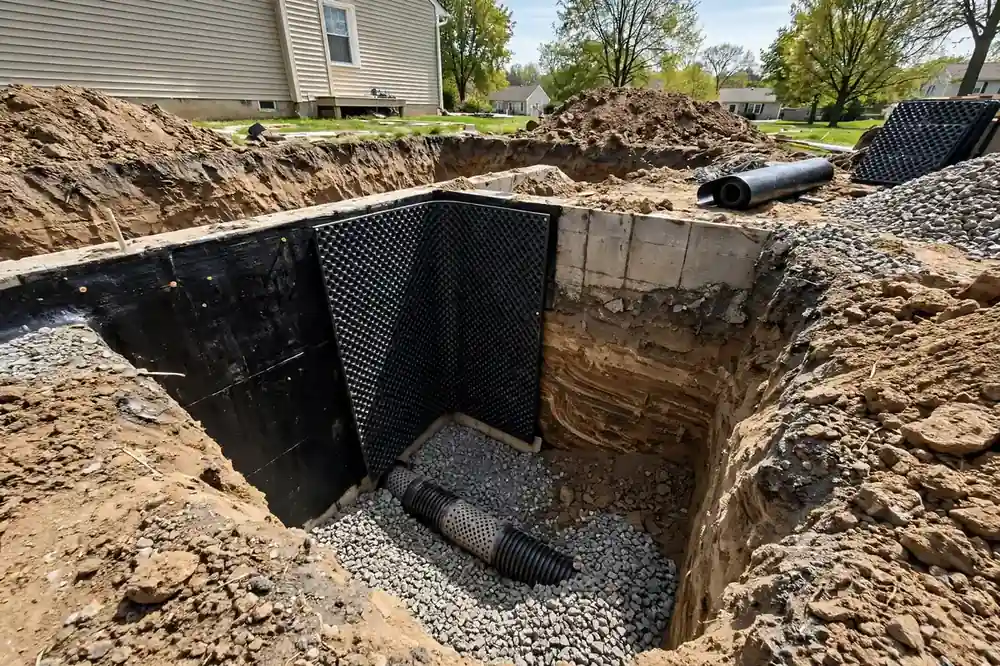 Interior vs Exterior Waterproofing | Which Is Right for Your
Interior vs exterior waterproofing compared: what each one does, when each is right, and why many Youngstown h
Learn moreQuestions, answered
Because the snow melts while the ground is still frozen, and the water has nowhere to go but against the foundation. Youngstown gets about 40 to 45 inches of snow a year, and the spring thaw sends it all at the foundation in a few weeks. The water table rises fast, the cove joint leaks, and the sump pump has to work harder than at any other time of year. A basement that leaks only in spring is a basement with a water-table problem.
Yes, it is the worst soil for a foundation. Clay drains slowly, it holds water against the wall for days after a storm, and it swells when it is wet and shrinks when it dries. The wall is pushed and released, year after year, and the mortar joints are what give way first. A French drain, a perimeter drain and proper grading all help, because they give the water a path that does not press against the wall.
No. A basement that leaks in the Mahoning Valley will not stop leaking on its own, because the water table, the soil and the climate do not change. The leak will get worse every season, as the wall becomes more porous and the joint opens further. A basement that is repaired when it is damp is a manageable job. A basement that is repaired after years of damp is a major one.
Not all, but most older homes have had a water problem at some point, and many have one now. A home with a working drain system, a properly sized sump pump and good grading will stay dry, even in the valley. A home without those things will leak, because the water, the soil and the age are the same for every house. The difference is the system, not the house.
The cove joint is the seam where the foundation wall meets the floor slab. It exists because the wall and the floor were poured at different times, and they never become one piece. It is the weakest point in the foundation, and it is where water enters first when the water table rises. The fix is an interior drain channel that collects the water at the joint and sends it to a sump pump.
Talk to a local waterproofing professional
Describe what is happening in your basement and a local professional will assess the water path and the right fix.
Get in touch
Talk to a local waterproofing professional about your basement.
Hours: Mon–Fri 7:00 AM–10:00 PM ET · Sat 8:00 AM–10:00 PM ET · Sun 7:00 AM–9:00 PM ET
What to have ready
- Where the water appears, and after what kind of weather
- Whether the basement has a sump pump, and whether it runs
- Photos of the wall, the floor joint, or the water itself