Sump Pump vs Interior Drain System: Which Does Your Basement Need?
A sump pump and an interior drain system are often talked about as if they are alternatives. They are not. They are two halves of one system, and a basement with only one half is a basement that is half protected.
The short version
A sump pump removes water from the house. An interior drain system collects the water and delivers it to the pump. The pump is the exit, and the drain is the collection network. A pump without a drain can only remove the water that happens to reach the pit. A drain without a pump fills with water and has nowhere to go. Most Youngstown basements need both, because the water enters along the whole wall, not just at the
The short answer
A sump pump removes water from the house. An interior drain system collects the water and delivers it to the pump. The pump is the exit, and the drain is the collection network. A pump without a drain can only remove the water that happens to reach the pit. A drain without a pump fills with water and has nowhere to go. Most Youngstown basements need both, because the water enters along the whole wall, not just at the pit.
The confusion comes from the fact that many homes already have a sump pit, because a previous owner installed one after the first flood. The pit and the pump are visible, and they look like a system. But a pit without a channel is a single point in a large basement, and water entering twenty feet away along the wall will cross the floor before it ever reaches the pit. The drain is what connects the whole basement to the pump.
What a sump pump does
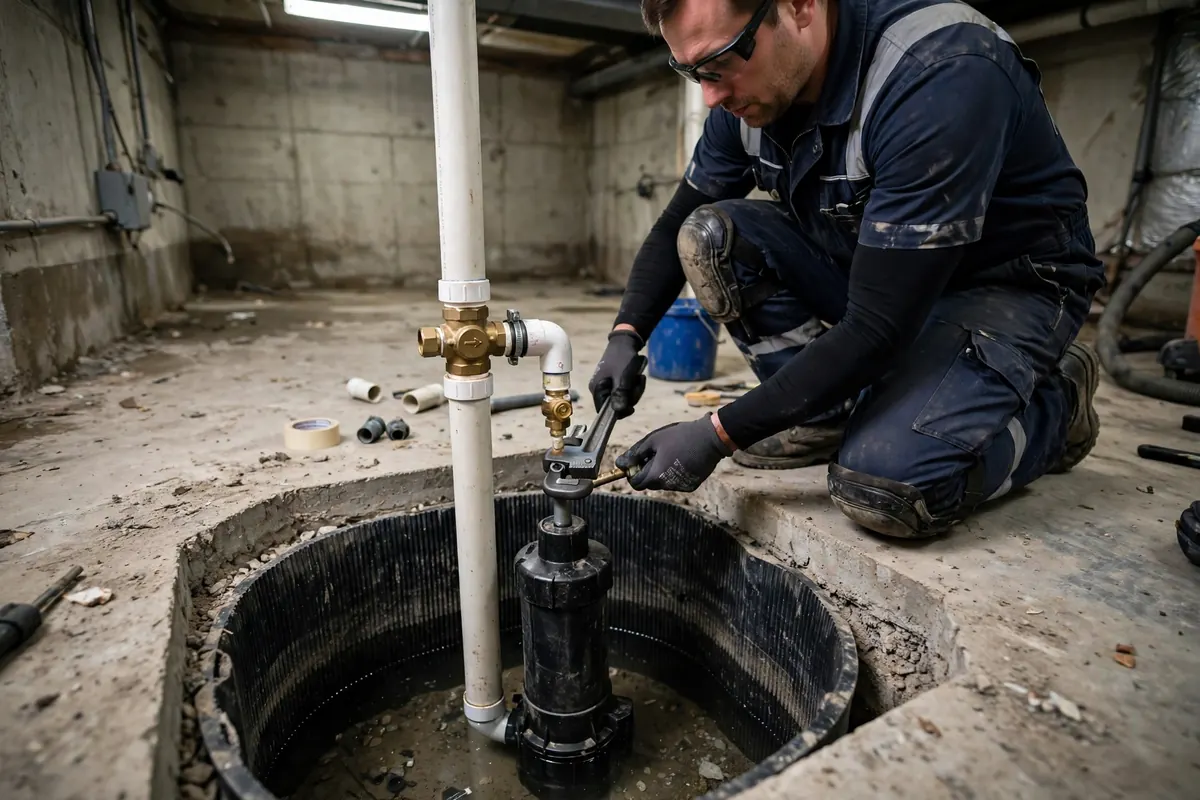
A sump pump sits in a pit dug into the lowest point of the basement floor. Groundwater that collects under and around the foundation drains into the pit, and when the water rises to a set level, a float switch turns the pump on, and the pump pushes the water up through a discharge pipe and out of the house. When the water falls, the float drops and the pump stops.
The pump is a simple machine with one job, and it does that job well, as long as the water reaches it. The pump does not collect water. It does not find water. It waits for water to arrive in the pit, and then it removes it. A pump that is properly sized, with a clear discharge and a battery backup, will handle the storms Youngstown gets, including the fast summer downpours and the spring thaw.
The pump also has a working life. A submersible pump that runs regularly usually lasts seven to ten years. A pump that runs rarely can last longer, and a pump that runs constantly in a wet basement can wear out sooner. The float switch often fails before the motor, and a switch can be replaced without replacing the whole pump. The pump needs to be tested regularly, because a pump that has never been tested will fail on the night it is needed.
What an interior drain system does
An interior drain system is a channel installed inside the basement along the base of the foundation walls, at the footing, just below the floor slab. It collects the water that arrives at the wall-floor joint before that water can spread across the floor, and it delivers the water to the sump basin, where the pump removes it.
The system works because it respects how water actually behaves in a Youngstown basement. Groundwater does not rise evenly through the middle of a slab. It presses against the wall, moves down to the footing, and enters at the cove joint. A channel placed exactly at that seam intercepts the water at the point of entry. A wall drainage membrane, fixed to the wall above the channel, catches seepage through the block and directs it into the channel as well.
The channel, the gravel bed and the concrete are permanent. They do not wear out. The pump is the only part with a limited working life, and it is designed to be replaced without touching the channel. As long as the pump is tested and replaced when it wears out, and the discharge stays clear, the system keeps working for decades.
When a pump alone is enough
A pump alone is enough when the water comes from one place, and that place is the pit. That happens in a basement with a high water table, where the water rises evenly under the slab and drains into the pit through the soil, and where the walls do not leak. It also happens in a basement that has never leaked at the joint, and where the only water is the water that rises under the floor.
That is a narrow case, and it is not the case for most Youngstown basements. Most basements in the valley leak at the cove joint, and the water enters along the wall, not under the slab. A pump alone will not keep those basements dry, because the water has to cross the floor to reach the pit, and by the time it gets there, the floor is already wet.
A pump alone is also enough as a temporary measure, while a drain system is being planned. A working pump will keep a basement from flooding, even if it does not keep it dry, and that is worth having. But it is a temporary measure, not a solution, and the drain should follow.
When a drain alone is not enough
A drain without a pump is a trench full of water. The channel collects the water, but the water has nowhere to go, and it will fill the channel, overflow onto the floor, and make the basement wetter than it was before. A drain system always needs a pump, unless the lot slopes steeply enough that the drain can run to daylight by gravity, with the outlet below the basement floor level.
Most Youngstown lots are flat enough that a pump is needed. The drain collects the water, the pump removes it, and the discharge carries it away from the house. The three are one system, and leaving out any one of them leaves the basement wet.
A gravity drain to daylight is possible on a sloped lot, and it is a good solution where it works, because it has no pump to fail and no electricity to lose. But it needs a slope that drops below the basement floor, and most valley lots do not have it. The inspection will tell you whether a gravity outlet is possible, or whether a pump is needed.
How the two work together
The drain collects the water along the whole perimeter, the membrane catches the seepage through the wall, and the pump removes the water from the pit. The discharge carries the water away from the house, and the check valve stops it from running back. The battery backup takes over when the power fails, and the alarm sounds if the water rises too high. Each part has one job, and each part depends on the others.
The sizing has to match. A drain that is too small for the water it has to carry will overflow during the heaviest rain. A pump that is too small for the water the drain delivers will run constantly and burn out. A basin that is too small will make the pump short-cycle. The inspection measures the water volume, the lift and the pit, and the system is sized to those numbers.
The maintenance is simple, but it has to be done. Test the pump a few times a year. Keep the pit clean. Check the discharge each spring. Check the battery backup. A few minutes of checking each season is what keeps the system ready for the storm that matters.
What to install first
If the basement has no pump and no drain, the drain and the pump are installed together, as one job. The trench is cut, the channel is laid, the basin is set, the pump is fitted, and the discharge is run. The job takes two to three days for a typical Youngstown basement, and the basement is usable again once the concrete has cured.
If the basement already has a pump but no drain, the drain is added, and the existing pump is checked. If the pump is properly sized and in good condition, it is kept. If it is undersized or worn, it is replaced at the same time, because a new drain delivering more water to an old pump will overwhelm it.
If the basement already has a drain but the pump has failed, the pump is replaced, and the drain is checked for silt and blockages. A drain that has been working for years may need to be flushed, and the discharge may need to be cleared. The pump and the drain are one system, and they are serviced as one system.
What getting it wrong leads to
A pump without a drain is the most common mistake in the valley, and it is an expensive one. The homeowner installs a pump, the basement still gets wet, and the homeowner concludes that waterproofing does not work. The pump was not the problem. The missing drain was the problem, and the pump was blamed for a job it was never designed to do.
A drain without a pump is the second most common mistake, and it is worse, because the drain collects the water and then has nowhere to go. The channel fills, overflows onto the floor, and the basement is wetter than it was before. A drain without a pump is not a system. It is a trench full of water.
A pump that is undersized is the third most common mistake. The pump runs constantly, burns out, and fails during the storm that needs it most. A pump that is far too large short-cycles, wears out its switch, and fails the same way. The sizing has to match the water volume, the lift and the pit, and the sizing is decided by the inspection, not by a catalogue.
The most reliable system is the one that is installed once, properly, with the drain and the pump sized together, and maintained regularly. A system that is installed in pieces, or that is repaired after it fails, will work out worse in the end, because the failure will come with a flooded basement to clean up, and the repair will mean doing the job again.
More from the blog
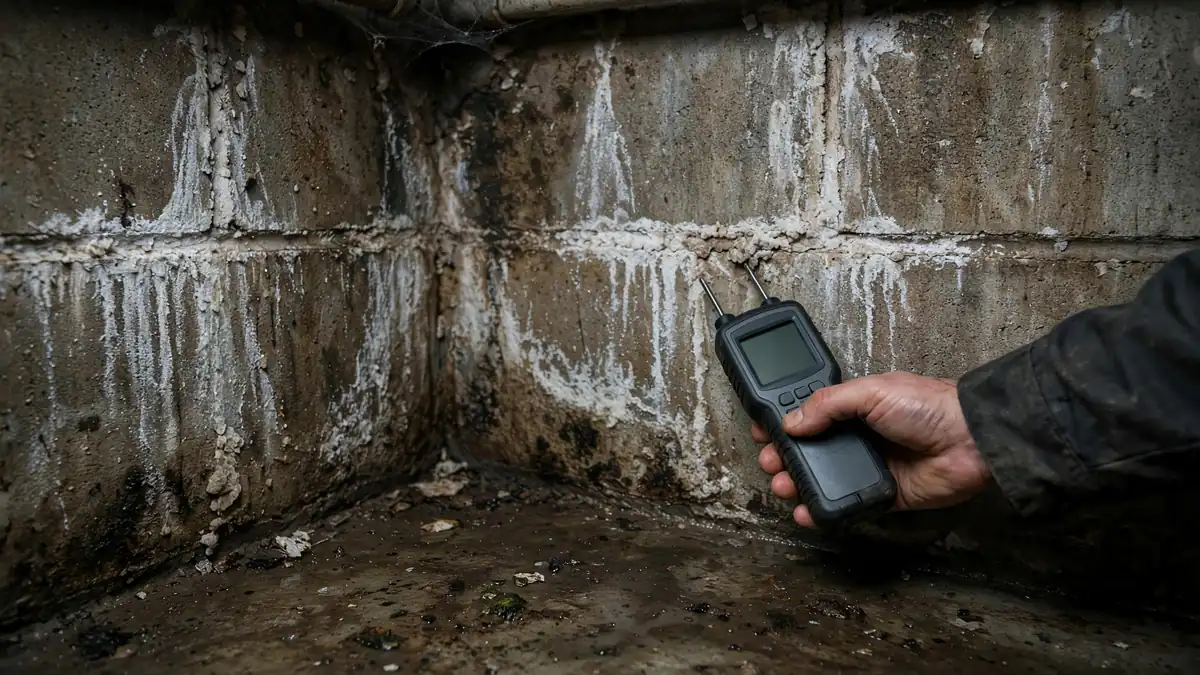 Why Basements Leak in Youngstown, OH | The Mahoning Valley W
Why do Youngstown basements leak? The water table, clay soil, old foundations and spring thaw explain most wet
Learn more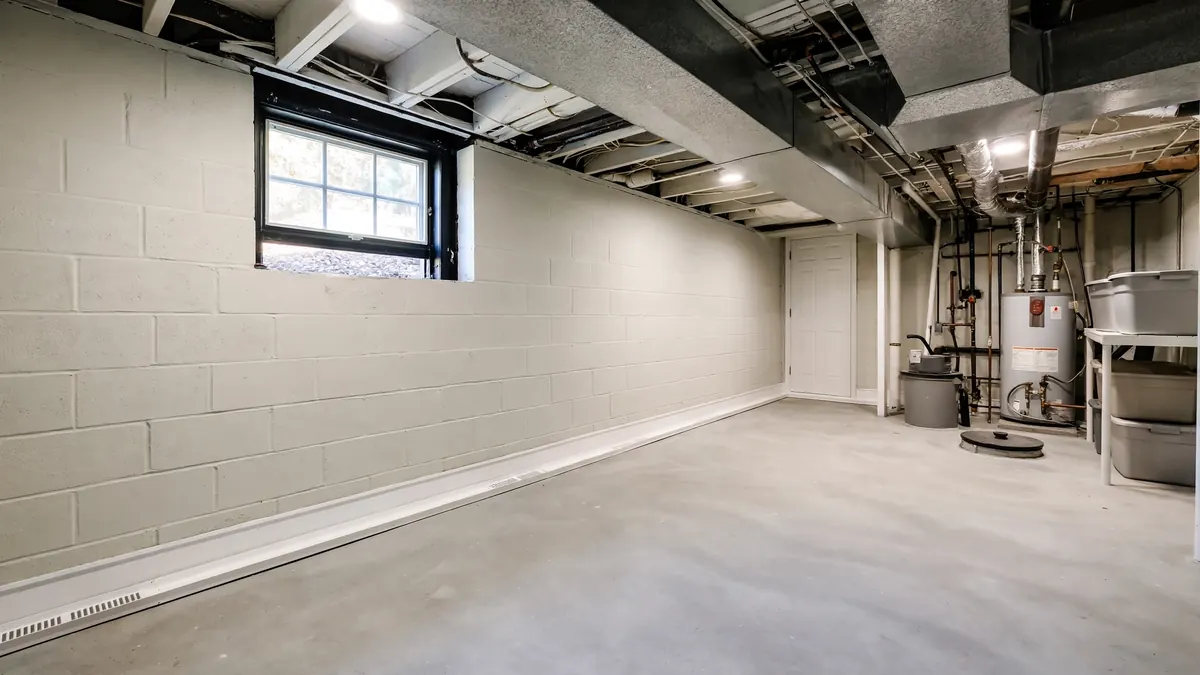 7 Signs Your Basement Needs Waterproofing | Youngstown Homeo
Seven signs your Youngstown basement needs waterproofing: water at the joint, efflorescence, musty smell, flak
Learn more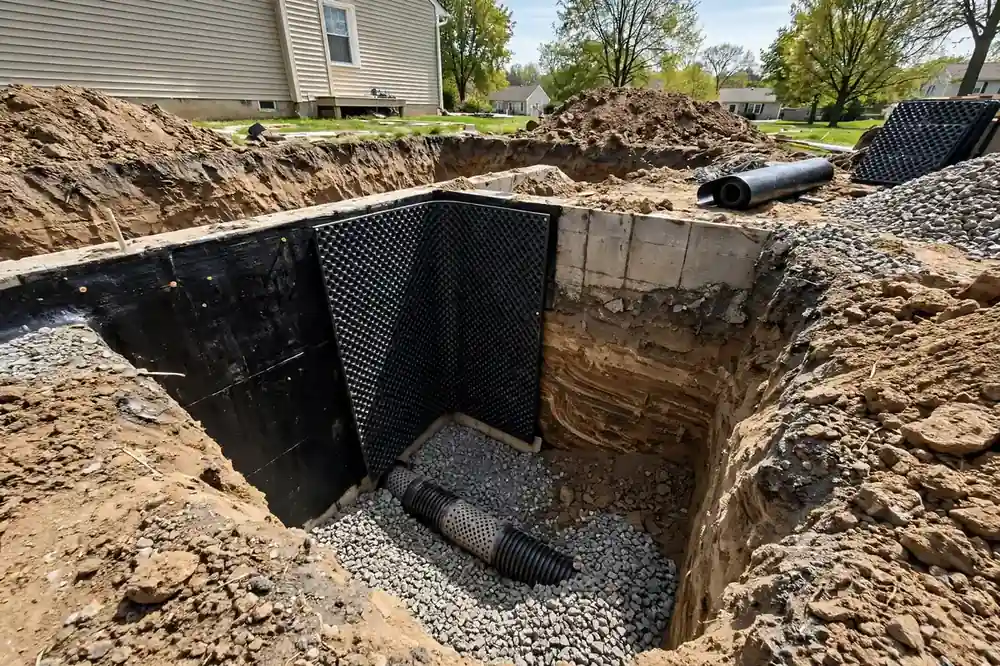 Interior vs Exterior Waterproofing | Which Is Right for Your
Interior vs exterior waterproofing compared: what each one does, when each is right, and why many Youngstown h
Learn moreQuestions, answered
In most Youngstown basements, yes. The drain collects the water along the whole wall, and the pump removes it from the house. A pump without a drain can only remove the water that reaches the pit, and water entering along the wall will cross the floor first. A drain without a pump fills with water and has nowhere to go. The two are halves of one system.
Yes, if the pump is properly sized and in good condition. The drain is installed, the channel is connected to the existing basin, and the pump is tested with the new water volume. If the pump is undersized or worn, it should be replaced at the same time, because a new drain delivering more water to an old pump will overwhelm it.
No, not on its own. A finished basement needs a drain channel to collect water along the walls, a sealed basin lid to keep moisture out of the room, and a pump to remove the water. A pump on its own will not keep a finished basement dry, because the water has to cross the floor to reach the pit, and by the time it gets there, the finished floor is already wet.
It depends on the pump and the lift. A pump has to move the volume that arrives during the heaviest rain, up the height from the pit to the discharge outlet, with some margin left over. A pump that is too small runs constantly and burns out. A pump that is far too large short-cycles and wears out its switch. The inspection measures the pit, the lift and the water volume, and the pump is sized to those numbers.
The main pump stops, and the pit fills. A battery backup pump takes over automatically when the power fails, and it will keep pumping for hours on a charged battery. Without a backup, a power cut during a storm leaves the basement with no protection at all. A battery backup is worth considering in any home where a flooded basement would be expensive.
Talk to a local waterproofing professional
Describe what is happening in your basement and a local professional will assess the water path and the right fix.
Get in touch
Talk to a local waterproofing professional about your basement.
Hours: Mon–Fri 7:00 AM–10:00 PM ET · Sat 8:00 AM–10:00 PM ET · Sun 7:00 AM–9:00 PM ET
What to have ready
- Where the water appears, and after what kind of weather
- Whether the basement has a sump pump, and whether it runs
- Photos of the wall, the floor joint, or the water itself