Interior vs Exterior Waterproofing: Which Is Right for Your Home?
Interior waterproofing manages water after it arrives. Exterior waterproofing stops water before it touches the wall. Most Youngstown homes need one of them, and some need both, and the inspection decides which.
The short version
Interior waterproofing is the right answer for most Youngstown homes, because the problem is usually the water table and the cove joint, and an interior drain system handles both without excavation. Exterior waterproofing is the right answer when the wall itself is the problem: when it is spalling, when the mortar is failing, or when the leak is localised to one wall. Many homes end up with a combination, and the com
The short answer
Interior waterproofing is the right answer for most Youngstown homes, because the problem is usually the water table and the cove joint, and an interior drain system handles both without excavation. Exterior waterproofing is the right answer when the wall itself is the problem: when it is spalling, when the mortar is failing, or when the leak is localised to one wall. Many homes end up with a combination, and the combination is decided by the inspection, not by a catalogue.
The two methods do different jobs. Interior work manages water. Exterior work prevents contact. A home with a sound wall and a wet joint needs interior work. A home with a crumbling wall needs exterior work. A home with both needs both.
What interior waterproofing does
Interior waterproofing means a drain channel installed inside the basement along the base of the foundation walls, a wall membrane that catches seepage, and a sump pump that sends the water outside. The system collects the water that arrives at the wall-floor joint and along the wall, and it removes it before it can spread across the floor.
The system works in almost any weather, it can be installed year-round, and it does not disturb landscaping, driveways or porches. Its weakness is that the wall still gets wet on the outside. The system manages the water rather than preventing contact, and for most homes with a high water table or a leaking cove joint, that trade is worth it.
An interior system is also the lower-disruption option, because there is no excavation, no backfill, and no landscaping restoration. A full-perimeter interior system in a typical Youngstown basement takes two to three days, and the basement is usable again once the concrete has cured.
What exterior waterproofing does
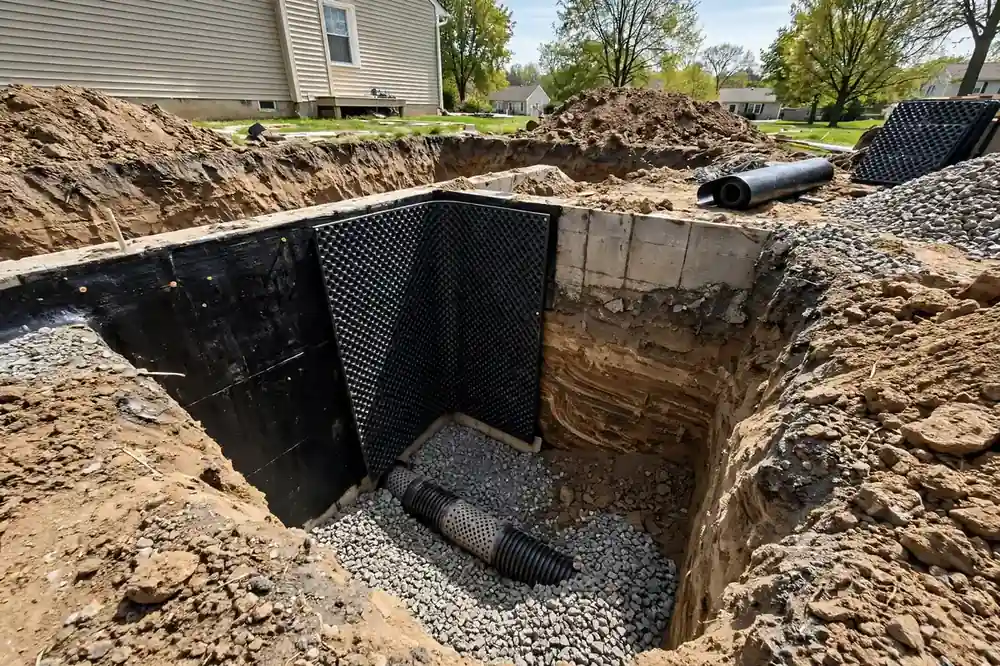
Exterior waterproofing means excavating the soil away from the foundation wall, down to the footing, and applying a waterproof membrane and a drainage board to the outside face of the wall. New drain tile is laid at the footing, in gravel, and pitched to a sump pit or a daylight outlet. The trench is backfilled, the grading is restored, and the wall is protected from the outside for the first time since the house was built.
The method is the oldest in waterproofing, and it is still the strongest. It works because it addresses the water where it first arrives, at the outside face of the wall, rather than managing it after it has already passed through. A wall that is sealed from the outside stays dry, and a dry wall does not deteriorate, does not grow mould, and does not pass water into the basement.
The work is heavy. Excavation means digging, and digging means a yard that is disturbed, a driveway or a porch that may have to be worked around, and a job that takes days. It is also weather-dependent, because excavation in heavy rain or frozen ground is slow and risky. For those reasons, exterior work is chosen when it is the right answer, not as a default.
Comparing the two
Interior work is faster, cheaper, and less disruptive. It can be done year-round, it does not disturb the yard, and it handles the water table and the cove joint, which are the most common problems in the valley. Its weakness is that the wall still gets wet, and it does not protect a deteriorating wall.
Exterior work is stronger, more durable, and the only method that protects the wall itself. It stops water before it touches the masonry, and it is the right answer for a wall that is spalling, for a foundation with a failed exterior coating, or for a new addition where the wall is already exposed. Its weakness is the scale of the work and the disruption: excavation, landscaping repair, and the risk of disturbing a driveway, a porch or a gas line.
The two are not in competition. They are complementary, and many homes end up with both. An interior drain handles the water table and the cove joint, while a single exterior repair fixes the one wall that is failing. The combination is decided by the inspection, and the inspection looks at the wall, the water table, the grading and the use of the basement.
When interior is the right choice
Interior work is the right choice when the wall is sound but wet, when excavation is impossible because of a driveway, a porch or a neighbouring building, or when the problem is the water table rather than the wall itself. It is also the right choice when the budget or the season rules out excavation, because interior work can be done year-round.
A home with a high water table, a leaking cove joint, or walls that seep across a wide area after sustained rain is a home that needs an interior system. The drain collects the water, the membrane catches the seepage, and the pump removes it. The system is the direct answer, because it intercepts the water at the point of entry.
Interior work is also the right choice for a finished basement, because the work is done from the inside and the disruption is limited to the floor along the wall. A finished basement that is waterproofed from the outside would require the yard to be dug up, and the finished interior would still need a drain to handle the water table.
When exterior is the right choice
Exterior work is the right choice when the wall is deteriorating, when the mortar is soft and crumbling, or when the block faces are flaking off. A wall in that condition needs exterior protection, because no interior coating will hold it together. The excavation lets the wall be repaired properly before it is sealed.
Exterior work is also the right choice when the leak is localised to one wall, while the rest of the basement stays dry. A single wall that leaks, because the exterior coating has failed or the drain tile is broken on that one side, can be fixed by excavating that one wall, sealing it, and replacing the tile. It is a targeted repair, and it is often cheaper than a full interior system that the house does not need.
Exterior work is the right choice for new construction or an addition, when the wall is already exposed. Sealing a wall that is already open is straightforward and inexpensive, and it protects the wall from the start. It is far cheaper to waterproof a wall that is already open than to excavate it later.
Why many homes get both
Many Youngstown homes end up with a combination, because the problems are different on different walls. An interior drain handles the water table and the cove joint around the whole perimeter, while a single exterior repair fixes the one wall that is failing, or a window well is rebuilt so it drains instead of filling. The combination is the most complete answer, because it protects the wall where the wall needs it, and it manages the water where the water needs it.
The combination is decided by the inspection, not by a standard package. A home with a sound wall and a wet joint needs interior work only. A home with a crumbling wall needs exterior work, and the interior system follows. A home with both needs both, and the work is done in the order that makes sense: the wall is stabilised and sealed first, and then the interior system is installed.
A homeowner who is offered only one method, without an inspection, should be cautious. A company that only does interior work will recommend interior work. A company that only does exterior work will recommend exterior work. The right recommendation comes from the house, not from the company's catalogue.
What to ask before you choose
Before choosing between interior and exterior work, ask the inspector four questions. Where is the water entering? What is the wall made of, and what condition is it in? Where does the water table sit after a wet week? And where can the discharge go? A waterproofing plan that starts with those four answers will hold. One that starts with a product catalogue will not.
Ask whether the wall is moving. A wall that is bowing, or a crack that is growing, needs a structural assessment before any waterproofing begins, because a seal applied to a moving wall will not hold. Ask whether the problem is the water table or the wall, because the two need different answers. And ask what the work will disrupt, because exterior work disturbs the yard and interior work disturbs the floor, and the disruption should be planned, not a surprise.
Ask what the system includes. A complete interior job includes the drain channel, the wall membrane, the sump basin and pump, the discharge line with a check valve, and the concrete restoration. A complete exterior job includes the excavation, the membrane, the drainage board, the drain tile, and the restoration of the grading and the yard. A job that leaves out any of those is a job that is not complete.
Ask what happens after the work. A good job includes a test, with water run into the channel and the pump cycled, and a follow-up after the next rain to confirm the basement is dry. A job that is not tested is a job that is not finished, because the test is what proves the system works.
The question of timing
Timing matters as much as method. Interior work can be done year-round, because it happens inside the basement, and it is often the right choice in winter, when the basement is at its driest and the inspection is clearest. Exterior work is weather-dependent, and it is usually scheduled in the warmer months, when the ground can be excavated and the membrane can cure properly.
A basement that is leaking now, in the middle of winter, should not wait for spring to be fixed from the outside. An interior system can be installed now, and the exterior work, if it is needed, can follow in the warmer months. A basement that is wet now needs a system now, not a plan for later.
A basement that is being finished should be waterproofed first, and the finishing should wait until the basement has stayed dry through a wet season. Finishing a wet basement hides the water behind finished walls, where it does mould damage that is not visible until it is serious. Waterproof first, test through a spring, and only then finish. It is far simpler to waterproof an unfinished basement than to repair a finished one.
The timing of the work should be decided by the house, not by the season. A wall that is bowing needs attention now, whatever the season. A basement that floods every spring needs a system before the next spring, not after it. The calendar is a guide, not a reason to wait.
More from the blog
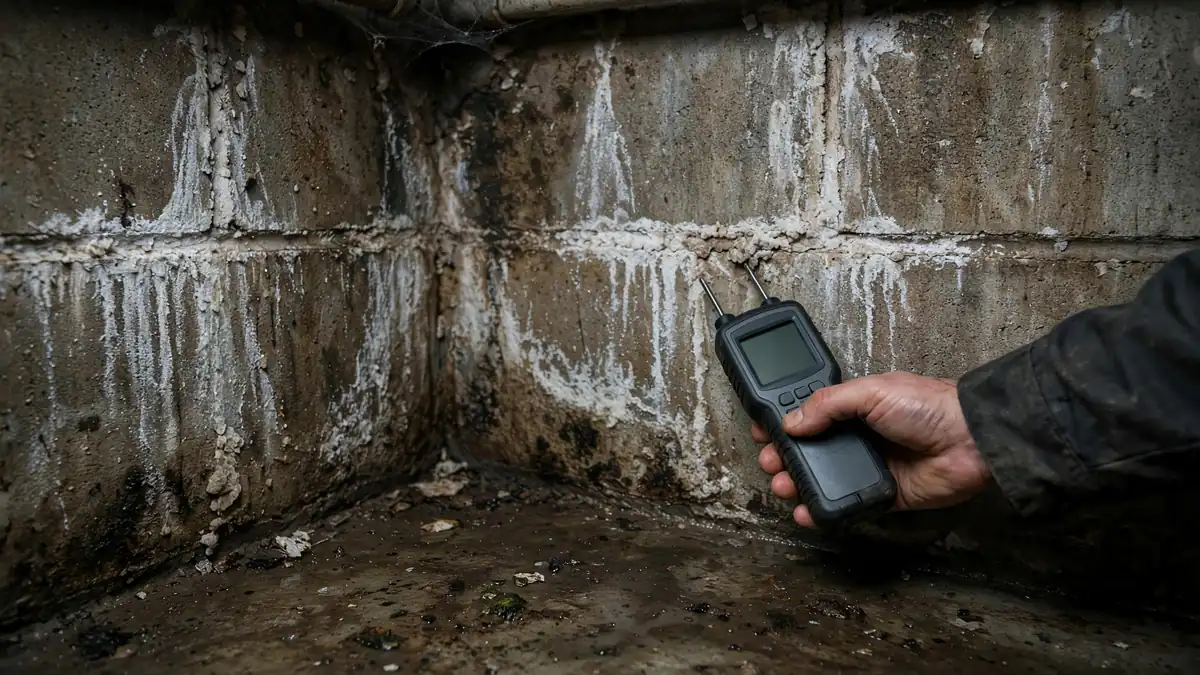 Why Basements Leak in Youngstown, OH | The Mahoning Valley W
Why do Youngstown basements leak? The water table, clay soil, old foundations and spring thaw explain most wet
Learn more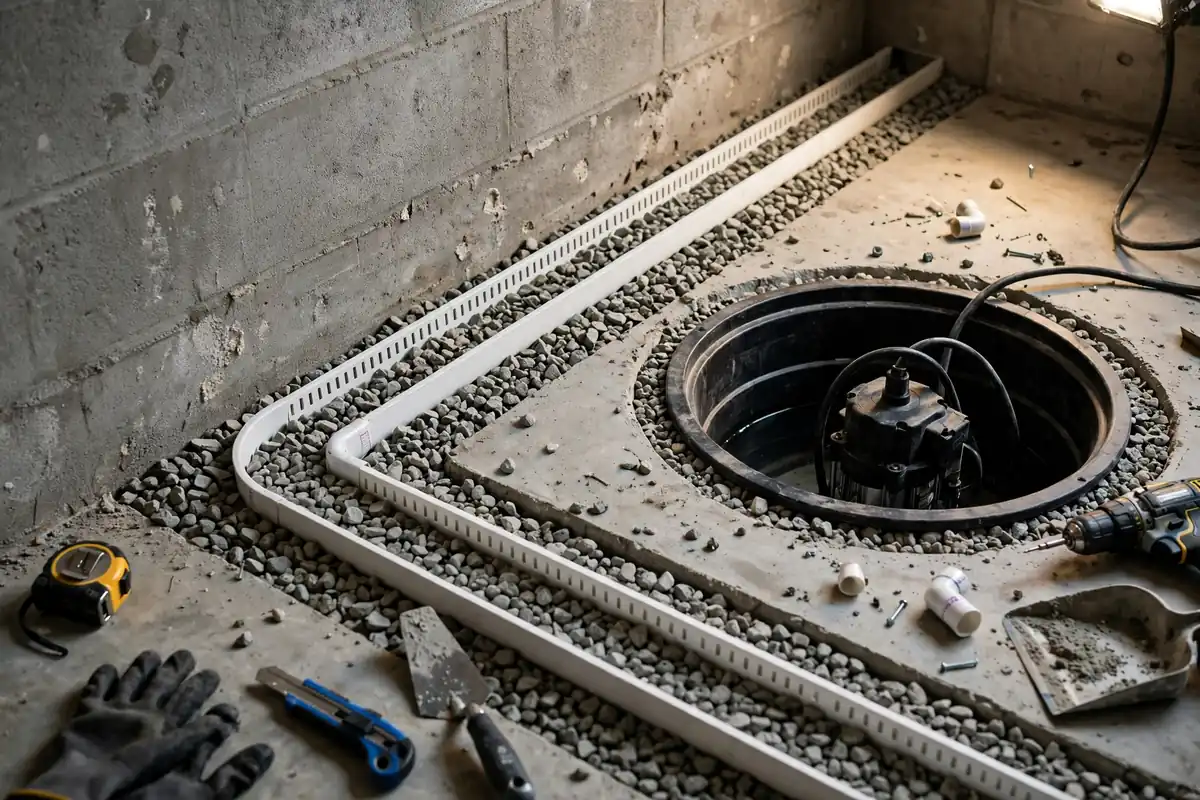 Sump Pump vs Interior Drain System | Which Does Your Basemen
Sump pump vs interior drain system: what each one does, why a pump alone is not enough, and how the two work t
Learn more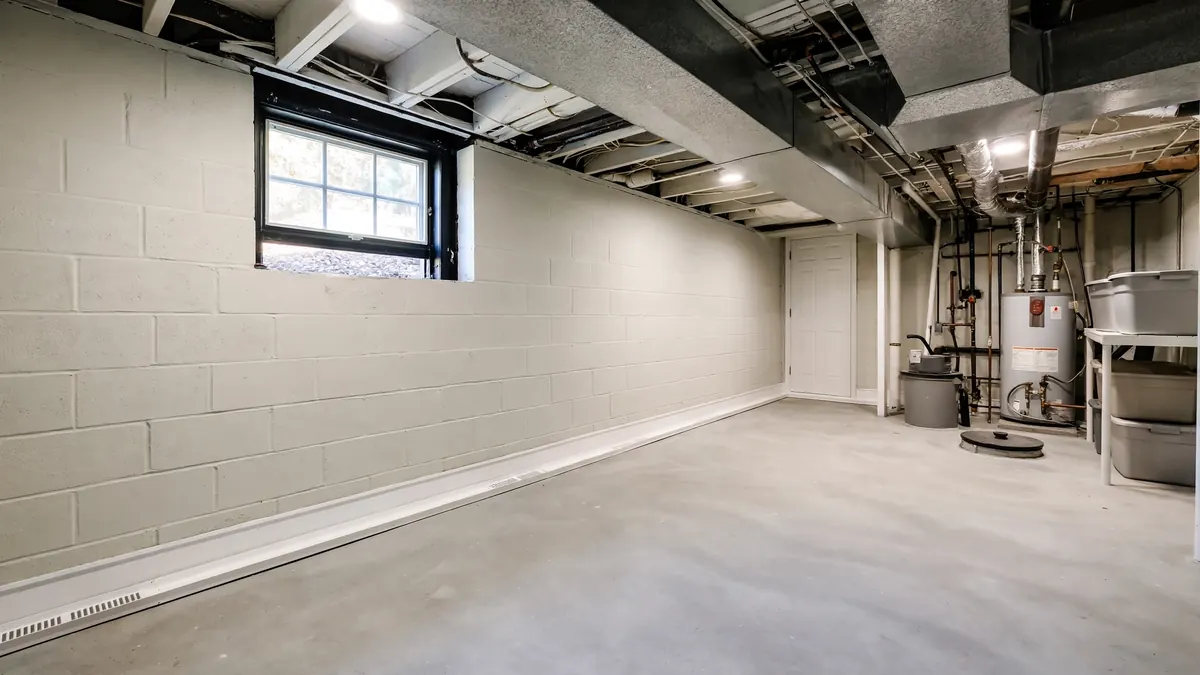 7 Signs Your Basement Needs Waterproofing | Youngstown Homeo
Seven signs your Youngstown basement needs waterproofing: water at the joint, efflorescence, musty smell, flak
Learn moreQuestions, answered
It is different, not simply better. Exterior waterproofing stops water before it touches the wall, which is the strongest protection for a deteriorating wall. Interior waterproofing manages the water after it enters, which is the right answer for a high water table and a leaking cove joint. Most Youngstown homes need an interior system, because the problem is the water table. A home with a crumbling wall needs exterior work. Many homes end up with both.
Yes, and it is often the right answer. A single wall that leaks, while the rest of the basement stays dry, is often a failed exterior coating or a broken drain tile on that one side. Excavating that one wall, sealing it, and replacing the tile is a targeted repair, and it is often cheaper than a full interior system that the house does not need.
No. An interior system manages the water after it enters, but the wall still gets wet on the outside, and a deteriorating wall will keep deteriorating. A wall that is spalling, or whose mortar is soft and crumbling, needs exterior protection, because no interior coating will hold it together. The wall has to be repaired and sealed from the outside.
Both last for decades, if they are installed properly. An interior drain channel, gravel and concrete do not wear out. The pump is the only part with a limited working life, and it is designed to be replaced without touching the channel. An exterior membrane and drainage board, properly installed and protected by gravel backfill, last for decades as well. The system fails only if the backfill is wrong, if the tile has no outlet, or if the grading is allowed to send water back to the wall.
Interior work is less disruptive, because it happens inside the basement and does not disturb the yard, the driveway or the porch. Exterior work disturbs the yard along the wall, and it may require a driveway or a porch to be cut or worked around. Interior work can also be done year-round, while exterior work is weather-dependent and is usually scheduled in the warmer months.
Talk to a local waterproofing professional
Describe what is happening in your basement and a local professional will assess the water path and the right fix.
Get in touch
Talk to a local waterproofing professional about your basement.
Hours: Mon–Fri 7:00 AM–10:00 PM ET · Sat 8:00 AM–10:00 PM ET · Sun 7:00 AM–9:00 PM ET
What to have ready
- Where the water appears, and after what kind of weather
- Whether the basement has a sump pump, and whether it runs
- Photos of the wall, the floor joint, or the water itself