7 Signs Your Basement Needs Waterproofing
A basement rarely floods without warning. It whispers first, in stains, smells and damp patches, and the homeowners who listen early are the ones who pay for a repair instead of a restoration.
The short version
The clearest sign is water itself: a puddle after rain, a damp strip along the wall-floor joint, or a floor that darkens in one corner and dries slowly. If it happens after more than one storm, the path is established and it will keep returning. The water is entering at the cove joint, where the wall meets the floor, because that joint is the weakest point in the foundation. A wet strip that appears after every sus
1. Water at the wall-floor joint
The clearest sign is water itself: a puddle after rain, a damp strip along the wall-floor joint, or a floor that darkens in one corner and dries slowly. If it happens after more than one storm, the path is established and it will keep returning. The water is entering at the cove joint, where the wall meets the floor, because that joint is the weakest point in the foundation.
A wet strip that appears after every sustained rain is not a one-time leak. It is a water path, and the path will not close on its own. The fix is an interior drain channel that collects the water at the joint and sends it to a sump pump. The channel intercepts the water at the point of entry, and it relieves the pressure instead of fighting it.
2. White, chalky deposits on the wall
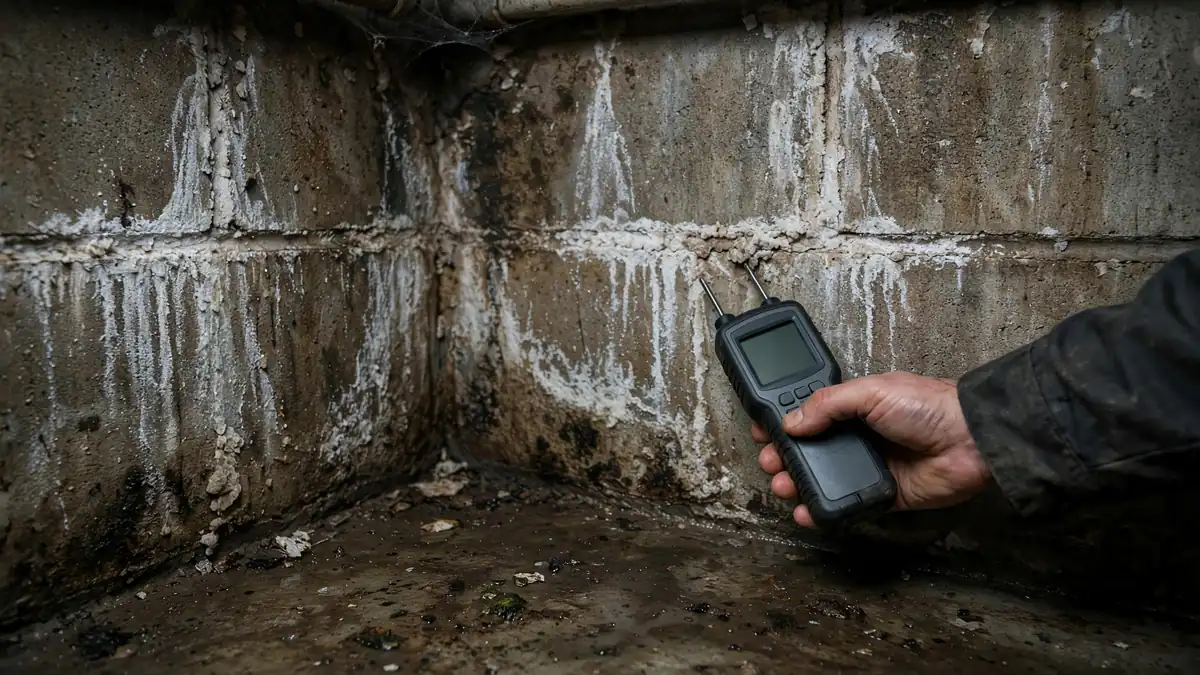
White, chalky deposits on a block wall are called efflorescence, and they are mineral salts left behind when water moves through the masonry and evaporates on the inside face. They mean water is travelling through the wall, even on days when the floor looks dry. A wall that shows efflorescence in bands, especially low on the wall, is telling you where the water table sits after wet weather.
Efflorescence is not just a cosmetic problem. It means the wall is wet through, and a wall that is wet through is a wall that is being damaged by freeze-thaw cycles. Each winter, the water in the block freezes, expands, and pries the surface apart. The efflorescence is the visible sign of a process that is breaking the wall down from the inside.
3. A musty smell that never leaves
A musty smell that never quite leaves, even with the windows open in summer, usually means moisture is feeding mould growth somewhere out of sight, behind stored boxes, behind a finished wall, or under carpet. The smell comes from mould, and the mould needs moisture to grow. Once the water path is closed and the basement dries out, the moisture source is gone, and the smell fades.
The smell is also a health concern, especially for children and for anyone with allergies or asthma. Mould spores rise into the living space through the air, and the musty smell is the sign that they are there. A basement that smells musty is a basement that needs to be dried, not just aired out.
4. Paint or parging flaking off the wall
Paint or parging that flakes off the inside of the wall in sheets is a sign that water is pushing it off from behind. The water moves through the wall, builds pressure behind the paint, and the paint lets go. A wall that has been painted over a leak will look dry for a few weeks, then peel, because the pressure behind it does not go away.
Flaking paint is also a sign that the wall is wet through, and that the moisture is not just on the surface. The wall needs a membrane that catches the seepage and directs it into a drain, not another coat of paint. Painting over a leak hides the problem without stopping it, and the problem will get worse while it is hidden.
5. Rust on the furnace, water heater or laundry appliances
Rust on the bottom of a furnace, water heater or laundry appliance is a sign that the basement has been wet, even if the floor looks dry now. The rust forms where the appliance sits in water, or where the air is humid enough to condense on the cold metal. A furnace that rusts out early is an expensive replacement, and a water heater that fails will flood the basement it sits in.
The rust is also a sign that the basement has been wet for a long time, because rust takes time to form. A basement that has rusted the furnace has been wet for years, and the damage is already done. The waterproofing will stop the water, but the appliance will still need to be checked, because water damage to gas and electrical equipment is not always visible.
6. A sump pit that fills and empties constantly
A sump pit that fills and empties constantly during wet weeks is a sign that the water table is high and the pump is working hard. That is normal in spring, when the snow is melting, but if the pit fills constantly in dry weather, or if the pump runs every few minutes all year, the water table is high and the basement needs a drain system, not just a pump.
A pit that fills while the floor stays wet a few feet away is a sign that the pump has no channel feeding it. The pump can only remove the water that reaches the pit, and water entering along the wall will cross the floor before it ever reaches the pit. The drain is what connects the whole basement to the pump.
7. Cracks, bowing or a stair-step pattern
The sign that should never be ignored is a horizontal crack, a wall that bows inward, or a stair-step crack running through block courses. Those are structural symptoms, not just moisture symptoms, and they need a foundation assessment before any waterproofing work begins. Waterproofing a wall that is moving will not hold, and the crack will keep opening.
A vertical crack that is narrow and stable is usually a shrinkage crack, and it can be sealed with confidence. A horizontal crack, a crack that is widening, or a wall that is bowing are structural signs, and they need to be understood before any sealing work begins. The wall is a structure, and it is assessed as a structure, not as a leak.
What to do if you see one of these signs
Note where the sign appears, and when. A wet strip that appears after every rain, a musty smell that is stronger in summer, or a crack that is wider this year than it was last year are all useful records, and they help the inspection. The homeowner's record is part of the diagnosis.
Do not paint over the sign, seal it with cement, or wait for it to go away. A surface patch will hide the sign without stopping the water, and the water will get worse while it is hidden. The sign is the house trying to tell you something, and the right response is to listen, and to arrange an inspection while the sign is still visible, because a dry wall tells the inspector nothing.
An inspection will map the water paths, measure the water volume, and decide the system. A basement that is repaired when the signs are small is a manageable job. A basement that is repaired after the signs have been ignored for years is a major one.
The sign most homeowners miss
The sign most homeowners miss is the one that is easiest to see: the sump pit. A pit that is full of silt, a pump that is covered in rust, or a discharge line that dribbles instead of flowing are all signs that the system is failing, and they are all visible without going into the basement during a storm. A pit that is never looked at is a pit that will fail without warning.
The second most missed sign is the grading. A lot that slopes toward the house, a downspout that discharges at the foundation, or a driveway that pitches water at the garage wall are all visible from the yard, and they all push water at the foundation. A homeowner who walks the yard after rain, and looks at where the water goes, will see the problem before it becomes a leak.
The third most missed sign is the smell. A musty smell that is noticed in the basement, and then forgotten, is a sign that mould is growing, and mould needs moisture. The smell is the house trying to tell you something, and the right response is to find the moisture, not to air out the basement and forget about it.
The habit that catches all three is a seasonal check. Walk the basement, look at the pit, walk the yard, look at the grading, and smell the air. A few minutes, a few times a year, will catch the signs while they are still small, and a basement that is repaired when the signs are small is a manageable job.
How the signs fit together
The seven signs in this guide rarely appear alone. A basement with a wet joint will usually also have efflorescence on the wall, a musty smell, and a sump pit that fills constantly. A basement with a horizontal crack will usually also have a bowing wall and a door that sticks. The signs fit together because they share a cause: water, pressure, and age.
Reading the signs together is more useful than reading any one of them alone. A wet joint plus efflorescence means the water table is high and the wall is porous. A musty smell plus flaking paint means the wall is wet through and the mould is growing behind the paint. A crack plus a bowing wall means the soil pressure is winning and the wall is losing.
The inspection reads the signs together, and the plan follows from the pattern, not from a single symptom. A basement with a wet joint and a sound wall needs a drain. A basement with a wet joint, a seeping wall and a failing pump needs a drain, a membrane and a new pump. A basement with a horizontal crack needs a structural assessment before any of those.
The homeowner's job is to notice the signs early, while they are still small, and to note when they appear and after what kind of weather. The inspector's job is to read the pattern and write the plan. Together, they keep the basement dry.
What a dry basement looks like
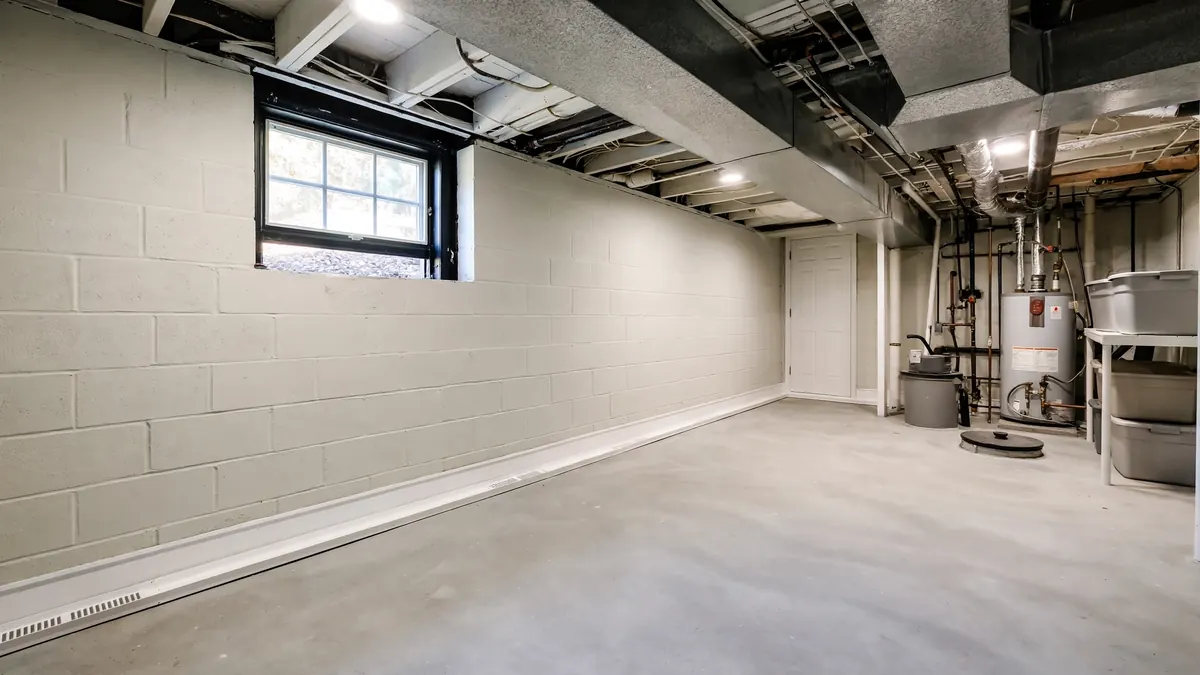
A dry basement is not a basement that has never been wet. It is a basement that has a system, and the system works. The floor is dry after rain. The walls are dry to the touch. There is no musty smell, no efflorescence, and no flaking paint. The sump pit is clean, the pump is tested, and the discharge flows outside. The basement smells like a basement, which is to say it smells like nothing at all.
A dry basement is also a basement that is checked. The homeowner walks it after a storm, tests the pump a few times a year, and checks the discharge each spring. A dry basement is not a basement that is ignored. It is a basement that is looked after, and the looking after is what keeps it dry.
If your basement does not look like that, it is not a reason to accept a wet basement. It is a reason to find the water path, fix the outside, install the system, and test it through the next wet season. A Youngstown basement can be kept dry, and the homeowners who do it are the ones who stop paying for the same water, season after season.
More from the blog
 Why Basements Leak in Youngstown, OH | The Mahoning Valley W
Why do Youngstown basements leak? The water table, clay soil, old foundations and spring thaw explain most wet
Learn more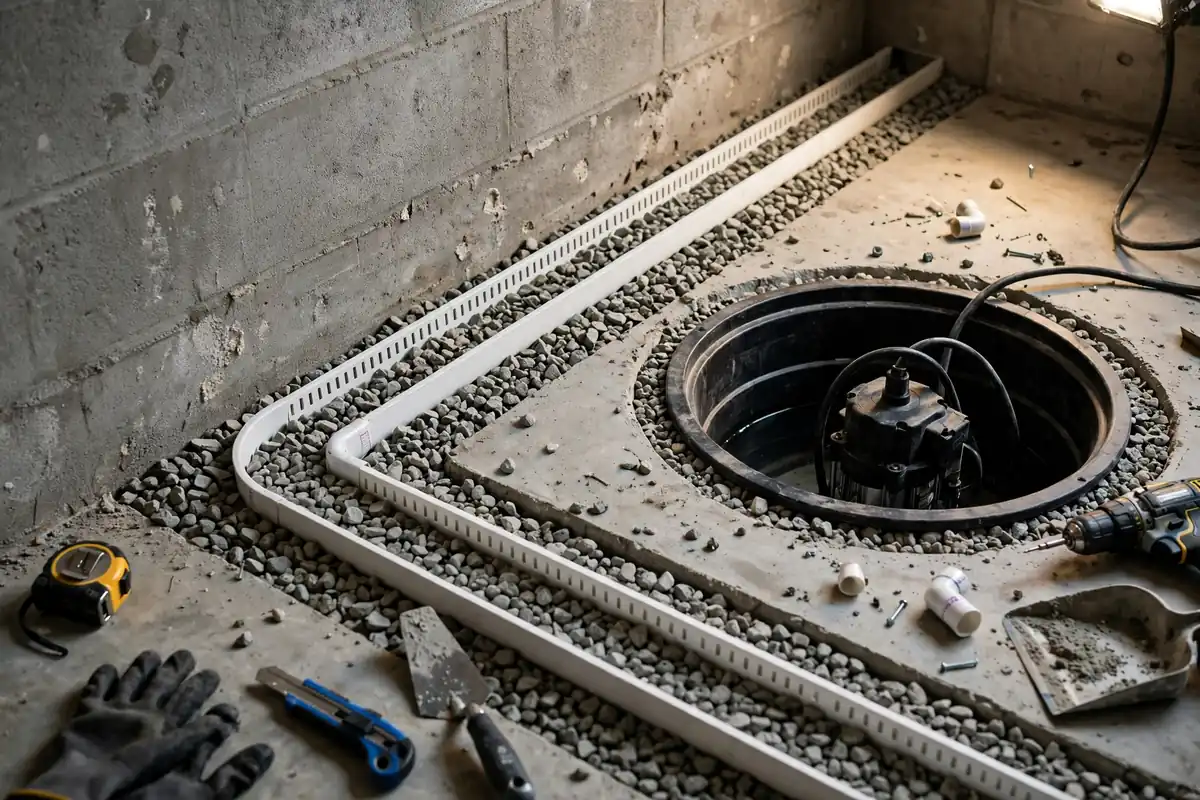 Sump Pump vs Interior Drain System | Which Does Your Basemen
Sump pump vs interior drain system: what each one does, why a pump alone is not enough, and how the two work t
Learn more Interior vs Exterior Waterproofing | Which Is Right for Your
Interior vs exterior waterproofing compared: what each one does, when each is right, and why many Youngstown h
Learn moreQuestions, answered
A horizontal crack, a bowing wall, or a basement that floods are the signs that need immediate attention. A horizontal crack or a bowing wall is a structural problem, and it needs a foundation assessment before any waterproofing begins. A basement that floods needs the water out safely, and then an inspection to find the cause. The other signs, such as efflorescence, a musty smell or flaking paint, need attention soon, but they are not emergencies in the same way.
Yes. A musty smell can mean a leaking joint, a seeping wall, or a damp crawl space, and the smell alone does not tell you which one it is. A wet floor can mean a joint leak, a wall leak, or a floor drain backup. The inspection maps the water paths, and the plan lists each path and the fix for it. A plan that lists one path is a plan for a leak. A plan that lists all of them is a plan for a dry basement.
Efflorescence in bands, low on the wall, is a sign that water is moving through the wall, and it should not be ignored. It means the wall is wet through, and a wall that is wet through is a wall that is being damaged by freeze-thaw cycles. A small patch of efflorescence on one wall is less serious than wide bands across the whole basement, but both mean water is travelling through the masonry, and both need an inspection.
No. A musty smell comes from mould, and mould needs moisture to grow. The smell will not go away until the moisture is gone, and the moisture will not go away until the water path is closed. Airing out the basement will help for a day, but the smell will return, because the moisture is still there. The water path has to be fixed first, and then the basement needs to dry, and the smell will fade as it dries.
It depends on the crack. A narrow, vertical crack that has not changed in years is usually a shrinkage crack, and it can be sealed with confidence. A horizontal crack, a crack that is widening, or a crack that is accompanied by a bowing wall are structural signs, and they need a foundation assessment. A small crack that is growing is a bigger problem than a large crack that is stable, because the growth means the wall is moving.
Talk to a local waterproofing professional
Describe what is happening in your basement and a local professional will assess the water path and the right fix.
Get in touch
Talk to a local waterproofing professional about your basement.
Hours: Mon–Fri 7:00 AM–10:00 PM ET · Sat 8:00 AM–10:00 PM ET · Sun 7:00 AM–9:00 PM ET
What to have ready
- Where the water appears, and after what kind of weather
- Whether the basement has a sump pump, and whether it runs
- Photos of the wall, the floor joint, or the water itself