Foundation Cracks: When to Worry and When to Repair
A crack in a foundation wall is the house trying to tell you something. Most of the time it is saying that the concrete shrank as it cured. Sometimes it is saying that the wall is moving, and that is a message worth hearing properly.
The short version
A narrow, vertical crack that has not changed in years is usually a shrinkage crack, and it can be sealed with confidence. A horizontal crack, a crack that is widening, a crack that is accompanied by a bowing wall, or a crack that is accompanied by a sticking door or a sloping floor are all signs that need a foundation assessment before any repair. The direction, the width, and whether the crack is changing are what
The short answer
A narrow, vertical crack that has not changed in years is usually a shrinkage crack, and it can be sealed with confidence. A horizontal crack, a crack that is widening, a crack that is accompanied by a bowing wall, or a crack that is accompanied by a sticking door or a sloping floor are all signs that need a foundation assessment before any repair. The direction, the width, and whether the crack is changing are what matter, not the size alone.
A crack is read the way a doctor reads a symptom: by its shape, its location, its width, and whether it is changing. A crack that has been the same width for years is a stable crack. A crack that is wider this year than it was last year is a moving crack, and the movement has to be understood before the seal goes in.
Vertical cracks: usually shrinkage
A vertical crack in a poured concrete wall, running from the top of the wall to the floor, is the most common crack in a Youngstown basement, and it is usually a shrinkage crack. The concrete shrank as it cured, and the wall cracked at its weakest point. A vertical crack that is narrow, stable and not growing can be sealed by injection, and the repair is usually permanent.
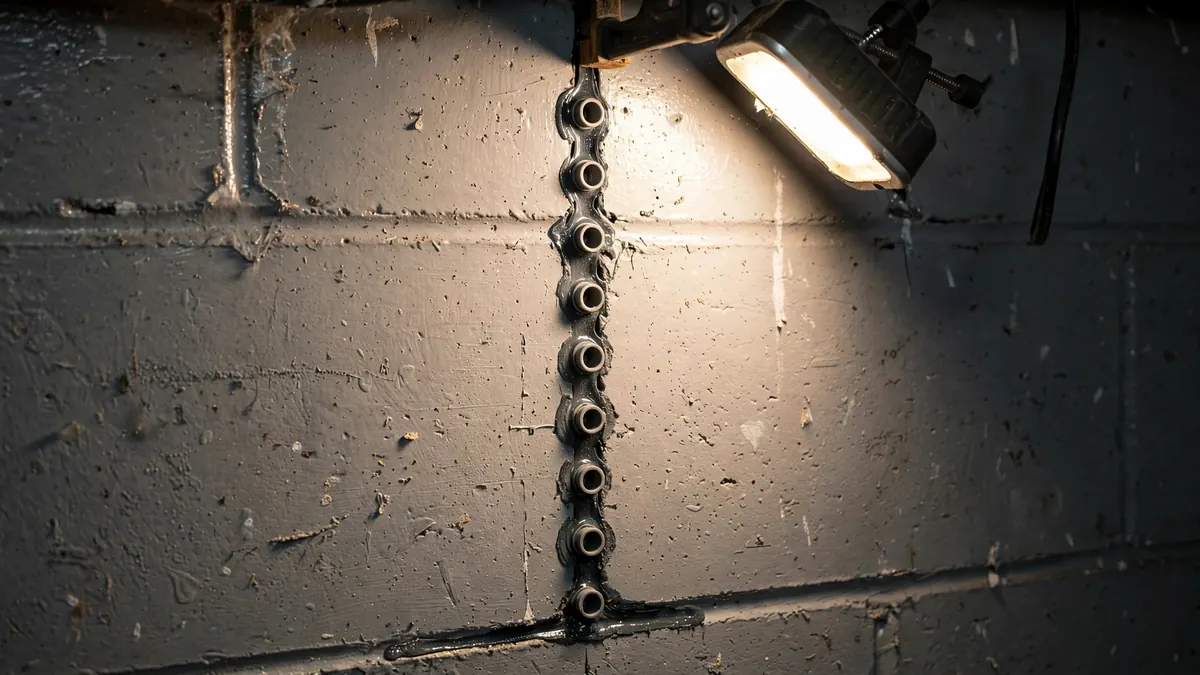
The repair is done from the inside, with a low-viscosity resin injected through ports along the crack, starting at the bottom and working up. The resin fills the crack all the way through the wall, from the inside face to the outside face, and it cures into a flexible, waterproof seal. A properly injected crack does not leak again, because the resin fills the full depth of the wall, not just the surface.
A vertical crack that is leaking is a water problem, not a structural problem, and it can be repaired with confidence. A vertical crack that is dry, but that is widening, is a different matter, and it needs to be watched, because a widening crack means the wall is moving.
Horizontal cracks: a structural sign
A horizontal crack runs along the wall, usually at the frost line or at the middle of the wall, and it means the wall is being pushed inward by soil pressure. The clay soil in the Mahoning Valley swells when it is wet and presses hard against the wall, and the wall bows inward. A horizontal crack that is opening, or a wall that is bowing, is a structural problem, and it needs a foundation assessment before any repair.
Sealing a horizontal crack without addressing the pressure behind it will not hold, because the wall will keep moving and the seal will keep breaking. The wall has to be stabilised first, with the appropriate structural repair, and only then sealed. Waterproofing a bowing wall without stabilising it is wasted work.
A horizontal crack is the sign that should never be ignored. It is the wall telling you that the soil pressure is winning, and the wall is losing. The assessment will measure the bow, look at the soil and the grading, and decide the stabilisation. The crack is the symptom. The pressure is the cause.
Diagonal and stair-step cracks
A diagonal crack, running from a corner at an angle, can mean settlement, or it can mean lateral pressure. A diagonal crack that is narrow and stable is often a settlement crack, and it can be repaired. A diagonal crack that is widening, or one that is accompanied by a door or a window that sticks, needs a closer look, because the settlement may still be happening.
A stair-step crack in a block wall follows the mortar joints, running diagonally across the wall in a series of steps. It can mean settlement, or it can mean the wall is being pushed. A stair-step crack that is narrow and stable can be repaired by repointing, but one that is widening, or one that is accompanied by a bowing wall, is a structural sign, and it needs an assessment.
Settlement cracks are usually diagonal, and they are often accompanied by a floor that slopes or a door that sticks. A settlement crack that has stopped moving can be repaired. A settlement crack that is still moving needs the cause understood first, because the repair will not hold if the house is still settling.
How to monitor a crack
The simplest way to monitor a crack is to mark it. Put a pencil mark across the crack, with the date, and check it every few months. If the mark is still aligned, the crack is stable. If the mark has separated, the crack is growing, and it needs attention. A crack gauge, a small device that is fixed across the crack, will measure the movement more precisely.
Photograph the crack, with a ruler for scale, and keep the photographs. A photograph from this year, compared with a photograph from last year, will show whether the crack is growing, even if the change is small. A crack that is growing slowly is still growing, and it needs to be understood.
Note the other signs too. A door that sticks, a floor that slopes, a chimney that leans, or a wall that bows are all signs that the house is moving, and they should be noted alongside the crack. The crack is one symptom. The house is the patient.
Repair options
A vertical crack in a poured wall is repaired by injection, with a polyurethane resin for a leaking crack, because it expands when it meets water and stays flexible, or an epoxy resin for a dry crack that needs structural bonding. The repair is done from the inside, it takes an hour or two, and it is permanent.
A stair-step crack in a block wall is repaired by repointing, which is the process of removing the old, soft mortar and replacing it with new mortar, and then sealing the wall with a membrane. A block wall that is leaking through the joints across a wide area is not a repointing job. It is a waterproofing job, and it needs a wall membrane and a drain.
A horizontal crack, or a bowing wall, needs a structural repair first, and the waterproofing follows. The structural repair depends on the wall, the soil and the bow, and it is decided by the assessment, not by a standard package. The wall has to be stabilised before it is sealed, because a seal applied to a moving wall will not hold.
When to call for an assessment
Call for an assessment if the crack is horizontal, if the crack is widening, if the wall is bowing or leaning, if the crack is accompanied by a sticking door or a sloping floor, or if the crack is leaking and the leak is getting worse. Any one of those signs means the wall needs to be looked at as a structure, not just as a leak.
Call for a repair, rather than an assessment, if the crack is vertical, narrow, stable, and not growing, and if the wall is not bowing. Those cracks can be sealed with confidence, and the repair is usually done in a single visit.
The worst time to wait is when the crack is growing. A crack that is growing slowly is still growing, and the longer it is ignored, the more expensive the repair will be. A crack that is repaired when it is small is a one-hour job. A crack that is repaired after years of movement is a structural repair.
Cracks in Youngstown homes: what the valley teaches
Youngstown's clay soil is the reason so many foundations in the valley crack. The soil swells when it is wet and shrinks when it dries, and the wall is pushed and released, year after year. The mortar joints are what give way first in a block wall, and the concrete shrinks and cracks in a poured wall. A crack in a Youngstown foundation is not unusual. It is the predictable result of the soil, the climate and the age.
The homes that crack least are the ones with good drainage, because the soil around them is drier and the pressure is lower. A home with clean gutters, downspouts that discharge away from the house, and a lot that slopes away from the foundation will have less soil pressure than a home where the water ponds against the wall. The grading and the gutters are the small things that protect the wall.
The homes that crack most are the ones on a slope, where the uphill water arrives at the wall with more pressure, and the ones with a high water table, where the soil is saturated for weeks at a time. Those homes need a drain system, not just a crack repair, because the pressure behind the wall is the cause, and the crack is the symptom.
A crack in a Youngstown foundation should be read in the context of the valley: the clay, the thaw, the age, and the grading. A crack that is understood in that context can be repaired with confidence. A crack that is repaired without understanding the context will open again, beside the repair, the next time the soil swells.
Living with a repaired crack
A repaired crack should be watched, not forgotten. Check it after the next few storms, and look for water at the crack, for a wet line running down from it, or for efflorescence appearing beside it. A crack that stays dry through a Youngstown spring is a crack that has been repaired, and a crack that wets up again needs to be looked at, because the cause may not have been what it seemed.
Watch the wall around the crack as well. A foundation has many possible weak points, and fixing one does not fix the others. A new crack beside a repaired one is not a failure of the repair. It is a sign that the wall has another weak point, and that weak point needs to be found and repaired as well.
Keep a record of the crack, with photographs and dates, so the change can be tracked. A photograph from this year, compared with a photograph from last year, will show whether the crack is growing, even if the change is small. A crack that is growing slowly is still growing, and it needs to be understood.
A repaired crack is not a reason to stop checking the basement. It is a reason to keep checking, because the basement has told you once that it has a weak point, and it may have another. A basement that is checked regularly is a basement that will stay dry, and a basement that is ignored will leak again, at the next weak point, in the next storm.
More from the blog
 Why Basements Leak in Youngstown, OH | The Mahoning Valley W
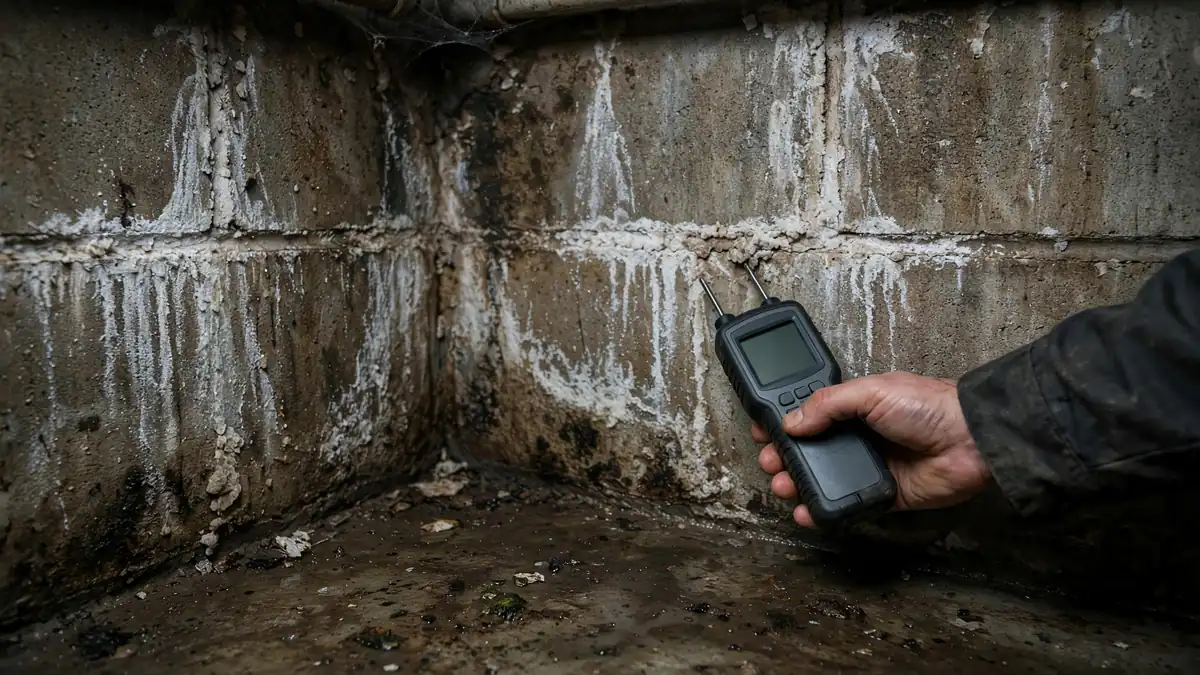
Why do Youngstown basements leak? The water table, clay soil, old foundations and spring thaw explain most wet
Learn more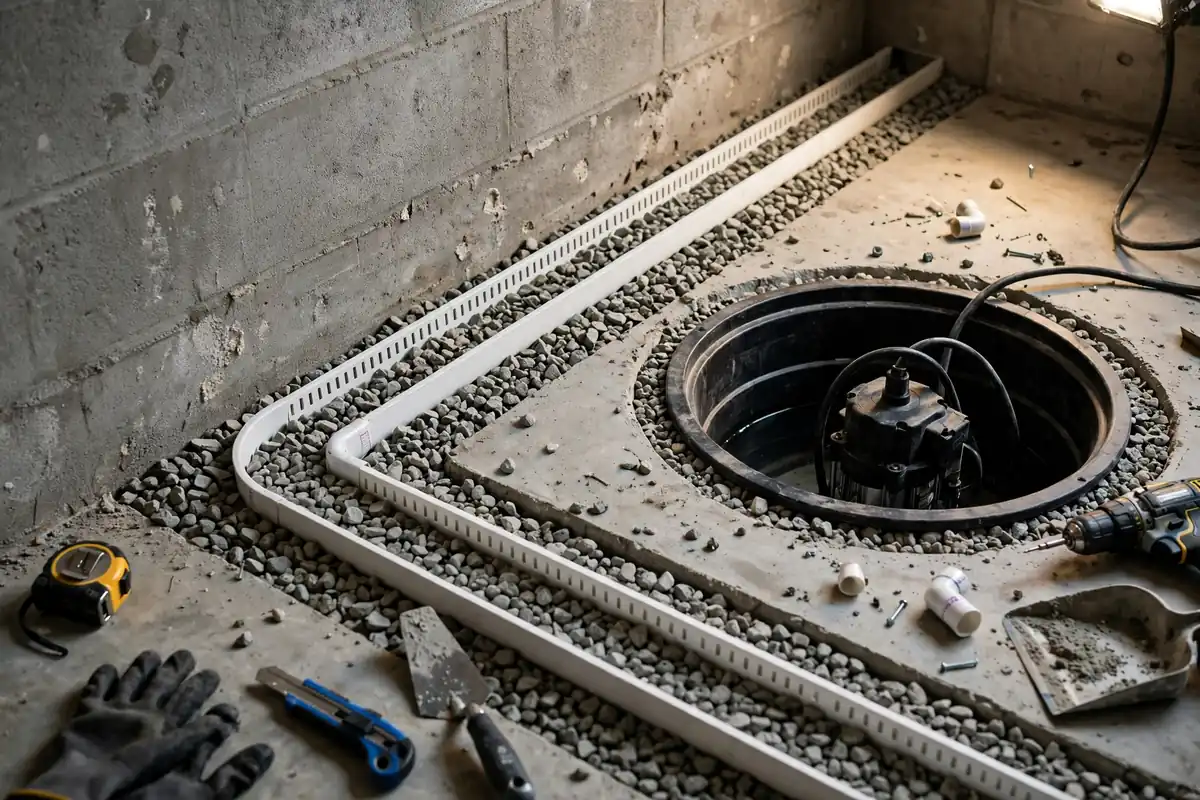 Sump Pump vs Interior Drain System | Which Does Your Basemen
Sump pump vs interior drain system: what each one does, why a pump alone is not enough, and how the two work t
Learn more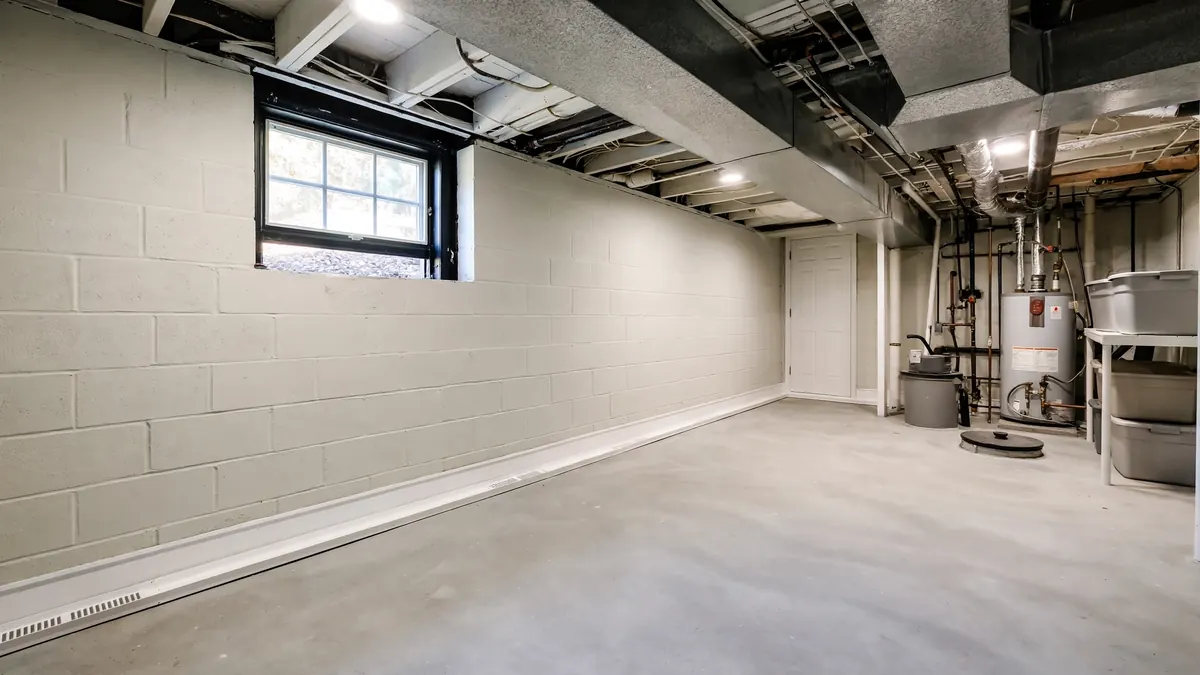 7 Signs Your Basement Needs Waterproofing | Youngstown Homeo
Seven signs your Youngstown basement needs waterproofing: water at the joint, efflorescence, musty smell, flak
Learn moreQuestions, answered
Look at the direction, the width, and whether it is changing. A narrow, vertical crack that has not changed in years is usually shrinkage and is not serious. A horizontal crack, a crack that is getting wider, a crack with a bowing wall, or a crack with a sticking door or a sloping floor are all serious, and they need a foundation assessment before any repair.
Most can. A vertical crack in a poured wall is repaired by injection from the inside, and a block wall crack is repaired by repointing and a membrane from the inside. Exterior repair is needed when the wall is deteriorating, when the crack is at the top of the wall, or when the problem is a single failed section of the exterior coating. The inspection decides which side the repair belongs on.
A crack that is injected properly stays sealed permanently. The resin fills the full depth of the wall and bonds to the concrete, so the water path is closed for good. It does not peel or wash out, and it flexes with the wall as temperatures change. If the wall itself starts to move, a new crack can open beside the repaired one, but the repaired crack will not leak again.
Yes. A visible crack, a stain, or a musty smell will be found by a buyer's inspection, and it will weigh more heavily in negotiation than the repair itself. A repaired crack, with a dry basement to show, removes the objection entirely. It is one of the few repairs that pays for itself at sale, because a dry basement is something every buyer wants.
In a poured wall, the most common cause is shrinkage as the concrete cures. In a block wall, the most common cause is settlement or lateral pressure from the soil. In both, the clay soil in the Mahoning Valley, which swells when it is wet and shrinks when it dries, pushes and releases the wall year after year, and the wall cracks at its weakest point.
Talk to a local waterproofing professional
Describe what is happening in your basement and a local professional will assess the water path and the right fix.
Get in touch
Talk to a local waterproofing professional about your basement.
Hours: Mon–Fri 7:00 AM–10:00 PM ET · Sat 8:00 AM–10:00 PM ET · Sun 7:00 AM–9:00 PM ET
What to have ready
- Where the water appears, and after what kind of weather
- Whether the basement has a sump pump, and whether it runs
- Photos of the wall, the floor joint, or the water itself